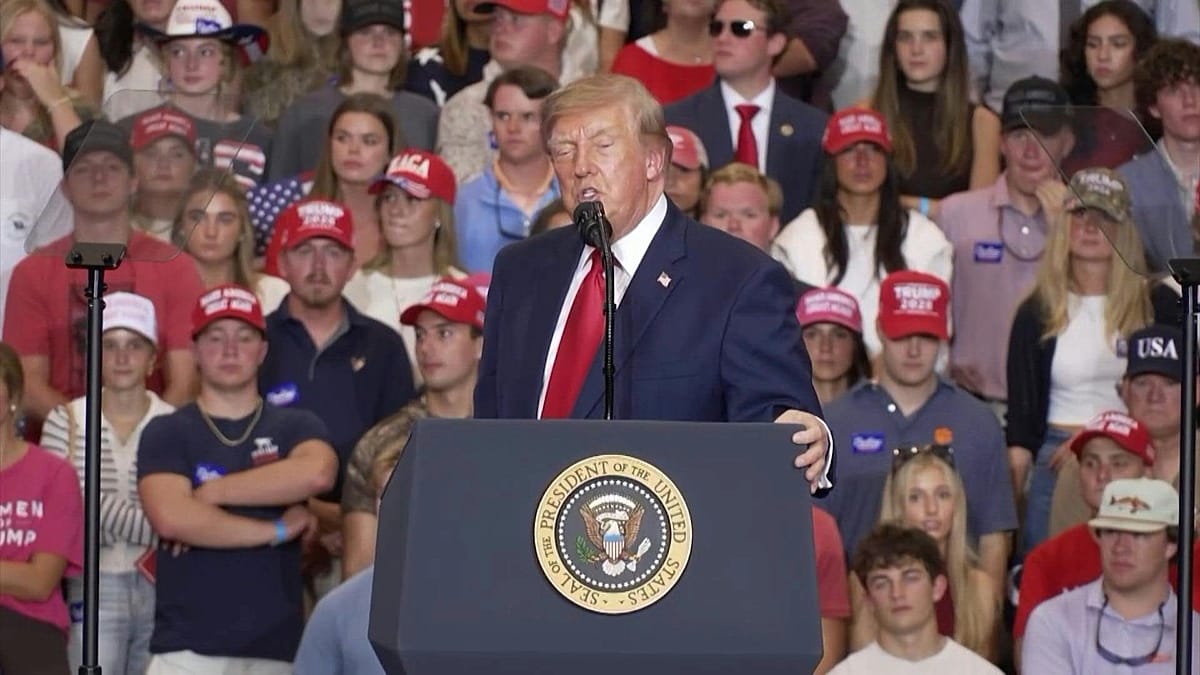
US President Donald Trump has once again floated a symbolic geographical rebrand, this time suggesting that the Atlantic Ocean be renamed the “American Ocean”. Speaking at a rally ahead of the US midterm elections, Trump said he had toyed with renaming either the Atlantic or the Pacific, before settling on the Atlantic as a candidate.
Trump claimed he had raised the idea with Google CEO Sundar Pichai, whom he called “a great guy”, but said the tech executive was not keen on the proposal. The president’s remarks were delivered in a joking tone, yet they fit a pattern of unilateral gestures that often unsettle European partners.
A name with transatlantic weight
The Atlantic is more than a body of water; it is the historical and economic link between Europe and the Americas. Renaming it would carry symbolic weight for the 27 EU member states, the UK, and other coastal nations from Norway to Portugal. The ocean’s current name derives from Greek mythology and the Atlas Mountains, a heritage that spans continents.
Trump did not specify how such a change would be implemented, but he did imagine the reaction of European leaders, including European Commission President Ursula von der Leyen. His quip about her response was met with laughter from the crowd, but the underlying tension is real. The transatlantic relationship has already been strained by disputes over trade, defence spending, and climate policy.
The suggestion comes amid a broader pattern of Trump’s rhetoric that often tests diplomatic norms. Earlier, he claimed that Paris would become a “Muslim city” under President Emmanuel Macron’s immigration policies, a statement that drew sharp criticism from French officials. Such comments, while often dismissed as hyperbole, can influence public perception and complicate EU-US relations.
European observers note that renaming the Atlantic would be largely symbolic, but it would ignore the ocean’s shared history. From the voyages of Columbus to the transatlantic slave trade, the Atlantic has shaped both continents. Its name is embedded in treaties, scientific conventions, and everyday language.
Some analysts see Trump’s proposal as a distraction from more pressing issues, such as the ongoing war in Ukraine. The US president has recently pressed Ukrainian President Volodymyr Zelenskyy to “make a deal” as American patience wears thin, and his overtures to Russia have deepened the transatlantic rift. Europe, however, has held its course, maintaining sanctions and military support for Kyiv.
Meanwhile, Trump’s relationship with tech leaders remains a topic of interest. His mention of Pichai suggests a familiarity with Silicon Valley that contrasts with his administration’s regulatory push against big tech. The Google CEO’s reluctance to endorse the renaming is unsurprising, given the company’s global mapping services would need to update countless references.
For now, the “American Ocean” remains a rhetorical flourish rather than a policy proposal. But in an era of rising nationalism, even symbolic gestures can resonate. European leaders may prefer to focus on concrete cooperation, from trade deals to climate action, rather than engage in naming disputes.
As the midterm elections approach, Trump’s comments are likely aimed at energising his base. Yet they also serve as a reminder that the transatlantic partnership, while resilient, is not immune to rhetorical shocks from Washington.