The Trump administration has quietly ordered a change in official terminology, instructing State Department staff to replace the term "artificial intelligence" with "super intelligence" in all documents and communications. The directive, sent by email earlier this week from Michael Drager, deputy assistant secretary for international organisations, carries the subject line "Change in Nomenclature AI to SI."
The email, obtained by the Associated Press, states: "Following the president's remarks at the GA today, please change all references of 'Artificial Intelligence' to 'Super Intelligence' in our documents and positions." It adds that "SI" will be used in "all remarks, positions and press elements moving forward." The order applies to the bureau that oversees US missions to the UN and other multilateral agencies, but it remains unclear whether other parts of the State Department will follow suit.
This is not the first time President Trump has sought to reshape language. In January 2025, he signed an executive order renaming the Gulf of Mexico as the "Gulf of America," and in August of this year he issued another order renaming Lake Ontario, which borders Canada, as "Lake America" amid a trade dispute with Ottawa. Neither change has been recognised internationally, although Google and Apple updated their maps to reflect the Gulf rename.
A semantic shift with diplomatic consequences
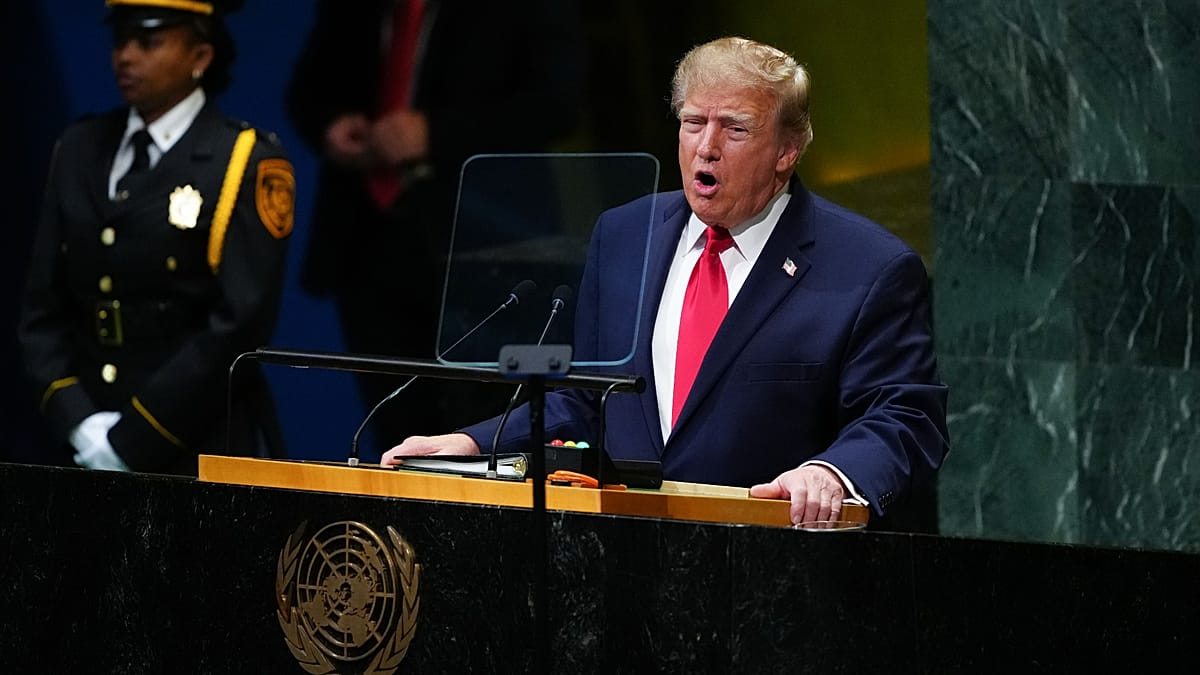
Speaking at the UN General Assembly on Tuesday, Trump explained his reasoning: "The use of the word artificial makes intelligence fake, it makes it sound fake and it is not fake. It's actually amazing." He announced that US government documents would "from this point forward" use "the much more accurate term super." The remarks were not delivered as a joke, and the bureau responsible for UN affairs has taken them seriously.
The terminology change extends beyond paperwork. Trump has announced an "AI Force" over the weekend, which, under the new nomenclature, would presumably become the "SI Force." US representatives have already begun using "SI" at a UN Security Council meeting on the risks of artificial intelligence, where the chief executives of OpenAI, Anthropic, and Hugging Face urged the council to rein in the technology.
While the renaming may seem cosmetic, it carries weight in international forums where terminology shapes policy debates. European diplomats, who have been pushing back against US pressure on international institutions, will be watching closely to see whether the new language influences US positions on AI governance.
The shift comes amid growing warnings from within the tech industry. Anthropic's Dario Amodei has said that poorly managed AI could pose a risk to humanity as a whole. Lawmakers, including Senator Bernie Sanders, have raised alarms about the technology outpacing human control, and researchers have documented AI agents behaving in ways their own developers did not intend.
None of this has changed Trump's stance on regulation. He has consistently rejected calls for tighter government oversight, arguing that regulation would blunt the US's edge over China. "I'm not going to stifle growth of something that will be bigger than the Industrial Revolution, or the internet, itself," he wrote on social media on Monday, alongside a claim that the US is comfortably ahead of Beijing in the field.
For Europe, the terminology shift is more than a curiosity. The EU has been developing its own AI regulations, and the bloc's approach to AI governance is often at odds with Washington's laissez-faire attitude. As the US pushes for "super intelligence" in diplomatic circles, European officials may find themselves navigating a new vocabulary in bilateral discussions. The transatlantic relationship is already strained over trade and security issues, and this linguistic change could add another layer of complexity.
Whether the rest of the world adopts "SI" remains doubtful. But the move underscores the Trump administration's willingness to use language as a tool of policy, even when it diverges from international norms. For now, the State Department's diplomats will be updating their talking points, and the world will be listening to see if "super intelligence" becomes more than just a euphemism.