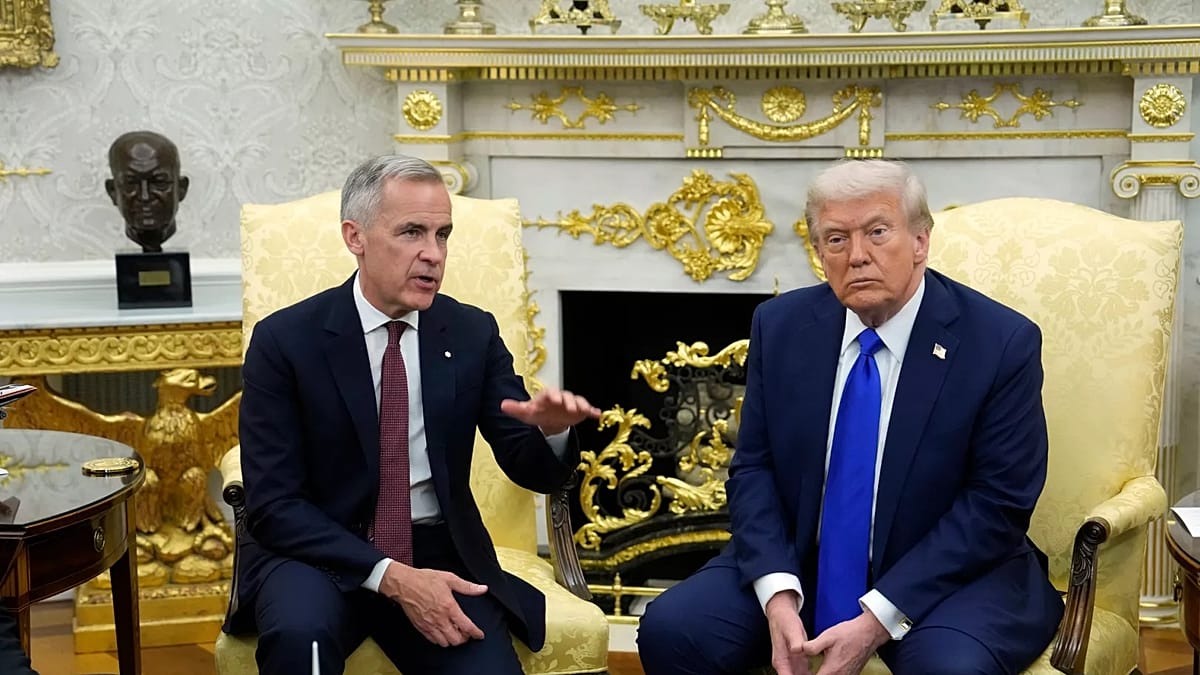
Washington and Ottawa are heading for a deeper trade confrontation after US President Donald Trump announced plans to double tariffs on Canadian vehicles and parts to 50% by 2027. In a post on his Truth Social platform, Trump accused Canada of having “ripped off” the United States for years, and said the higher duties would apply to all cars, trucks, and automotive components, as well as steel.
The announcement came just days after negotiations aimed at averting 50% tariffs on a range of Canadian goods broke down. Both sides blamed each other for introducing last-minute demands. Canadian Prime Minister Mark Carney said Ottawa had walked away from a “bad” deal, insisting that “we cannot accept what they've offered, and we will not give what they've asked.”
The existing tariffs, which took effect on Saturday, affect roughly $20 billion worth of Canadian exports. Carney has promised to match the US measures “dollar for dollar” to protect Canadian workers and businesses. In a speech on Saturday, he said the response would target sectors such as steel, dairy, appliances, agricultural equipment, pulp and paper, and electronics.
A widening rift between neighbours
The trade dispute is part of a broader deterioration in US-Canada relations. Trump has repeatedly suggested that Canada should become the 51st US state, and last week he said Ottawa wanted “the benefits of being a State, without being one.” On Monday, he also criticised what he called Canada's “ridiculously high tariffs” on US farmers, and insisted that Canada would no longer be treated “like a state.”
The US Trade Representative's office described the breakdown in talks as a “missed opportunity” for Canada, which it said was maintaining a “prolonged retaliation” against the US. In a statement, the office said that despite offering Canada the best treatment of any major exporter to the US market, “new demands and walk backs of other commitments by Canada have upended the careful balance reached in the past days.”
For European observers, the escalating dispute is a reminder of the unpredictability of US trade policy under Trump. The president has pursued an aggressive tariff agenda since returning to the White House, raising levies on partners across the world, including the European Union. His administration argues that tariffs will boost US manufacturing and create jobs, but critics warn of higher costs for consumers and businesses.
The announcement also raises questions for European automakers and suppliers with operations in Canada, such as Volvo Cars (owned by China's Geely) and various German manufacturers that use Canadian plants as export hubs. A 50% tariff on Canadian-made vehicles entering the US could disrupt supply chains and force companies to rethink their North American strategies.
Carney, who has positioned himself as a defender of Canadian sovereignty, has vowed to stand firm. “Our response will be concentrated in sectors such as steel, dairy, appliances, agricultural equipment, pulp and paper, and electronics,” he said. The Canadian leader has also sought to rally international support, and his government has been in touch with European allies about the dispute.
The trade war is already having an impact on both economies. Canadian businesses that rely on US exports are bracing for higher costs, while US consumers may face higher prices for Canadian goods, including maple syrup, lumber, and dairy products. The uncertainty is also weighing on investor sentiment, with markets closely watching for any signs of de-escalation.
Analysts say the collapse of talks and the threat of further tariffs could push Canada to diversify its trade relationships, including with Europe. The EU and Canada already have a free trade agreement in place, the Comprehensive Economic and Trade Agreement (CETA), which could serve as a foundation for closer economic ties. However, any shift would take time, and the immediate focus remains on the next round of negotiations.
For now, the two countries appear locked in a standoff. Trump shows no sign of backing down, and Carney has vowed to retaliate. The coming months will test whether the world's two largest trading partners can find a way to resolve their differences, or whether the dispute will escalate further, with consequences that extend far beyond North America.