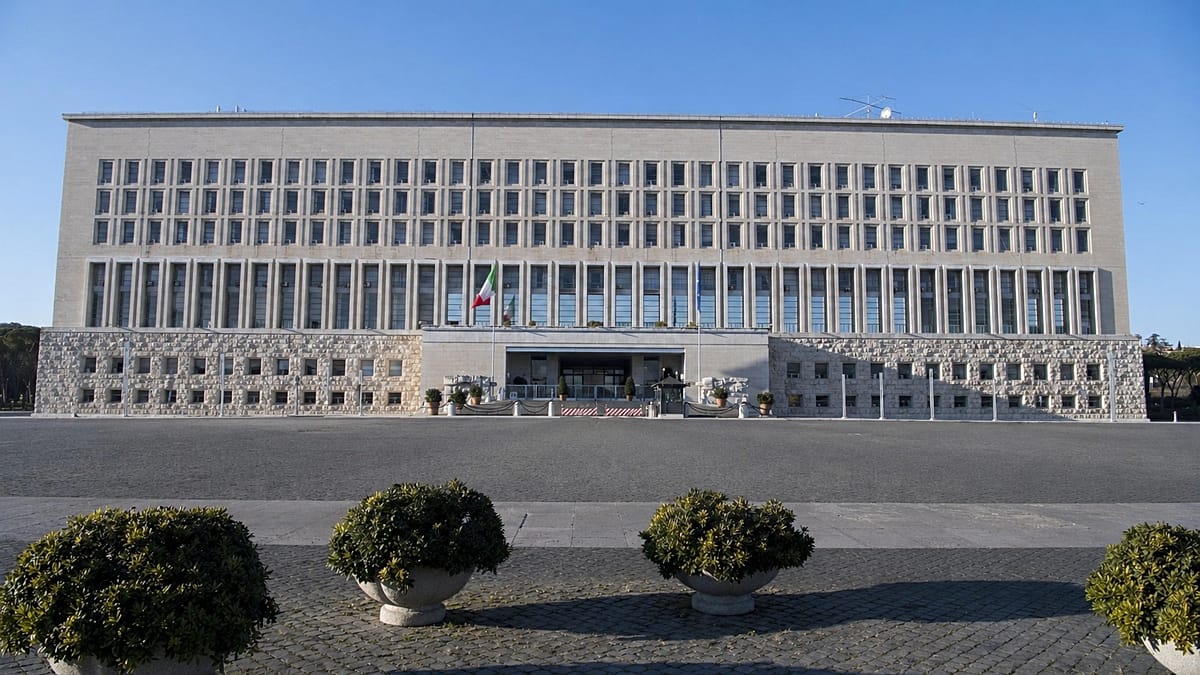
Italy's cybercrime police spent Thursday responding to an ongoing cyberattack targeting the website of the Foreign Ministry, known as the Farnesina. Italian news agencies reported in the evening that the attack was believed to have been carried out by the pro-Russian hacker group NoName057(16).
According to initial reports, the incident appears to have been a distributed denial-of-service (DDoS) attack, in which a website is flooded with fake requests to overwhelm its systems. However, the attack was "effectively mitigated" by security systems "without causing any disruption," the Farnesina said in a statement.
The ministry said it was closely monitoring the situation in cooperation with the National Strategic Hub and relevant authorities. Checks were also under way on the websites of Italian embassies and consulates abroad following a suspected similar cyberattack by pro-Russian hackers.
Cybersecurity as a priority
Foreign Minister Antonio Tajani emphasized that cybersecurity is a central element of the reform of the Farnesina approved last year. "In recent months, we have strengthened our capacity to prevent, monitor and respond to threats, adopting all necessary countermeasures, including technological ones," he said.
The attack comes amid heightened concerns about Russian hybrid activities across Europe. The EU has been weighing tighter restrictions on Russian diplomats as such incidents mount, reflecting a broader pattern of cyber aggression linked to Moscow.
NoName057(16) has previously claimed responsibility for attacks on government and media websites in several European countries, often in response to political decisions perceived as anti-Russian. The group's tactics typically involve DDoS attacks that disrupt services but rarely cause lasting damage.
Italy's response highlights the growing importance of cyber resilience for public institutions. The Farnesina's recent reforms include investments in threat detection and response capabilities, which officials say helped contain Thursday's incident.
While no disruption was reported, the episode underscores the persistent threat posed by state-aligned hacker groups. As European nations bolster their defenses, cooperation among member states and with partners like NATO remains crucial.
The Italian government has not yet attributed the attack officially, but investigations are ongoing. The National Strategic Hub, which coordinates cybersecurity for public administration, is working with the postal police and other agencies to trace the origin and prevent further incidents.
This attack also fits a wider pattern of Russian cyber and disinformation campaigns targeting European audiences, as seen in efforts to influence voters in the Baltics. Such activities have prompted calls for stronger collective action across the EU.
For now, the Farnesina's website remains operational, and officials say they are confident in their ability to withstand future attempts. The incident serves as a reminder that cyber threats are an enduring feature of the geopolitical landscape, requiring constant vigilance and adaptation.