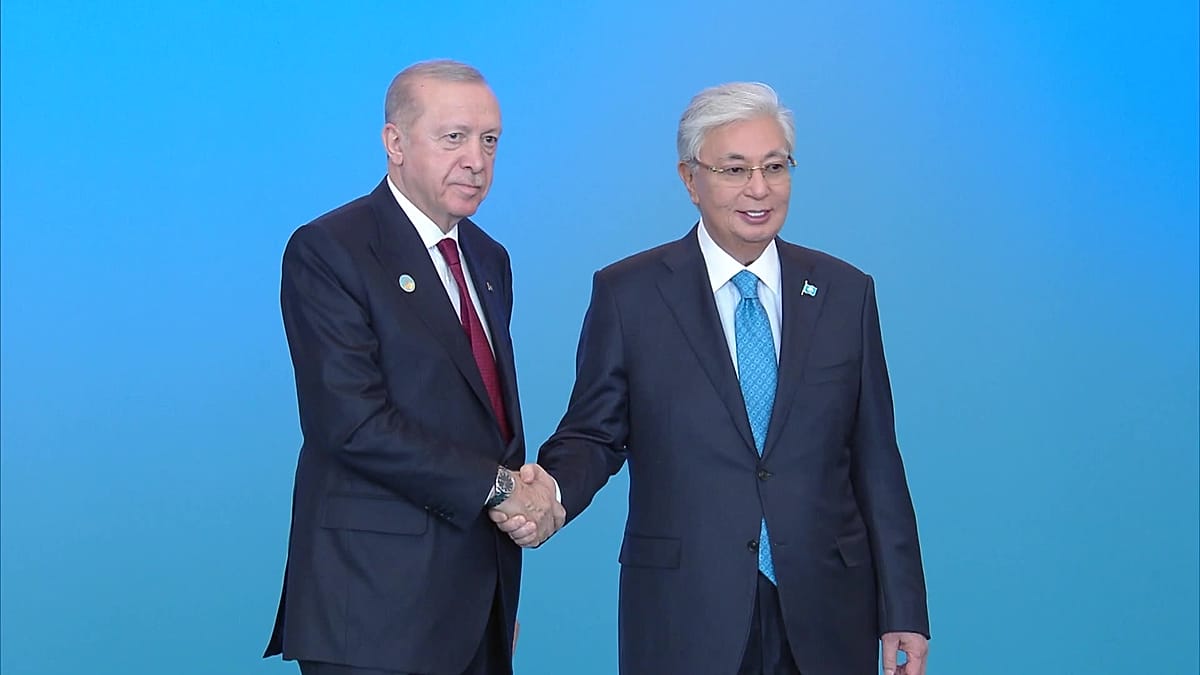
Leaders of the Organisation of Turkic States (OTS) gathered in the historic city of Turkistan, Kazakhstan, for an informal summit that centred on artificial intelligence, digital cooperation, and regional connectivity. The meeting, which brought together presidents from Kazakhstan, Uzbekistan, Kyrgyzstan, Azerbaijan, and Turkey, underscored a shared ambition to build a smarter, more integrated Turkic world without geopolitical or military overtones.
Kazakh President Kassym-Jomart Tokayev described the OTS as “a unique platform that strengthens trade, economic, technological, digital, cultural and humanitarian cooperation between fraternal countries.” He stressed that the organisation has no geopolitical or military ambitions, focusing instead on economic and cultural ties. The leaders also discussed expanding the OTS Plus format to include non-member states, potentially broadening the bloc’s reach across Central Asia and beyond.
AI and Digital Cooperation
The summit’s agenda was heavily shaped by digital transformation. Delegations reviewed national achievements, such as e-government platforms and legal frameworks for AI, and identified areas for joint projects. Turkish President Recep Tayyip Erdogan warned of “next-generation threats against our databanks and critical national infrastructure,” calling cybersecurity as vital as land, air, and maritime security.
Uzbek President Shavkat Mirziyoyev highlighted satellite monitoring of climate risks, as the region grapples with rising temperatures and water shortages. To that end, Uzbekistan, Turkey, and Kazakhstan are jointly developing a CubeSat satellite, scheduled for launch in 2027. Kazakh AI and Digital Development Minister Zhaslan Madiyev explained that “every country is contributing its own technology,” describing the project as “industrial cooperation of satellite production” and a step toward a broader satellite constellation.
Smart Logistics and Regional Connectivity
Logistics modernisation was another key theme. The integration of digital logistics platforms and mutual recognition of electronic customs documents are already underway, with all member states adopting the new e-Permit system. Suyinbay Suyudikov, a political scientist at Al-Farabi Kazakh National University, noted that digitalisation could reduce customs procedures from four to five days to just 40 to 50 minutes.
Azerbaijani President Ilham Aliyev announced the upcoming launch of a Trans-Caspian fibre-optic cable line connecting Azerbaijan to Kazakhstan. This infrastructure, Madiyev said, will “help to attract big tech companies as well as hyperscalers to locate their AI computing power resources in our countries.” Kazakhstan has already built several large supercomputers, the largest in the region. The leaders also noted that the Zangezur and China-Kyrgyzstan-Uzbekistan corridors will eventually integrate with the larger Middle Corridor, enhancing trade routes between Europe and Asia.
Digital Heritage and Cultural Integration
The digital push extends to culture. At the summit, presidents laid the foundation capsule for the Centre of Turkic Civilisation in Turkistan. OTS Secretary General Kubanychbek Omuraliev said the centre is “of strategic importance for the systematic study, preservation and the broad international promotion of the rich historic, cultural and spiritual heritage of the Turkic peoples.”
In parallel, the Turkic Culture and Heritage Foundation is building a Turkic Heritage Platform, a digital repository for historic and cultural data. Foundation President Aktoty Raimkulova explained that “anyone in the world, when visiting this digital platform, can see the rich heritage we have today.” The foundation is working with member states’ ministries of culture to translate existing digital content into a common format.
The summit also included cultural events, such as a visit to the mausoleum of Khoja Ahmed Yassawi, a 12th-century philosopher and spiritual leader whose tomb is a pilgrimage site for many cultures. This blend of digital ambition and cultural preservation reflects the OTS’s broader vision: a connected Turkic world that leverages technology while honouring its shared past.
For Europe, the OTS’s growing digital and logistics integration could have implications for trade routes and tech investment. The Middle Corridor, which connects Central Asia to European markets, stands to benefit from improved customs procedures and fibre-optic links. As the EU races to finalise its own defence and digital strategies, the Turkic states’ coordinated push for AI and cybersecurity offers a parallel model of regional cooperation.