Turkish Airlines has permanently scrapped its Luanda route, becoming the latest international carrier to abandon Angola's capital since the country's new airport opened in 2023. The Istanbul-based airline removed Luanda from its schedule earlier this month, along with Juba, Kinshasa, Libreville and Lusaka, after suspending those services through 24 October.
The carrier initially described the suspension as temporary when it announced the move in April, attributing it to fuel costs. Although the service operated as a triangular route via Kinshasa rather than a direct connection, it gave Luanda passengers onward access to destinations across Europe, Asia and beyond through Istanbul's extensive network.
Turkish Airlines' exit follows a string of similar decisions. Brussels Airlines ended its Luanda service on 25 March 2025 as part of a restructuring within the Lufthansa Group, redirecting passengers onto Lufthansa's direct Frankfurt–Luanda flights. TAAG Angola Airlines suspended its Madrid route — codeshared with Iberia — in January 2024 and later removed a planned return from its schedule. Iberia, which has not flown to Luanda since 2016, had opted to codeshare with TAAG since 2022, but that link is now gone as well. South African Airways (SAA) also only places its code on TAAG-operated flights.
New airport far below capacity
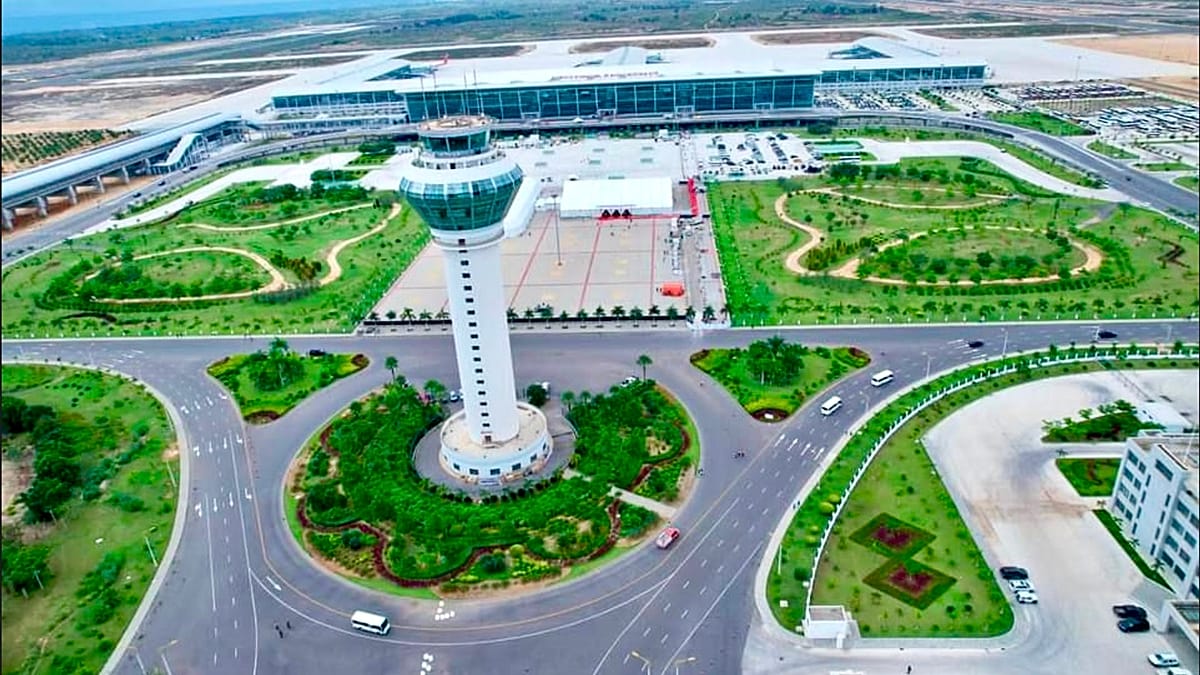
The departures come as Angola's Dr António Agostinho Neto International Airport, about 45km from central Luanda, struggles to establish itself as the regional hub the government promised when it inaugurated the facility in November 2023. Built by Chinese state-owned company AVIC and designed for a maximum annual capacity of 15 million passengers, the airport handled just 756,028 passengers in all of 2025, according to figures from the airport's temporary operator ATO.
By 24 February of this year, total passenger numbers since the first domestic flight in November 2024 stood at 1,090,861, including 444,212 international passengers. The full transfer of services from the old Quatro de Fevereiro airport was completed on 1 March — more than two years after the inauguration — when South African carrier Airlink moved its Johannesburg flights to the new facility.
In December 2025, ATO's Director of Planning and Quality Vissolela Chivunda said the airport expected around 4 million passengers in 2026. That projection, while ambitious, would still leave the facility operating at less than a third of its designed capacity.
The situation in Luanda contrasts sharply with the performance of many European airports, which continue to dominate global rankings for passenger experience. The gap highlights the challenges facing new infrastructure in emerging markets, where airline networks and passenger demand often lag behind construction timelines.
For European travellers, the loss of Turkish Airlines' service means fewer one-stop options to Luanda from cities like London, Paris or Berlin. Lufthansa's Frankfurt–Luanda route remains the main European link, but the overall reduction in capacity could push fares higher and make connections less convenient.
The Angolan government has yet to announce a strategy to attract more airlines or boost passenger numbers. With the airport's operator still temporary and the country's oil-dependent economy under pressure, the road to becoming a regional hub looks increasingly steep.