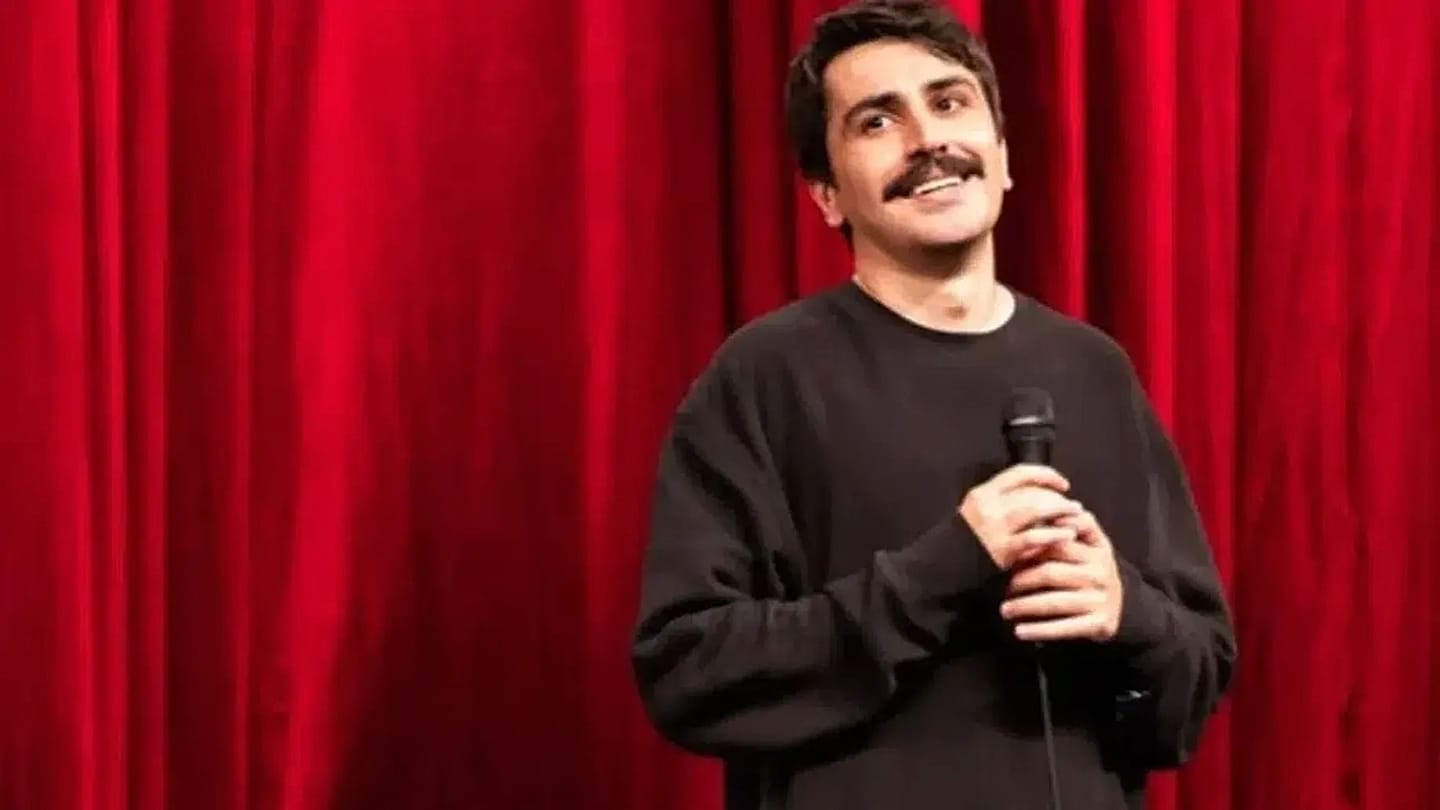
Turkish comedian Deniz Göktaş was taken into custody at Istanbul Airport on Thursday, shortly after a stand-up performance he uploaded to YouTube drew the attention of prosecutors. The 32-year-old now faces investigations on charges of “publicly insulting religious values” and insulting President Recep Tayyip Erdoğan, according to local media reports.
The arrest marks the latest in a long line of cases where Turkish authorities have used the country’s penal code to target comedians, journalists, and artists whose work touches on Islam or the president. Under Article 216 of the Turkish Penal Code, “publicly denigrating religious values” can carry a prison sentence of up to three years, while insulting the president is punishable by up to four years.
Free Speech Under Pressure
Göktaş’s detention has drawn criticism from human rights groups and free speech advocates, who argue that such prosecutions chill artistic expression in Turkey. The country has seen a steady erosion of media freedoms under Erdoğan’s rule, with Turkey ranking 165th out of 180 countries in the 2024 World Press Freedom Index published by Reporters Without Borders.
This is not an isolated incident. In recent years, several Turkish comedians and satirists have faced legal action for jokes about religion or politics. The case echoes the 2022 arrest of comedian and actor Atalay Demirci, who was investigated for a sketch that allegedly insulted Erdoğan. More broadly, it fits a pattern of crackdowns on dissent that have intensified since the failed coup attempt in 2016.
Göktaş’s show, which was recorded in front of a live audience, reportedly included jokes about Islamic practices and Erdoğan’s leadership. The exact content of the routine has not been made public, but prosecutors cited it as the basis for the charges.
Turkey’s judiciary has been widely criticized for lacking independence from the executive. The European Court of Human Rights has ruled against Turkey in multiple cases involving freedom of expression, including the 2018 case of journalist Şahin Alpay, who was detained for his writings. Yet Ankara has often been slow to implement such rulings.
The arrest also comes at a time when Turkey’s relationship with the European Union remains strained. EU accession talks have been frozen for years, and the bloc has repeatedly called on Turkey to uphold democratic standards, including the protection of fundamental rights.
For now, Göktaş remains in custody pending further investigation. His lawyer has stated that they will challenge the detention, arguing that the comedian’s routine fell within the bounds of satire and artistic freedom. The case is expected to be closely watched both in Turkey and abroad as a test of the country’s commitment to free expression.