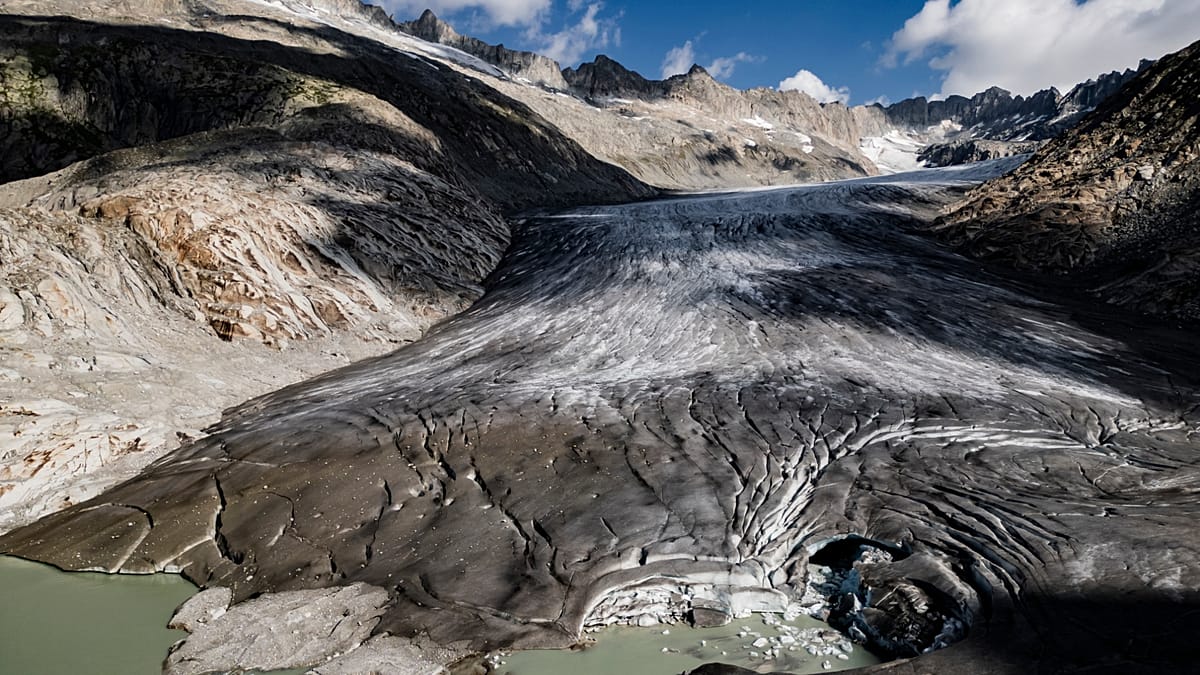
For decades, summer was the season when mountaineers flocked to the Alps with confidence. That certainty is crumbling. In 2026, the French Alps have become a laboratory of climate-driven instability, with the Mont Blanc massif alone recording 450 rockfalls since January—a figure never seen before.
The previous record, set in 2022, stood at 300 rockfalls. This year's surge is no anomaly, says Ludovic Ravanel, a geomorphologist and research director at the CNRS laboratory Edytem in Chambéry. “Here temperatures have easily climbed above 30–35 degrees, and that obviously has impacts on the glaciers and on the permafrost. That is why this year we are recording unprecedented figures, for example in terms of the number of rock-face destabilisations and collapses.”
Warming's fingerprints on the rock
Ravanel and his team have spent years comparing photographs of alpine faces, some dating back nearly two centuries. The images tell a stark story. “By comparing them with one another, we are able to identify the scars, that is to say the areas where rock faces have been destabilised. We can quantify them in terms of volume. And we have shown that 80 or 85% of these scars have formed over the past two or three decades. So there is a very clear relationship between climate warming and the destabilisation of rock faces.”
The mechanism is twofold. As permafrost—the glue that holds high-altitude rock together—thaws, it loses its binding strength. At the same time, retreating glaciers remove the pressure they once exerted on valley slopes. “Rock collapses and rock avalanches now occur mainly because of the degradation of permafrost, but also because of the retreat of glaciers, since glaciers tend to exert pressure on the slopes. This pressure is rather stabilising. And when glaciers lose thickness, the rock faces, on the contrary, are relieved of that pressure,” Ravanel explains.
The human cost has been tangible. In July, two Czech tourists died in a rockfall on Mont Blanc; a month later, a man lost his life in similar circumstances. These incidents underscore the new reality for the estimated 20,000 climbers who attempt the mountain each year.
Local authorities and alpine experts are not yet calling for restrictions on access to the high mountains. Instead, they are urging mountaineers to exercise heightened vigilance, noting that rockfalls could continue well into the autumn as warm temperatures persist.
The situation in the Alps is part of a broader pattern across Europe. Germany's record heat-related deaths last summer highlighted the continent's vulnerability to extreme temperatures. Meanwhile, historic gardens like Chambord are adapting to a changing climate, and food prices are feeling the heat.
For scientists like Ravanel, the message is clear: the mountains are not static. They respond to a warming atmosphere in ways that are both measurable and dangerous. As the 2026 season draws to a close, the record number of rockfalls serves as a sobering reminder that Europe's alpine playground is entering uncharted territory.