As the clock ticks down to Friday's deadline at COP31 in Turkey, negotiators from more than 200 countries are locked in intense talks over a deal that could shape global climate action for years. The atmosphere is tense, with deep divisions emerging over two central issues: how much financial support wealthy nations will provide to vulnerable countries, and how quickly the world can move away from fossil fuels.
The European Union, a key player in the negotiations, has signaled a particular stance. EU Climate Commissioner Wopke Hoekstra told Euronews earlier this week that Europeans are less focused on the size of financial commitments and more on ensuring that existing pledges are actually delivered. "We don't want to talk about money alone," he said, "we want to talk about implementation." That position, however, has drawn criticism from developing nations and civil society groups who argue that the rich world is still not doing enough.
Are rich countries handing out crumbs?
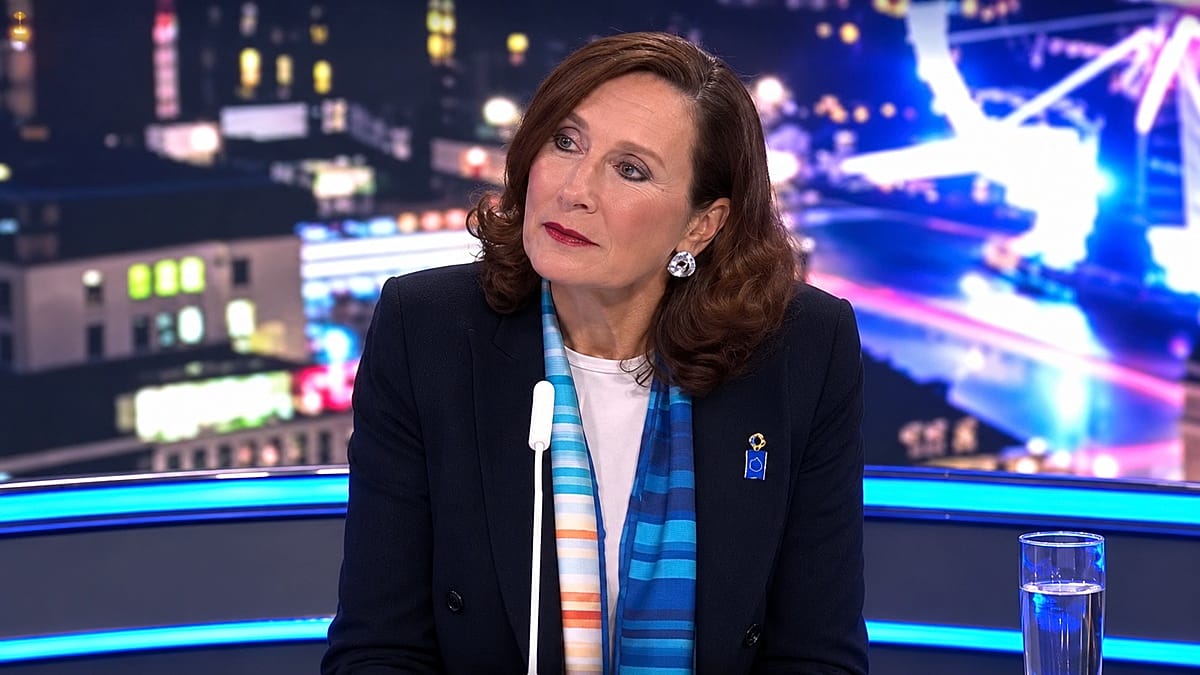
On Thursday, the weekly Euronews programme Europe Tonight hosted Sandrine Dixson-Declève, Honorary President of the Club of Rome, to examine whether COP31 can be deemed a success and whether wealthy nations are merely offering "crumbs" to poorer countries grappling with the devastating impacts of climate change. Dixson-Declève, a prominent voice on sustainable development, did not mince words. She argued that the current level of climate finance is grossly inadequate, especially when compared to the scale of losses and damages already being experienced by vulnerable nations, from devastating floods in Pakistan to prolonged droughts in the Horn of Africa.
"The gap between what is promised and what is delivered remains enormous," she said during the interview. "We are seeing a pattern where the richest countries, including many in Europe, are prioritizing domestic political concerns over global solidarity. That is not leadership; that is a failure of responsibility." Her comments echo a broader frustration among climate-vulnerable countries, who have long called for a more ambitious and predictable financing mechanism.
The issue of fossil fuel phase-out is equally contentious. While the EU has pushed for a strong commitment to transition away from coal, oil, and gas, some major economies, including several Gulf states and China, have resisted binding language. The final text, expected by Friday, will need to balance these competing interests. Dixson-Declève warned that a weak outcome on fossil fuels would undermine the credibility of the entire COP process. "We cannot keep kicking the can down the road," she said. "Every year we delay, the costs of inaction multiply."
The stakes are particularly high for Europe, which has positioned itself as a global leader on climate action. The EU's own internal debates, such as the potential impact of carbon market reform on its 2040 climate goals, reflect the difficulty of balancing ambition with economic competitiveness. Meanwhile, the bloc is also dealing with a range of hybrid and climate-related threats in East-Central Europe, which add to the urgency of a coherent strategy.
Dixson-Declève also highlighted the role of innovation and technology, noting that Europe's push for electrification could be a competitive advantage, as EU climate chief has argued. But she cautioned that technological solutions alone are not enough. "We need a fundamental shift in our economic models, away from endless growth and towards sustainability and equity," she said. "That is a political choice, and so far, the rich world has not made it."
As the negotiations enter their final hours, the question remains whether COP31 will deliver a meaningful outcome or become another missed opportunity. For climate-vulnerable countries, the difference is existential. For Europe, it is a test of its commitment to the principles it has championed on the world stage. The world is watching, and the verdict may be harsh if the final deal falls short.