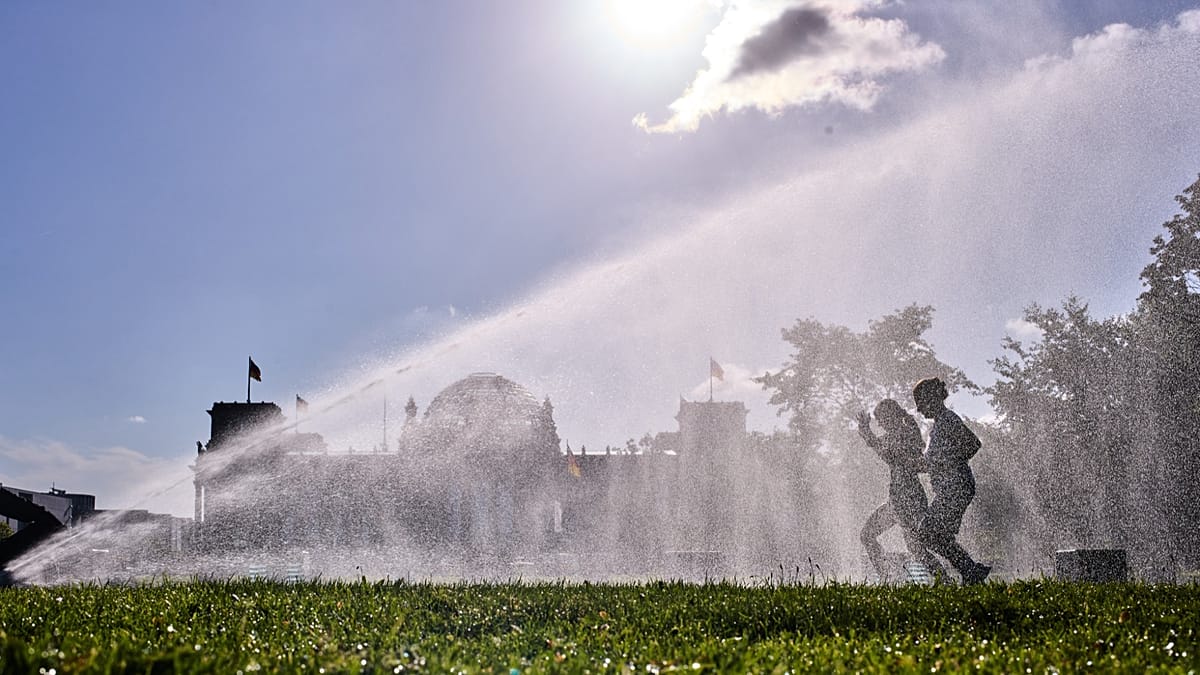
Germany has registered approximately 14,000 heat-related deaths this summer, the highest figure since the Robert Koch Institute (RKI) began collecting such data a decade ago. The record comes as Europe endured a series of punishing heatwaves, with temperatures in Germany exceeding 40°C in late June, a week that alone accounted for around 9,600 of the deaths.
The RKI, Germany's public health authority, said the previous record was 8,900 deaths in 2018, while a separate medical publication estimated 10,000 heat deaths in 1994. In some cooler years, the figure has dropped below 2,000, underscoring the variability driven by the severity of each summer's heat.
The majority of victims were aged over 75, the institute noted. "In some cases, such as heatstroke, exposure to heat leads directly to death, whereas in most instances, death results from a combination of heat exposure and pre-existing medical conditions," the RKI said in a statement. "Consequently, heat is not usually listed as the underlying cause of death on the death certificate; instead, statistical methods must be employed to estimate the extent of heat-related deaths."
Europe's hot summer takes a deadly toll
The heatwaves and drought have fuelled a historically hot summer across the continent. Spain's public health institute recorded nearly 4,500 heat-related deaths since 1 June, while French health authorities reported more than 7,300 excess deaths over the same period. The crisis has also reshaped landscapes and disrupted daily life, from low river levels on the Danube to wildfires in the Belgian High Fens.
In Germany, the heat has battered Europe's largest economy, fuelling wildfires, reducing crop yields, and dropping water levels in major rivers used for cargo shipping. The Rhine, a vital artery for freight, has seen boats stranded as water levels fell, threatening supply chains and pushing up costs for goods ranging from fuel to grain.
Political push for climate adaptation
The scale of the crisis has prompted political action. This week, ministers from the centre-left Social Democrats (SPD), junior coalition partners to Chancellor Friedrich Merz's conservatives, called for Berlin to enshrine "climate adaptation and nature conservation" in the German constitution, the Basic Law. Environment Minister Carsten Schneider said the climate crisis was now a "tangible reality" but that current law limits what his ministry can do to help states and local governments.
The group of ministers urged changes to urban planning legislation and building codes, as well as new labour laws to address working in high temperatures. Karl Lauterbach, the SPD's former health minister and a medical doctor, backed the push, arguing that municipalities need financial support to adapt. "Effective heat protection costs a lot of money," he told the Rheinische Post. "Many municipalities are heavily in debt and simply cannot finance the necessary measures on their own."
Earlier this month, the German Association of Towns and Municipalities estimated that billions of euros are needed to help hospitals and nursing homes, many of which lack air conditioning. Its president, Ralph Spiegler, told the Rheinische Post: "Hospitals need air conditioning, not only for patients but also for staff. We see an immense need for investment here, estimated at a minimum of €20 billion." He added that it is essential to specifically address the situation in retirement and nursing homes to account for climate change and equip their facilities accordingly.
Lauterbach warned that the true number of heat-related deaths this year may be even higher than the statistics indicate. "The Robert Koch Institute employs a rather conservative methodology," he said. "This means the number of heat-related deaths is likely being underestimated." He explained that very few people die of classic heatstroke; most deaths occur in combination with other conditions. "For instance, high heat stress can contribute to a stroke developing from pre-existing atrial fibrillation. Formally, the person might die of a stroke, but without the heat, it might not have happened."
As Europe braces for more frequent and intense heatwaves, the debate over how to protect vulnerable populations is likely to intensify. The German experience offers a stark reminder that heat is a silent killer, one that demands both immediate relief measures and long-term structural changes.