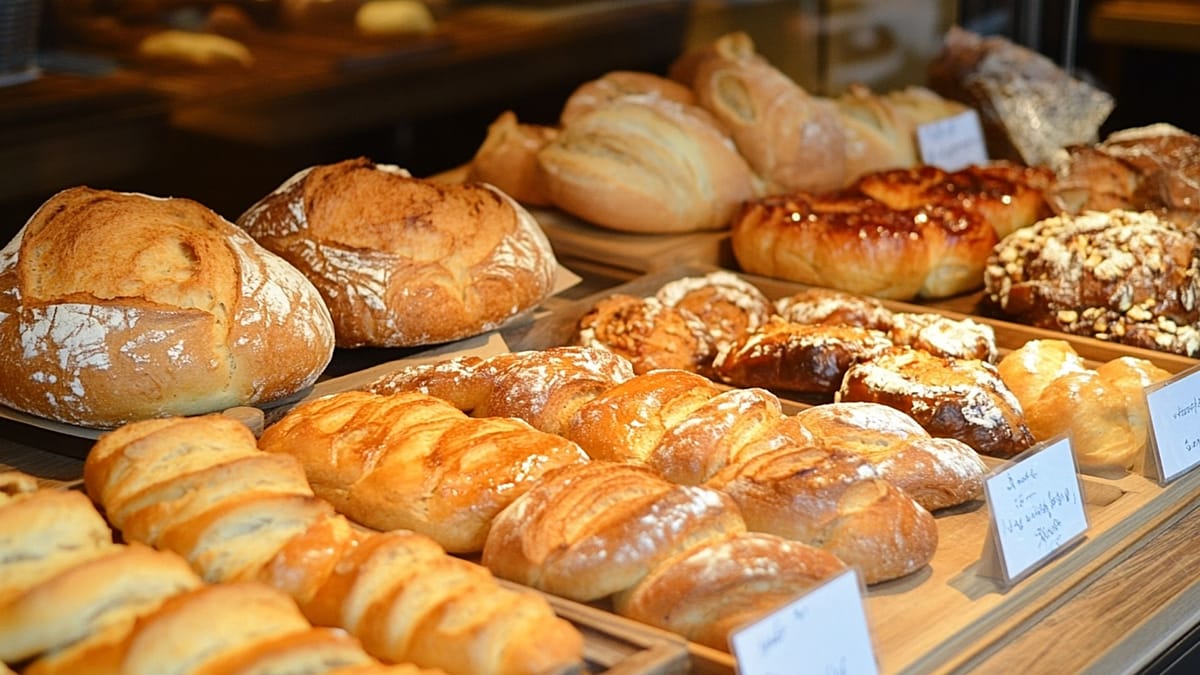
European consumers should brace for noticeably higher grocery bills over the next two years. Oxford Economics projects that global food prices will climb by 11.8% in 2026 and a further 4.8% in 2027, with the steepest increases hitting grains, fruit, vegetables, and dairy. The main drivers are the ongoing war in Ukraine, extreme heat across Europe, and disruptions to energy and fertiliser markets linked to the conflict in the Middle East.
Harvests shrink under extreme heat
This summer's repeated heatwaves and drought have taken a heavy toll on European agriculture. In July, Coceral, the Brussels-based trade association for cereals and oilseeds, issued an extraordinary update cutting its forecast for the combined EU-27 and UK grain harvest from 295.5 million tonnes to 286.6 million tonnes. That compares with 310 million tonnes harvested in 2025.
Germany, the bloc's second-largest grain producer, expects its harvest to fall by 7% this year, according to the German Farmers' Association, which cited severe drought and heat. Production is now forecast at 41.9 million tonnes. Similar conditions have affected farms from Spain to Poland, straining water supplies and adding to the pressure on rural economies already dealing with high input costs.
The heat is not just a short-term problem. As Western Europe's repeated heatwaves strain water, health and economy, the long-term resilience of the continent's food system is being called into question. Farmers are adapting, but the costs are mounting.
War and supply chain shocks
Beyond the weather, geopolitical conflicts are compounding the crisis. The war in Ukraine has disrupted Black Sea grain exports, with attacks on ports and vessels threatening 86 million tonnes of annual export capacity — 52 million tonnes from Russia and 34 million tonnes from Ukraine. That represents nearly 17% of global cereal exports, according to Oxford Economics.
Meanwhile, the US-Iran war and the blockade of the Strait of Hormuz have driven up the cost of oil, natural gas, and fertiliser. Global diesel prices surged 36% year-on-year in July, and fertiliser prices are forecast to rise 22% this year. These input costs hit wheat particularly hard, as it is a fertiliser-intensive crop.
“The most significant impact on food prices globally stems from the US-Iran war and its impact on inputs for food production, mainly oil (diesel), natural gas and fertiliser,” said Tomas Dvorak, senior economist at Oxford Economics, in an interview with Euronews Business.
What this means for your shopping basket
Wheat prices are expected to jump 36% year-on-year to $6.92 per bushel by the third quarter of 2026. Since wheat is a staple in bread, pasta, breakfast cereals, and biscuits, the knock-on effect on supermarket shelves will be significant. Dairy and fresh produce are also vulnerable, given their sensitivity to heat and drought.
“The most severe impact will be in crops — grains, fruit and vegetables — and dairy,” Dvorak said. “This will also feed into prices of processed products — bread, cheese, wine or oil.” Meat, by contrast, is expected to see smaller increases.
The timing of price changes will vary. For fresh food, the impact could show up in consumer prices within two to three months, meaning shoppers might see higher costs for fruit and vegetables as early as October or November 2026. For processed goods, the lag is longer — the peak effect on bread and pasta prices could hit between February and May 2027.
Jed Cartledge, an agricultural commodities economist at Oxford Economics, warns that the shock could be even worse than forecast. “The full impact of Black Sea attacks is still emerging, and a strong El Niño threatens crops beyond Europe,” he said.
While the projected 2026 increase is lower than the 14.2% spike seen in 2022, it still represents a significant burden for households across the continent. The UN Food and Agriculture Organisation already reports that global food commodity prices were 1% higher in July than a year earlier, with cereal prices up 6.9% and vegetable oils up 17.3%.
For European policymakers, the challenge is twofold: ensuring food security in the short term while building a more resilient agricultural system that can withstand both climate shocks and geopolitical disruptions. As the continent grapples with these pressures, the cost of a simple loaf of bread may become a symbol of broader global instability.