Large swathes of western Europe are bracing for another day of extreme heat on Thursday, as repeated heatwaves stretch water supplies, public services and economic resilience across the continent. Britain and France are bearing the brunt this week, but the strain is being felt from the Iberian Peninsula to the Balkans.
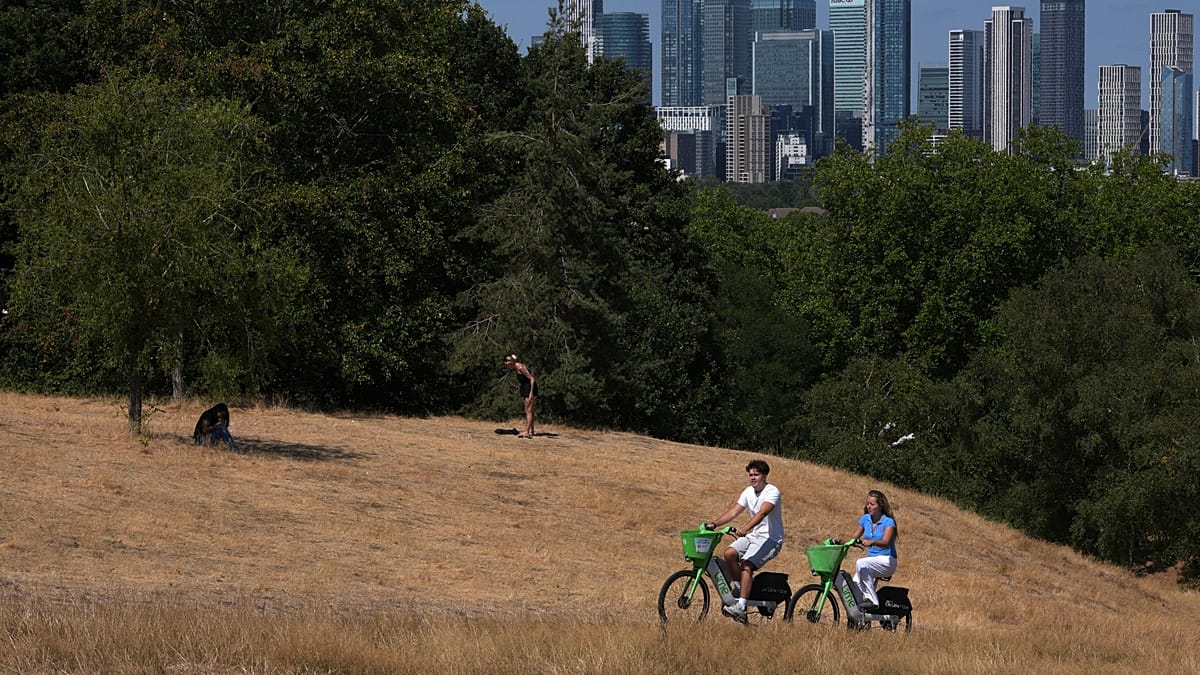
Forecasters expect the mercury to reach as high as 38°C in central and southeast England, just shy of the August record of 38.5°C set in 2003. This will be the country's fifth heatwave of the summer, a frequency that has left infrastructure and public services struggling to cope.
The Met Office noted earlier this week that even average conditions for the rest of August would be enough to make 2024 the hottest year on record, surpassing last year's milestone. For a nation largely unaccustomed to such sustained heat, the discomfort has been acute. Air conditioning remains rare outside shops and offices, leaving homes, hospitals and schools vulnerable.
Hospitals under pressure
Nowhere is the strain more visible than in the National Health Service. The Royal College of Nursing reports that nurses have collapsed from heat exhaustion while on duty, and some have even been admitted to the very hospitals where they work because the buildings cannot be cooled adequately.
“When nursing staff are collapsing, feeling dizzy, sick or even being admitted to the very hospitals they work in because their workplaces cannot handle the heat, it shows just how badly they are being failed,” said Nicola Ranger, chief executive and general secretary of the Royal College of Nursing.
The situation has prompted calls for urgent investment in ventilation and cooling systems, as well as long-term adaptation strategies for a warming climate.
Drought and water restrictions
Most of Britain is now officially in drought, adding to pressure on water companies, farmers and the environment. Households face hosepipe bans, while agricultural producers are having to rethink irrigation schedules. Environmental agencies warn that rivers and wetlands are at risk, with fish kills and algal blooms becoming more frequent.
Across the Channel, France is experiencing a similar ordeal. Météo-France has placed 80 of the country's 96 metropolitan départements under orange alert until Friday, with only parts of the northeast, three Pyrenean départements, Lozère and Haute-Loire at a lower yellow level. The heatwave is expected to peak on Thursday and Friday, with temperatures in the Centre-Val de Loire and Nouvelle-Aquitaine regions reaching 38–40°C, and Île-de-France close to 38°C.
The French government estimates that the succession of extreme heat events this summer could cost between €10 and €15 billion, factoring in lost productivity, health impacts, and damage to agriculture and infrastructure. The broader economic toll across Europe could be far higher.
Water supply under threat
Access to drinking water is a growing concern. Monique Barbut, the Minister for Ecological Transition, said that “our first priority remains obviously drinking water supply, which is already under strain in several areas, more specifically today in 50 French départements.” More than 40,000 people are currently affected by tap water cutoffs, according to government figures.
In some regions, municipalities are distributing bottled water, while others are imposing restrictions on non-essential uses such as watering gardens or filling swimming pools. France's drought has already led to tighter water restrictions, and the situation is expected to worsen as the summer wears on.
The heat is also affecting energy production. High water temperatures and low river levels have forced several nuclear reactors to reduce output, adding to the strain on the electricity grid at a time when demand for cooling is soaring.
Europe is the fastest-warming continent on the planet, and its infrastructure was largely built for a cooler climate. The repeated heatwaves this summer have fueled a historically hot season of drought and wildfires, and have contributed to the deaths of thousands of people. Tourist guides and other workers in the tourism sector have called for action as the heat becomes increasingly dangerous.
As the continent swelters, the need for both short-term relief and long-term adaptation has never been more urgent. From redesigning hospitals and schools to rethinking water management and urban planning, European governments are being forced to confront a new reality: the climate they once knew is no longer the climate they live in.