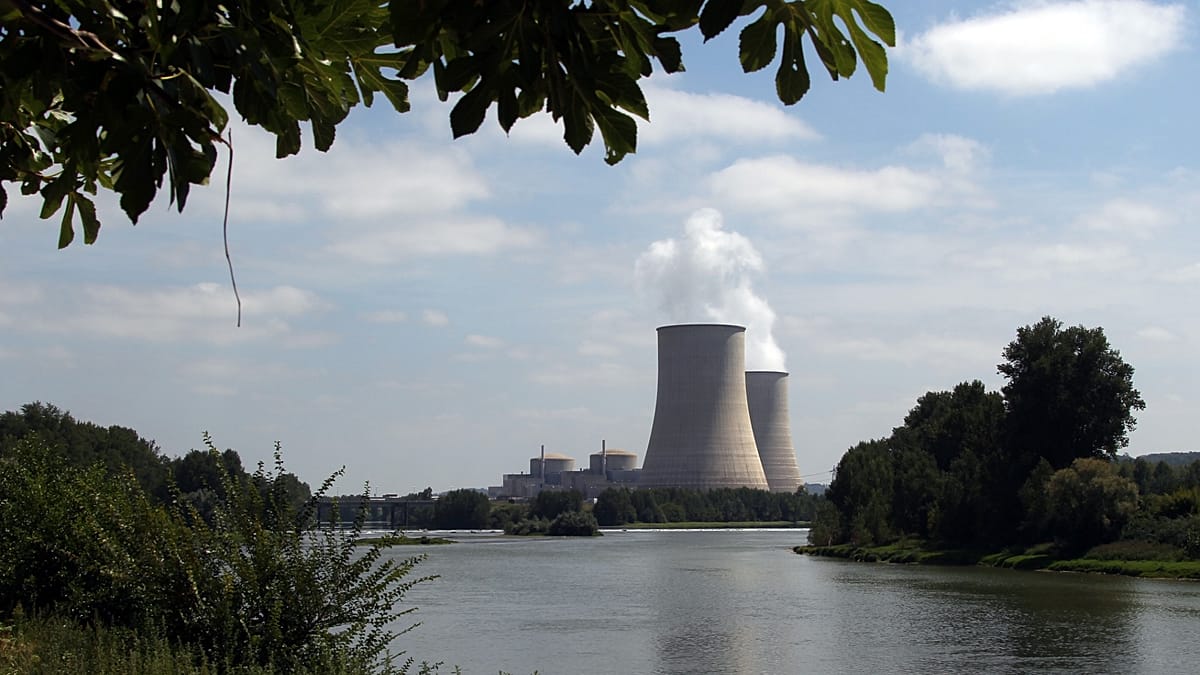
France's nuclear fleet, which supplies about 70% of the country's electricity, suffered an unprecedented loss of capacity on Wednesday as a combination of extreme heat, drought and a jellyfish invasion forced reactors offline. According to calculations by AFP based on data from the state-owned utility EDF, 20.4% of generating capacity was unavailable—the highest such figure since records began in 2015.
Between 9:45 and 10:00 in the morning, EDF recorded a new peak in outages attributed to “environmental constraints” or “external environmental causes.” In total, 13 of the 57 reactors in the fleet were affected: eight were completely shut down, while five operated at reduced output.
The most dramatic disruption occurred at the Gravelines nuclear power plant on the North Sea coast, the largest in Western Europe. Five of its six reactors were either fully or partially taken offline after a swarm of jellyfish clogged the seawater intake pumps used for cooling. The sixth reactor continued to operate normally.
Experts point to a combination of overfishing, plastic pollution and rising sea temperatures linked to climate change as factors that have allowed jellyfish populations to thrive and reproduce in coastal waters. The incident at Gravelines is not isolated—similar jellyfish-related shutdowns have occurred at other coastal plants in recent years.
Heat and drought strain inland reactors
Beyond the coast, the other outages were tied to the severe heatwaves and drought that have gripped much of France this summer. Inland reactors rely on river water for cooling, and when river levels drop or water temperatures rise too high, EDF is forced to reduce output or halt production altogether. The operator must also avoid discharging chemical or radioactive effluents or returning water to rivers at temperatures that could harm aquatic life.
These environmental constraints are becoming more frequent. Earlier this summer, water restrictions were imposed across nearly 70% of French territory as drought conditions worsened. The current heatwave, which has pushed temperatures above 40°C in some regions, has only exacerbated the pressure on the nuclear fleet.
The record outage comes at a delicate time for France's energy supply. With many reactors already offline for maintenance or refuelling, the additional environmental shutdowns have reduced the margin of spare capacity. EDF has been working to restart reactors that were closed for corrosion inspections, but the summer's weather has complicated those efforts.
France is not alone in facing these challenges. Across Europe, nuclear plants are increasingly vulnerable to the effects of climate change. In Hungary, the Paks plant recently restarted a turbine after the Danube rose, but low river levels had earlier forced output cuts. The situation highlights a broader tension: nuclear power is often seen as a low-carbon solution, yet it is itself exposed to the impacts of a warming world.
For now, EDF has not indicated when full capacity at Gravelines will be restored. The jellyfish swarm may disperse with changing currents, but the underlying conditions that attract them—warmer seas and disrupted ecosystems—are likely to persist. As heatwaves become more frequent and intense, French nuclear operators will need to adapt, whether through better cooling systems, more resilient intake designs, or a greater reliance on other energy sources during peak summer months.
The record outage is a stark reminder that even the most advanced energy infrastructure is not immune to the forces of nature. For a country that has staked its energy independence on nuclear power, the challenge is to ensure that the fleet can withstand the very climate pressures it is meant to help mitigate.