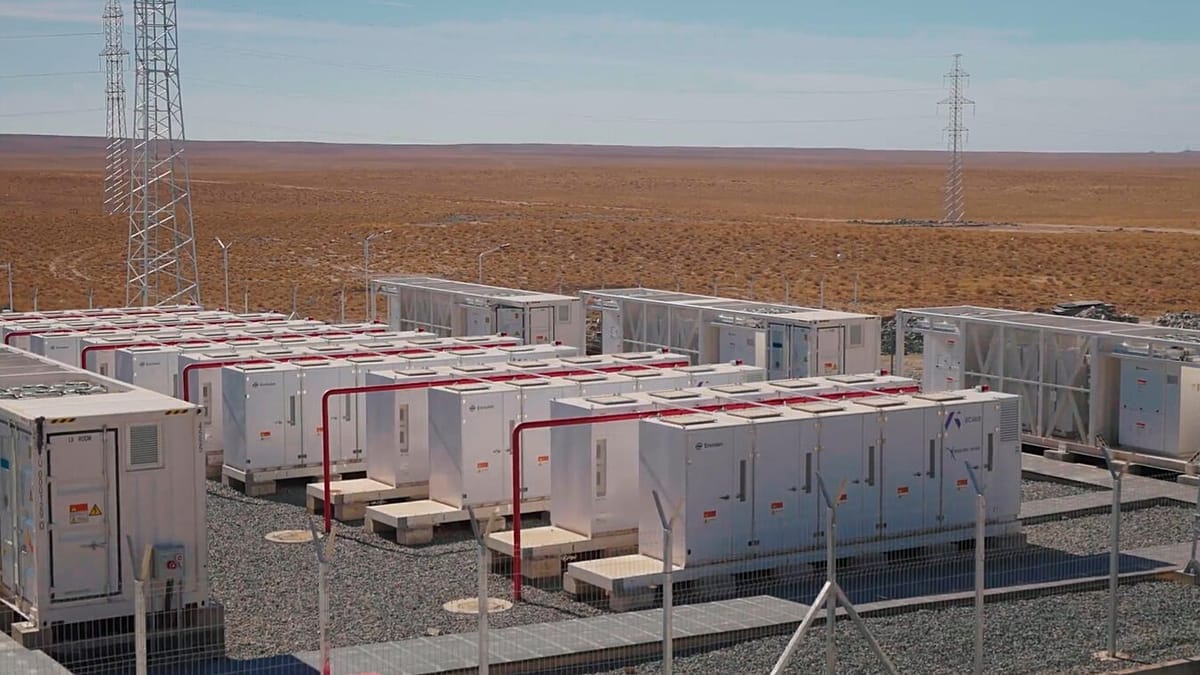
In the arid expanse of Karakalpakstan, an autonomous republic in northwestern Uzbekistan, a new energy project is taking shape that could set a benchmark for the entire region. The Nukus 2 wind farm, developed by Saudi Arabia's ACWA Power, is on the verge of becoming Central Asia's first facility to combine utility-scale wind generation with large-scale battery storage. Once fully commissioned, it will not only supply clean electricity to hundreds of thousands of people but also demonstrate how storage can stabilise grids increasingly reliant on intermittent renewables.
The project, valued at €232 million ($260 million), has reached 94.2% completion, according to an update released on 26 October. Of the 26 turbines, 25 are already generating power and feeding Uzbekistan's national grid. The remaining work centres on the battery system, which is undergoing rigorous safety and fire-protection checks before it can be fully integrated. Project director Sardorbek Mahmudov explained that commissioning the storage component involves additional layers of testing, carried out in stages to ensure reliability.
Balancing supply and demand
The core challenge that Nukus 2 addresses is one familiar to grid operators across Europe and beyond: how to match electricity supply, which fluctuates with weather conditions, with consumer demand, which follows its own daily and seasonal rhythms. Battery storage offers a flexible solution, absorbing excess power when generation outstrips demand and releasing it when the wind drops or consumption spikes. At Nukus 2, the 100-megawatt-hour battery system is designed to provide short-term support, with Mahmudov estimating it can supply electricity for "three to four hours" depending on the load drawn.
The facility also includes a new 44-kilometre transmission line and upgrades to existing infrastructure, connecting it to Uzbekistan's national grid. Once fully operational, the wind farm is expected to generate nearly 728,000 megawatt-hours of electricity annually, enough to meet the needs of more than 300,000 people, according to the Asian Development Bank (ADB), which is a key financier.
The importance of storage extends far beyond Central Asia. According to the International Energy Agency (IEA), global installations of new battery storage capacity reached 108 gigawatts in 2025, a 40% increase year-on-year. Europe is experiencing a similar shift: although overall battery installations dipped slightly, large-scale storage additions more than doubled in 2025, reaching approximately 4.6 gigawatts. This trend underscores the growing recognition that renewables need robust storage to replace fossil fuels reliably.
International financing and long-term commitment
The Nukus 2 project is being implemented through ACWA Beruniy Wind, a local subsidiary of the Saudi developer. In September 2025, the ADB and a fund it administers signed a loan package worth approximately €46 million ($51 million). Other lenders include the Asian Infrastructure Investment Bank (AIIB), Dutch development bank FMO, Standard Chartered, and Saudi EXIM. The AIIB has separately approved around €67 million ($75 million) in financing. The ADB also provided a government-backed credit guarantee to reduce financial risks and encourage competitive bidding.
The investment operates under a 25-year power purchase agreement signed in March 2024, following a competitive tender. Under this agreement, Uzbekistan's national grid operator will purchase all electricity generated by the wind farm, providing a stable revenue stream and a clear commercial framework for the project.
Abdulatif Matkarimov, an ADB portfolio manager, noted that the bank has been supporting Uzbekistan's renewable energy development since an earlier project in Navoi. "In total, there are around ten projects in this sector," he said, referring to wind and solar generation. This pipeline reflects Uzbekistan's broader ambitions to diversify its energy mix and reduce reliance on fossil fuels.
Local impact and employment
Beyond its technical significance, the project has created substantial employment opportunities in Karakalpakstan. Between 750 and 800 people worked on the construction, including more than 400 local workers and specialists. Mahmudov highlighted that "local specialists are now taking on management roles in projects of this scale," a sign of growing local expertise. Tarana Jafarova, the project's social manager, said recruitment from nearby communities was intended to support local incomes and livelihoods. She also described procedures for addressing complaints and compensating people affected by construction.
Environmental assessments have identified potential impacts on land use and wildlife, requiring mitigation and monitoring measures. The developer aims to complete commissioning of the battery system by the end of November 2026, bringing the entire facility into full operation. As Central Asia's first wind-plus-storage plant, Nukus 2 could serve as a model for other countries in the region, including those in the Balkans and Eastern Europe, where similar challenges and opportunities exist. The project also aligns with broader European efforts to accelerate the energy transition, as highlighted by the UN climate chief's warning that global warming is now a health emergency on a pandemic scale.
Uzbekistan's progress in renewable energy is part of a wider transformation. The country has seen its poverty rate drop sharply as wages and jobs expand, and it is investing in ambitious infrastructure projects like New Tashkent, a city for two million people. These developments, coupled with the Nukus 2 wind farm, signal a nation eager to modernise and integrate with global markets. For European investors and policymakers, Central Asia's energy transition offers both opportunities and lessons, as the continent itself grapples with the complexities of integrating renewables at scale.