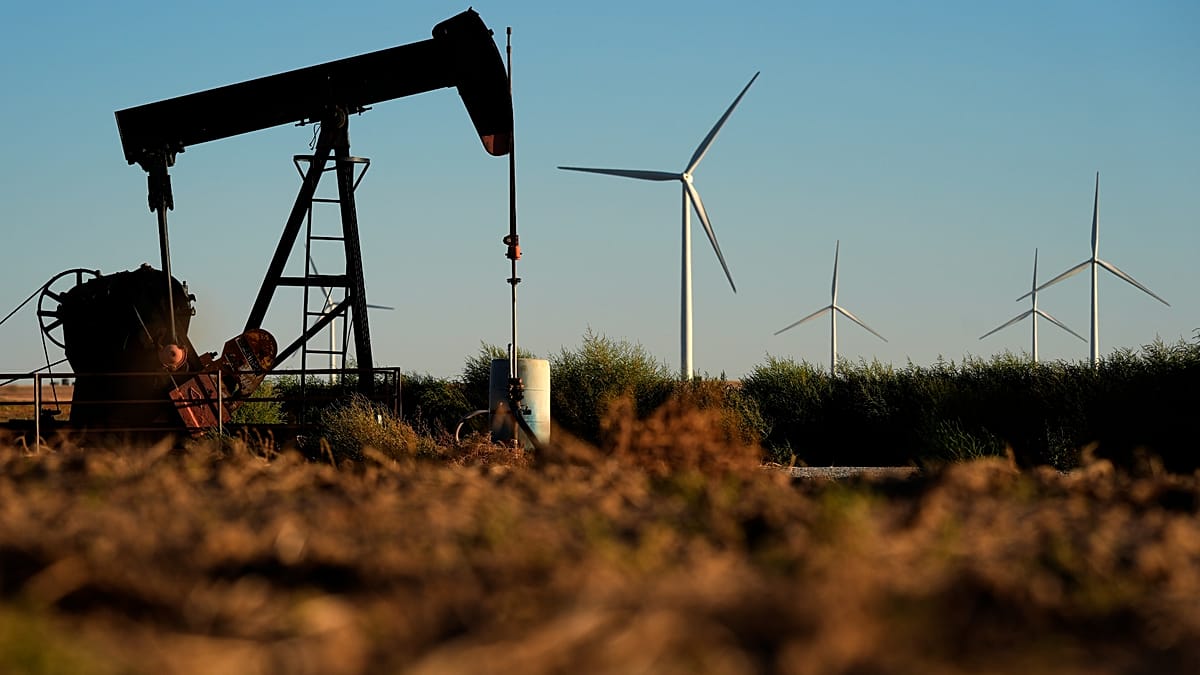
For the first time in years, the global outlook for fossil fuel emissions offers a glimmer of hope: the 2026 Global Carbon Budget projects a 0.4 per cent decline in CO2 emissions from fossil fuels. Yet climate scientists are far from celebrating, warning that this dip is not the structural shift needed to secure a sustainable future.
The anticipated drop is largely attributed to the expansion of renewables and the energy crisis triggered by the Iran war, which has curbed oil consumption. Emissions from oil are projected to fall by 1.9 per cent, while natural gas emissions are set to decline by 0.3 per cent. Coal, however, is expected to rise by 0.6 per cent, a short-term response to the energy shock.
Professor Pierre Friedlingstein, director of the Global Carbon Budget Office at the University of Exeter and lead author of the study, cautions: “A decline in fossil CO2 emissions is encouraging, but a reduction driven partly by geopolitical shocks is not a sustainable climate solution.”
The report, which tracks progress towards the Paris Agreement goals, reveals that the dip in fossil fuel emissions is offset by a rise in emissions from land-use change, such as deforestation. Total CO2 emissions are projected to reach 43.3 billion tonnes this year, up from 42.8 billion in 2025.
Regional disparities and the road ahead
Among major emitters, the European Union is expected to see the steepest decline at 1.5 per cent, followed by the United States at 1.3 per cent, largely due to a drop in coal emissions. Japan’s emissions are set to fall by one per cent, while China is projected to see a 0.9 per cent reduction thanks to strong growth in renewable electricity and a steep decline in oil emissions.
India bucks the trend with a projected 4.4 per cent rise, exceeding its average annual growth of 3.5 per cent over the past decade. The rest of the world is expected to see a 0.7 per cent fall, driven by higher oil prices and supply constraints.
The report emphasises that decarbonisation does not have to come at the expense of economic growth. In 2025, 59 countries managed to reduce emissions while growing their economies, a point that resonates as COP31 gets underway in Antalya.
Clean technologies are making inroads, with solar, wind, and electric vehicles meeting two-thirds of this year’s rise in global energy demand. The authors project that between now and the end of 2028, 64 to 79 per cent of emissions from new demand will be offset by these technologies.
However, the pace is still too slow. The remaining carbon budget for a 1.5°C warming limit is now 150 billion tonnes, equivalent to less than four years of emissions at current rates. Glen Peters, research professor at the CICERO Center for International Climate Research and a member of the report’s team, warns: “A drop in emissions in one year is not a peak unless it is driven by structural change.”
At COP31, host Türkiye is pushing its ‘35-by-35’ target, aiming to raise the share of global energy demand met by electricity to 35 per cent by 2035, up from around 20 per cent. Critics argue that this target must be met using clean energy to be meaningful.
The report also highlights the role of land-use emissions, which are projected to rise to 5.1 billion tonnes, driven by peat fires and forest degradation in Southeast Asia linked to El Niño. Reforestation offsets only about half of permanent deforestation, and novel carbon dioxide removal currently offsets less than 30 minutes of annual fossil emissions.
Despite the challenges, the authors remain cautiously optimistic: if the rollout of clean technology continues to accelerate, “a sustained peak and decline in global CO2 emissions could be a few years away.” For now, the dip in 2026 is a reminder that progress is possible, but not yet assured.