In the waters of Greece's Thermaic Gulf, a quiet conservation effort is giving vulnerable ray species a fighting chance. The Thermaikos Biodiversity Project, based in Halkidiki, has successfully hatched newborn rays from eggs that would otherwise have been lost to the sea, and released them back into their natural habitat.
The initiative addresses a little-known consequence of commercial fishing: when a female ray is accidentally caught in a trawler's net, the stress can cause her to expel her eggs prematurely. These eggs, often scattered on the seabed, rarely survive without the protection of their mother's body. The project's team, working with local fishermen, collects these eggs and transfers them to a specially designed aquarium at the Sani hotel on the Kassandra peninsula.
There, under the watchful eye of scientific coordinator João Bernardo and his colleagues, the eggs are kept in conditions that mimic the surrounding Aegean Sea—temperature, salinity, and light are all carefully regulated. The goal is to replicate the natural environment as closely as possible, giving the embryos the best chance of developing and hatching successfully.
"The eggs arrive with no guarantee of survival," Bernardo explains. "Our role is to provide a stable environment until they hatch, and then to prepare the young rays for their return to the wild."
The project, which began five years ago as a dolphin-monitoring programme, has expanded its scope to include the protection of other marine species. It now operates under the umbrella of iSea, an environmental organisation dedicated to safeguarding aquatic ecosystems. The collaboration extends to the Lamna Institute in Valencia, which assists with scientific monitoring of the hatched rays.
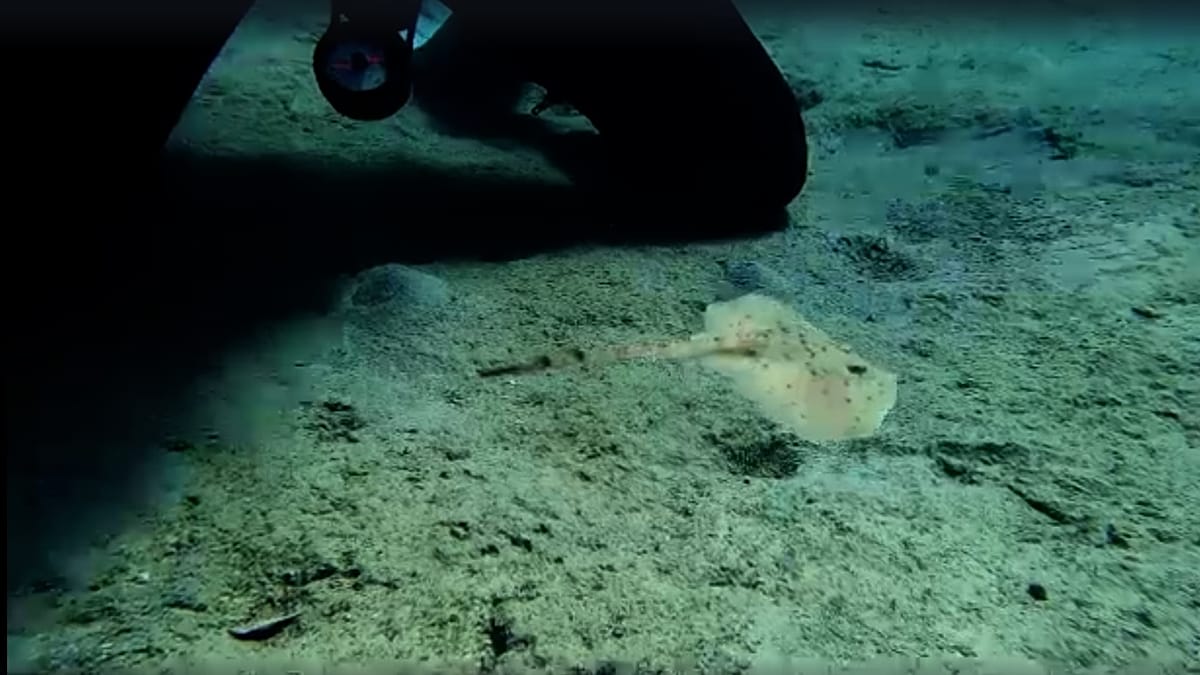
Once the newborn rays are strong enough, they are released into the Thermaic Gulf with the help of divers from iSea. The release takes place at a specific depth, where water temperature and quality closely match the conditions the rays experienced in the aquarium. This careful transition is crucial, as the young animals must adapt quickly to the open sea.
"The first swim is a milestone," says Bernardo. "It marks the beginning of their independent life, but survival in the wild is never guaranteed. They still face predators, changing conditions, and the ever-present threat of fishing nets."
Rays are among the most threatened groups of fish globally, and their decline has cascading effects on marine ecosystems. In Greece, nearly half of all ray species are listed as at risk of extinction on the national Red List, with by-catch—the accidental capture of non-target species—being the primary driver.
The Thermaikos project is part of a broader effort to restore these populations. So far, two Kalkanovatos rays have hatched and been released in 2026, and several more eggs are currently under observation. The team hopes that each successful release contributes to the long-term viability of the species in the northern Aegean.
"Every individual matters," Bernardo emphasises. "Each ray that survives to adulthood can reproduce and help maintain the population. It's a small step, but it's a necessary one."
The project's work is a reminder of the delicate balance between human activity and marine life. As fishing continues to put pressure on vulnerable species, initiatives like this offer a practical, science-based approach to mitigating the damage. For the newborn rays of the Thermaic Gulf, the journey has just begun—but for the first time, they have a real chance to complete it.