The COP31 climate conference opened in Antalya, Türkiye, with a Leaders' Summit that was meant to set the tone for two weeks of negotiations. But several of Europe's most prominent heads of government are notably absent, raising questions about the bloc's commitment to global climate diplomacy.
German Chancellor Friedrich Merz, French President Emmanuel Macron, Italian Prime Minister Giorgia Meloni, and Spanish Prime Minister Pedro Sánchez have all skipped the two-day gathering. Their absence is more than symbolic, according to Chiara Martinelli, Director of Climate Action Network Europe. “They are missing more than just a photo opportunity,” she said. “Their absence will not stop the negotiations, but it puts even more responsibility on the ministers and negotiators who are here to show that Europe and other developed countries are serious about delivery.”
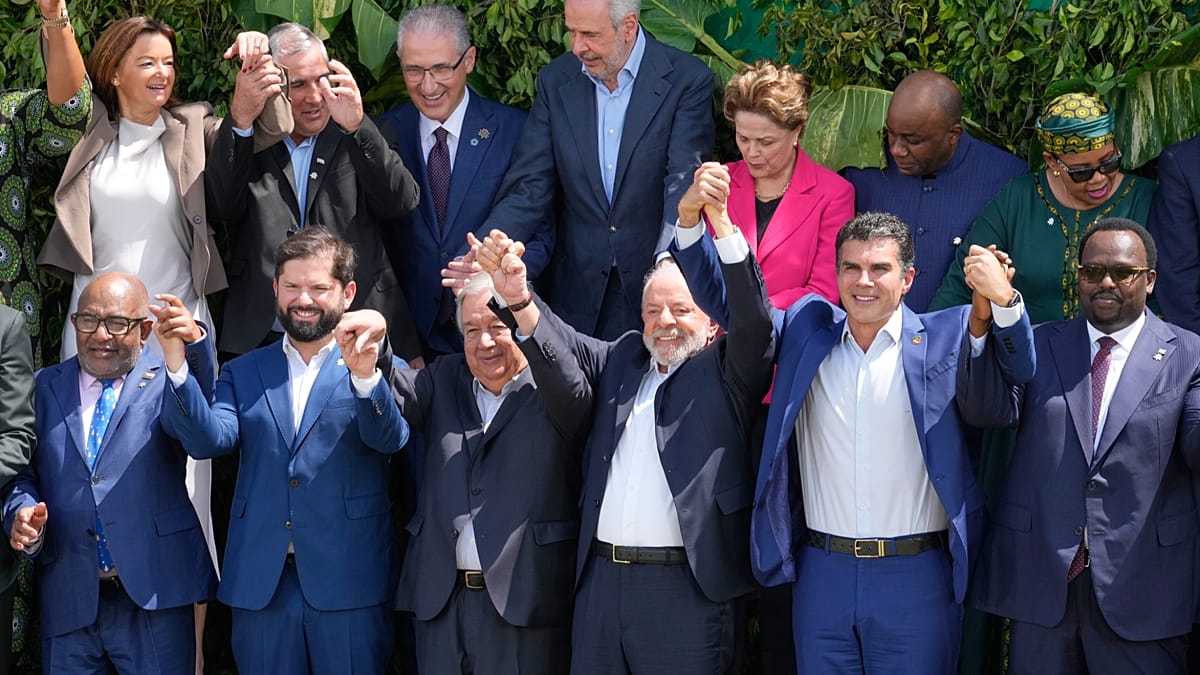
The Leaders' Summit is traditionally the moment when heads of state meet privately, form coalitions, and outline their negotiating positions before the detailed talks that stretch into next week. The 'family photo' and speeches are the public face, but the real work happens behind closed doors. With Macron, Merz, Meloni, and Sánchez absent, the EU's political weight at the summit is diminished.
Why are they skipping?
No official reasons have been given, but competing domestic and international priorities are likely at play. Macron faces ongoing political turbulence at home, while Merz is navigating coalition tensions in Berlin. Meloni's agenda is dominated by migration and economic issues, and Sánchez has been dealing with the aftermath of severe flooding in Spain. Yet critics argue that these are precisely the moments when leadership is needed.
“If top leaders want influence over where the global transition is going, showing up is a pretty good place to start,” Martinelli added.
The EU is still represented at the highest level by European Commission President Ursula von der Leyen, who is scheduled to speak today. But the absence of the bloc's largest member states sends a signal that climate action is not a top-tier political priority.
COP31's focus: from targets to action
Türkiye and Australia are co-hosting this year's COP. Türkiye's environment minister, Murat Kurum, who will preside over the summit, has said he wants COP31 to shift the focus from setting new targets to implementing existing commitments. Electrification and waste reduction are expected to be key themes, with many EU countries pushing for a stronger role for renewables and a clear transition away from fossil fuels.
The absence of several EU leaders also comes as Brussels this week published a report assessing member states' progress toward their 2030 emissions reduction goals. The European Commission found that Italy, Croatia, and Cyprus have already exceeded their interim targets for 2021–2025, but nine countries—Austria, Germany, Ireland, Lithuania, Malta, Sweden, and others—are at risk of missing their 2030 targets. The Commission has asked each of these nine to submit corrective action plans within three months.
European Climate Commissioner Wopke Hoekstra will write to the nine governments, urging them to accelerate emission reduction measures and investments. The EU's overall net greenhouse gas emissions fell by 1.6% last year, leaving the bloc 39% below 1990 levels. The EU has committed to a 90% cut by 2040 and net-zero by 2050, but environmental groups accuse Brussels of backsliding on its own ambitions.
The absence of key leaders at COP31 is likely to fuel that criticism. While negotiators and ministers will still work on the final text, the lack of high-level political engagement weakens the EU's ability to shape the global agenda. As Martinelli put it, “showing up is a pretty good place to start.”
Meanwhile, the United States is absent for the second consecutive year, following President Donald Trump's withdrawal from the Paris Agreement. However, a delegation of 19 Democratic congress members made a last-minute decision to attend, led by the Sustainable Energy and Environment Coalition (SEEC) Institute. They aim to explore opportunities for renewed US engagement on climate, energy, and economic policy.
For Europe, the challenge is clear: if it wants to lead by example, it must show up—not just with negotiators, but with its leaders.