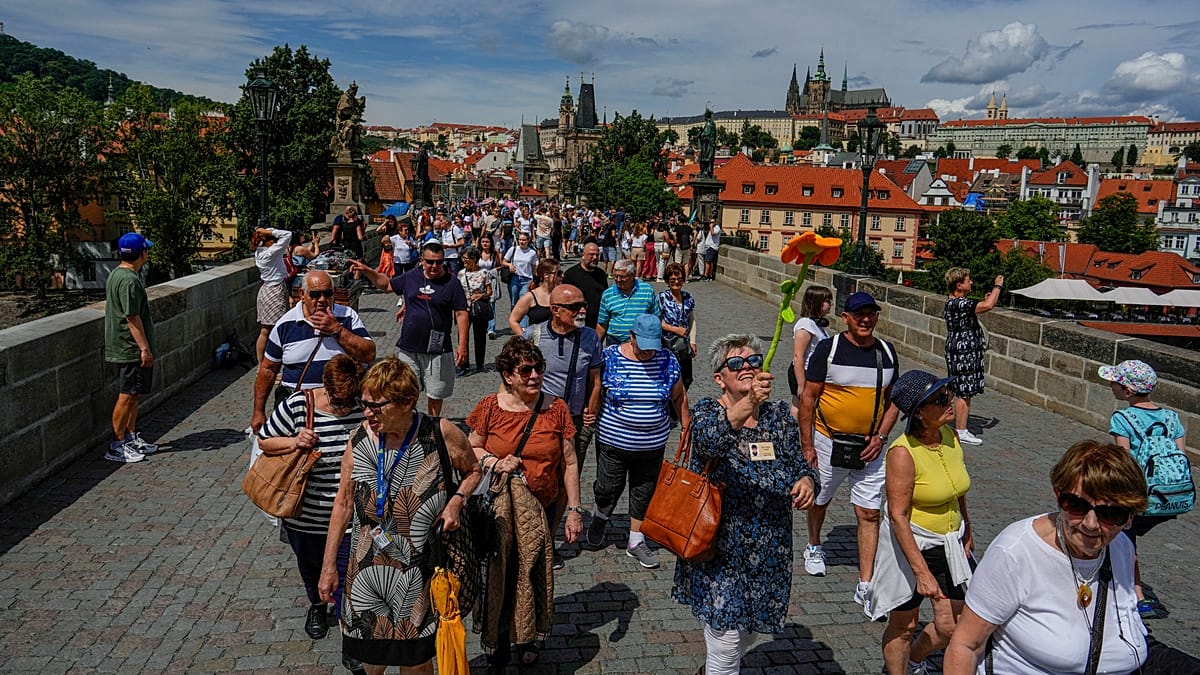
As Europe braces for yet another spell of extreme heat, tourist guides are speaking out about the dangers they face working long hours under a scorching sun. From the sun-baked ruins of Rome to the medieval streets of Lyon, guides say they are on the front line of a climate crisis that is turning their profession into a health hazard.
Last summer, Giovanna Maria Giammarino, a 56-year-old Italian guide, collapsed and died while leading a tour of the Colosseum in Rome in blistering heat. Her death prompted Italian guide associations, including Federagit and AGTA, to call for reforms such as updated summer protocols for cultural tourism. Yet little has changed, and the problem extends far beyond Italy.
No shade, no escape
Gabriel Quentin-Gerbault, a French guide based near Lyon, describes the reality of working in such conditions. "This afternoon, we went to Pérouges, a small medieval town northeast of Lyon, and it's more than 40°C in the sun. It's quite complicated," he says. Standing for hours in archaeological sites with no shade or leading city tours in temperatures of at least 30°C is now routine during the peak season.
For self-employed guides, the option to cancel or postpone a visit due to heat exists in theory, but in practice it is rarely feasible. "Most of the time, we work for an agency, a tour operator, or a cruise line. They are the ones who choose, very clearly. And most of the time it's not canceled, but it happens," Gabriel explains. Instead, some of his colleagues have successfully requested modifications, such as swapping a bike tour for a bus tour or replacing a walking tour with a visit to an air-conditioned museum.
These adjustments are not just about guide comfort. Gabriel notes that many of his clients are over 60 and struggle with the heat. "It's also in the interest of the visitors," he says.
Cooler hours, better infrastructure
Themis Halvantzi-Stringer, head of training for the European Federation of Tourist Guide Associations, which represents around 60,000 professional guides, argues that sites should adapt their opening hours. "In Greece, a lot of museums and open-air sites open very early in the morning and remain open until 8 or 9 o'clock in the evening. So people can visit at times which are more comfortable rather than in the midday sun," she says. Halvantzi-Stringer, who is based in London, also urges venues to provide shaded waiting areas, distribute water, and install misters to cool visitors down.
Such measures are becoming increasingly urgent as Europe faces more frequent and intense heatwaves. The UK, for instance, is on track for its hottest summer on record, while France is already grappling with drought and new heat alerts. The economic toll is also mounting: one estimate suggests Europe's heatwaves could erase €180bn from EU GDP this year.
For guides, the risks are not just physical. The pressure to deliver a memorable experience while managing heat-related health risks for themselves and their groups is immense. "We are the ones who have to keep everyone safe, but we are also the ones most exposed," says Gabriel.
Some solutions are simple: more public water fountains, more shade, and more flexibility in scheduling. Others require a shift in mindset. Halvantzi-Stringer suggests that visitors themselves could consider traveling in May or September, when temperatures are more bearable, rather than at the height of summer.
As the climate continues to change, the tourism industry must adapt. The death of Giovanna Maria Giammarino was a wake-up call, but without concrete action, guides across Europe fear more tragedies. As Gabriel puts it, "We cannot keep pretending that a 40°C day is normal."