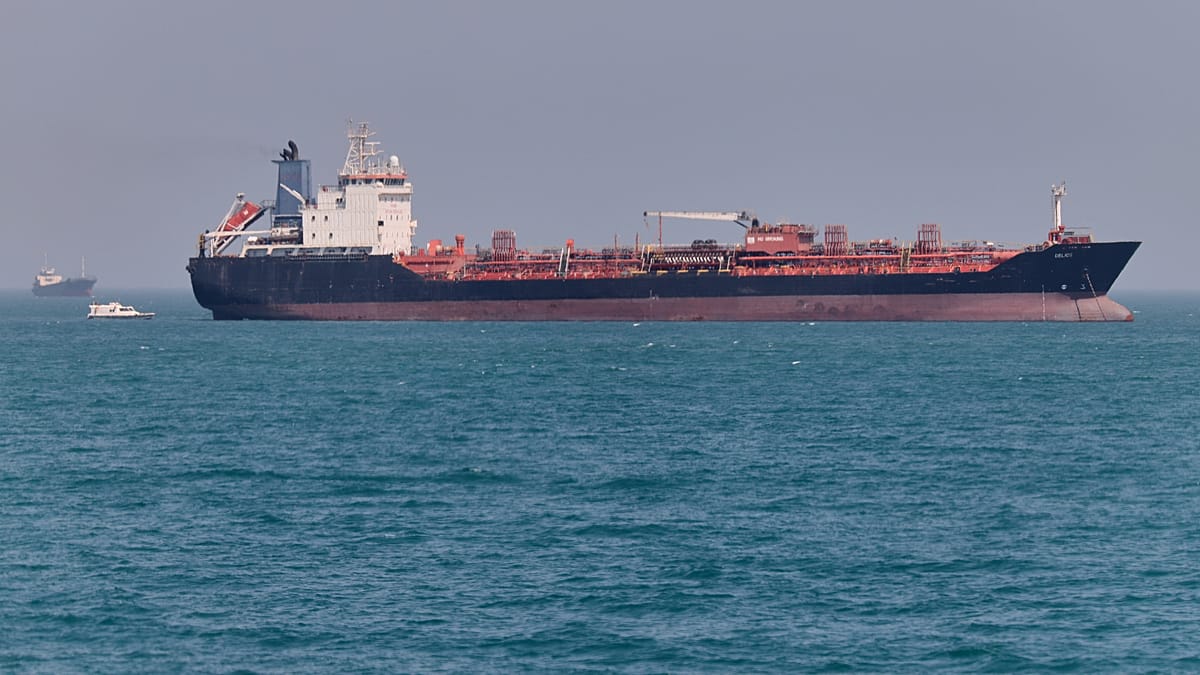
Crude oil exports from the Middle East Gulf region, excluding Iran, have returned to pre-war levels in September, according to maritime data firm Kpler, despite continued attacks on shipping in the Strait of Hormuz. The recovery is largely due to a shift in export routes, with pipelines in Saudi Arabia and the United Arab Emirates playing a crucial role.
Kpler reported that at least 16.5 million barrels per day (mbd) left the region between 1 and 28 September, matching the pre-war average when Iran is excluded. That figure is 10.5 mbd above March's monthly average, reflecting a significant rebound in flows.
However, the composition of these exports has changed. Around 40% of the crude now bypasses the Strait of Hormuz, compared with just 17% before the conflict. The Saudi East–West pipeline, which connects eastern oil fields to the Red Sea terminal at Yanbu, and the UAE's pipeline from Abu Dhabi to Fujairah on the Gulf of Oman, have become key alternative routes. Most of the crude that still transits the strait is transferred between tankers offshore.
Pipelines and Red Sea routes
The figures, which cover crude oil and condensate, also include shipments via the Red Sea. Exporters have increasingly turned to this route to avoid Iran's attempted blockade of Hormuz, a waterway that previously carried around a fifth of the world's oil supplies.
The Saudi pipeline was shut down on 11 September after strikes launched from Iraq, but resumed operations on 22 September, according to Kpler analyst Amena Bakr. The UAE's pipeline, which links Abu Dhabi's oil fields to Fujairah, has also been operating at full capacity.
Despite the recovery in export volumes, oil prices remain well above their pre-war levels. International benchmark Brent crude futures for December delivery traded at $102.25 a barrel on Monday morning, while US benchmark West Texas Intermediate was at $90.50. Brent futures were around $72 before the war. The disruption to shipping through the strait has sent shockwaves through the global economy, prompting countries to scramble for alternatives and sending fuel prices soaring.
Iran continues to claim control over the waterway, and ships travelling without its authorisation risk attack. Nevertheless, more vessels are getting through, and alternative routes are operating at full capacity. Experts warn that conditions remain far from normal, and a US blockade of Iranian ports continues to restrict a large share of Iran's own oil exports.
The recovery in exports comes as the seven core members of OPEC+, which includes Russia, agreed on Sunday to leave their production targets unchanged for November, in line with expectations. The seven countries produced about 25 million barrels of crude oil a day in August, up 630,000 barrels a day from July, according to OPEC's September report.
For European buyers, the situation remains precarious. The persistent risks in the Strait of Hormuz continue to threaten supply chains, and the impact on fuel prices is being felt across the continent, from Bulgaria to Germany. The US military buildup in the region underscores the ongoing tensions.
While the return to pre-war export levels is a positive sign for global markets, analysts caution that the underlying vulnerabilities remain. The reliance on pipelines and Red Sea routes, the threat of attacks, and the political instability in the region all mean that the situation could change quickly. For now, the oil is flowing, but the path to normalcy is far from secure.