Beijing has opened an anti-dumping investigation into a chemical imported from the European Union, a move that lands less than a week before the bloc's trade commissioner arrives in the Chinese capital for talks aimed at defusing a growing trade dispute.
China's commerce ministry announced on Saturday that it would examine whether low-priced p-nitrotoluene from the EU was flooding the Chinese market. A spokesperson said domestic producers had requested the probe, complaining of "damage to production and operations." The chemical is used in the manufacture of dyes, pharmaceuticals, and pesticides, and the investigation is expected to conclude within twelve months, with a possible six-month extension.
The move follows an EU investigation, opened in September, into polyvinyl chloride imports from several countries, including China. Beijing denies that its manufacturers owe their competitiveness to state support and has threatened countermeasures against EU actions that restrict Chinese firms.
"China has repeatedly reiterated that the EU needs to face its own economic and trade problems directly and resolve mutual concerns through dialogue and consultation," the commerce ministry spokesperson said.
What is dumping?
Dumping occurs when a company exports a product at a price lower than it charges in its home market, or below the cost of production. Under World Trade Organization rules, an importing country can impose extra tariffs—known as anti-dumping duties—if an investigation finds that the cheap imports have injured domestic producers.
Brussels has been reaching for this tool far more frequently. European Commission President Ursula von der Leyen said in August that the EU had opened thirty trade defence investigations in a year, nearly triple the usual rate, as Chinese imports rose 45% in five years.
Sefčovič heads to Beijing
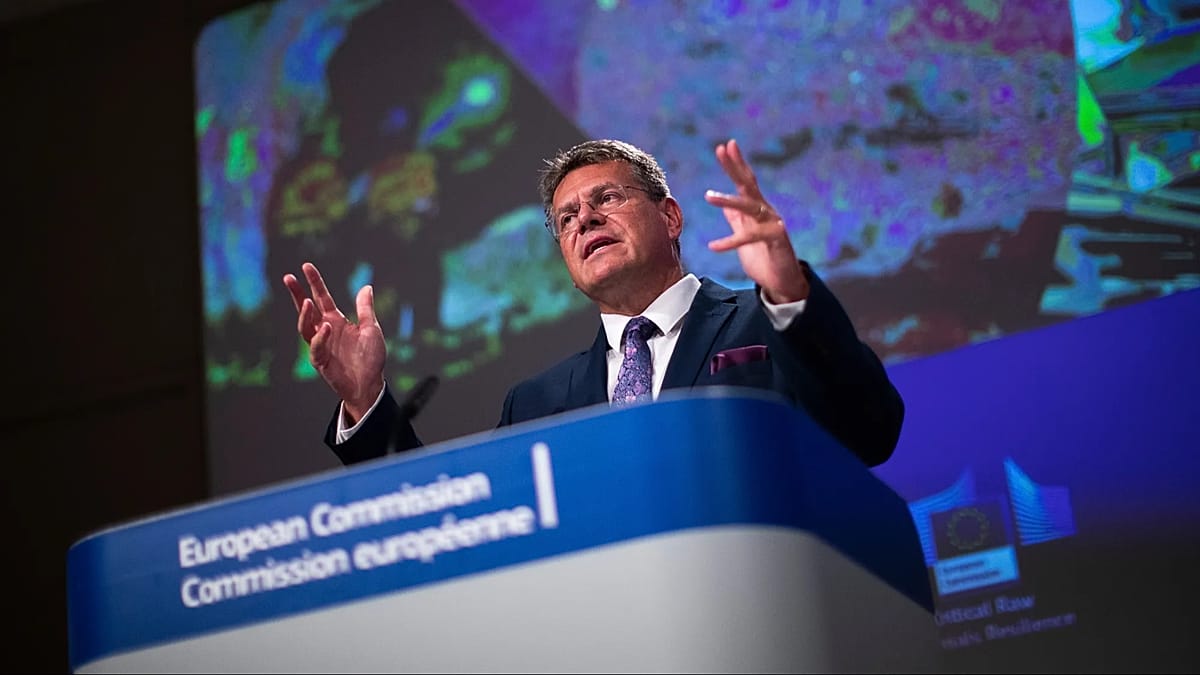
EU Trade Commissioner Maroš Sefčovič will be in Beijing on 8–9 October to co-chair a session of the EU-China Trade and Investment Council and meet Commerce Minister Wang Wentao. The visit marks the deadline Brussels set in June for the first tangible results from its dialogue with Beijing.
Brussels wants assurances that China will curb exports to the EU and extend a truce on rare earth exports, with the bloc's trade deficit running at €1 billion a day. Beijing has already warned it would respond firmly to any new EU restrictions on Chinese companies or products.
In an exclusive interview with Euronews last month, Sefčovič described the talks as highly political and said negotiations had to produce concrete results. Without them, he warned, there would be "a strong political movement to push for, I would say, harsher measures."
The escalating tit-for-tat comes as the EU seeks to balance its economic interests with growing political pressure to reduce dependence on Chinese supply chains. The bloc has also been convening emergency energy talks and addressing other strategic vulnerabilities, while member states like Hungary and Ukraine are navigating their own bilateral issues that could affect EU enlargement.
Analysts note that the chemical probe is relatively small in scale, but it signals Beijing's willingness to use trade defence instruments as leverage in broader negotiations. The EU, for its part, has been weighing how to engage with China in emerging sectors while protecting its own industries.
With the deadline for tangible results looming, all eyes are on Sefčovič's meetings in Beijing. Whether the two sides can move beyond rhetoric and find common ground remains uncertain, but the stakes are high for both economies.