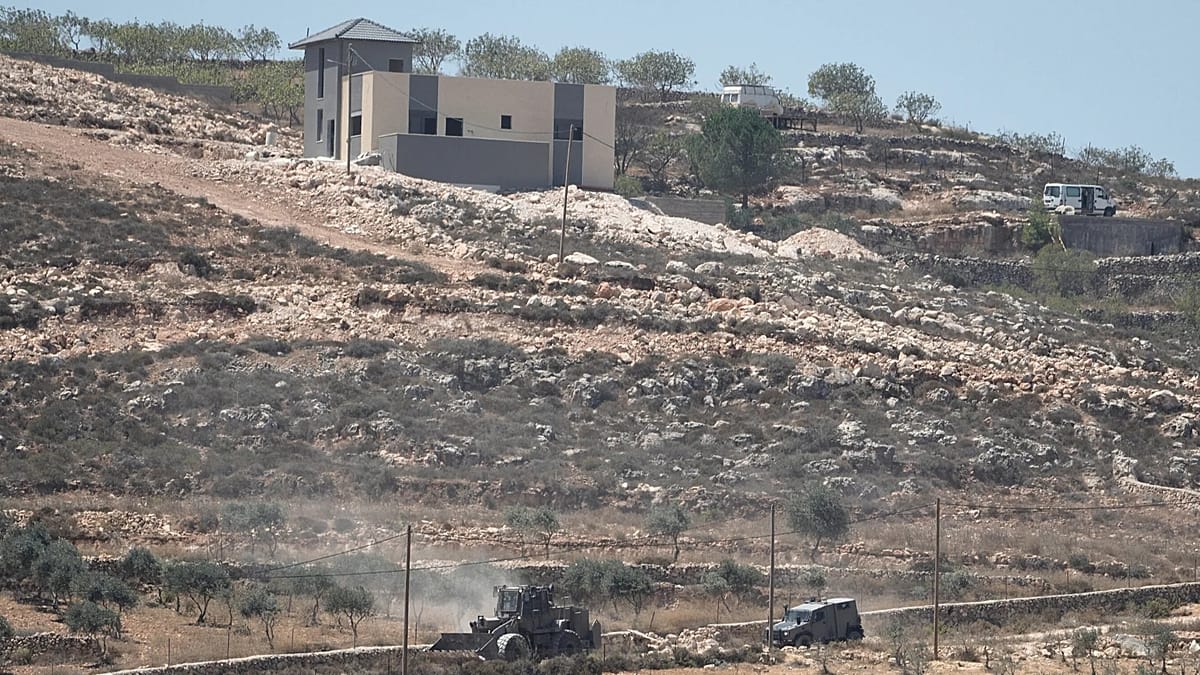
Twelve countries, including the United Kingdom and France, announced on Tuesday a coordinated set of trade sanctions targeting Israeli settlements in the occupied West Bank. The move comes amid what the nations describe as a "rapidly deteriorating" situation, marked by a surge in settler attacks against Palestinians and continued expansion of settlements.
In a joint statement, the foreign ministers of Canada, Denmark, Finland, Iceland, Ireland, Norway, Poland, Portugal, Spain, Sweden, the UK, and France confirmed plans to introduce restrictions on trade with settlements. The statement said Israel's actions in the West Bank are "undermining the possibility of a two-State solution," citing "unprecedented levels of settler violence and settlement expansion."
"Together, we are resolute: the two-state solution must be protected, and we will take action in pursuit of a just and lasting peace," the ministers declared.
Background to the sanctions
The announcement follows the Israeli government's decision last month to open tenders for the construction of around 1,200 housing units in the West Bank, a move that drew widespread international condemnation. The planned units, located in the E1 settlement area, would further isolate East Jerusalem from the rest of the territory. The twelve foreign ministers called the tender decision "unacceptable."
British Prime Minister Andy Burnham, French President Emmanuel Macron, and Canadian Prime Minister Mark Carney "have agreed on the need to take action to prevent further damage," the statement added.
Speaking to parliament on Tuesday, British Foreign Secretary Ed Miliband accused "settler terrorists" of "ethnic cleansing" in parts of the West Bank, alleging that the Israeli government had often "turned a blind eye to this." He announced that the UK would immediately implement an "import ban on goods from illegal settlements in the occupied territories."
"I do not believe the British people want us supporting the occupation by accepting products from settlements in our shops and supermarkets," Miliband told MPs.
In a post on X, French Foreign Minister Jean-Noël Barrot said Paris had decided to enforce the sanctions because the West Bank was "on the brink of explosion." He cited "unchecked expansion of settlements in violation of international law, a surge in violence committed by extremist settlers against Palestinians, and acts of terror condemned by the Israeli authorities themselves."
Israel's response
Israeli Foreign Minister Gideon Sa'ar ordered the closure of the British consulate in Jerusalem in response to the UK's actions, and sharply criticized Miliband's statement. "The accusations made today by the foreign secretary in the British Parliament were outrageous lies," Sa'ar said.
The West Bank has been under Israeli occupation since 1967, and violence has escalated since the start of the war in Gaza, which began after Hamas's attacks on Israel on 7 October 2023. According to a report from the Office of the United Nations High Commissioner for Human Rights, there were approximately 737,000 Israeli settlers in the West Bank, including East Jerusalem, as of October 2024.
The sanctions represent a significant step by European nations and Canada to exert economic pressure over settlement policy. The move also aligns with broader European concerns about the viability of a two-state solution, a cornerstone of EU foreign policy. The decision comes as the EU continues to navigate complex trade and diplomatic relationships in the region, as seen in debates over the ethical use of sanctions.
Observers note that the sanctions could have ripple effects on trade relations between the EU and Israel, and may further strain diplomatic ties. The UK's decision to ban imports from settlements is particularly notable, given its historical role in the region. The move also echoes similar actions by other European countries, such as Argentina's legal case against an Israeli firm, highlighting a broader trend of using legal and economic tools to address territorial disputes.
As the situation evolves, European leaders are likely to face pressure to expand sanctions or take additional measures. The joint statement underscores a collective resolve to protect the two-state solution, but the effectiveness of these measures remains to be seen. The coming weeks will reveal whether other nations follow suit, and how Israel responds to this coordinated diplomatic and economic pressure.