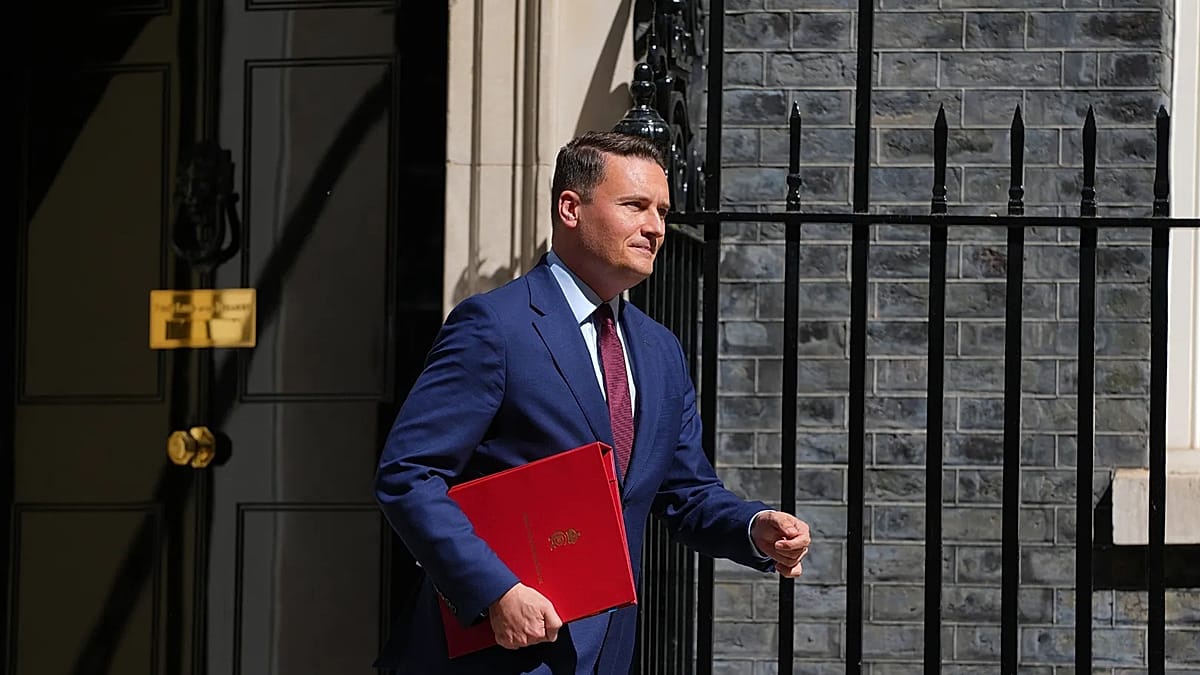
London – UK Health Secretary Wes Streeting resigned from Prime Minister Keir Starmer's cabinet on Thursday, marking the first cabinet-level departure amid growing pressure on Starmer to step down after Labour's poor performance in last week's local and regional elections.
Streeting, a prominent figure on the right of the Labour Party, is widely seen as a potential contender for the leadership. In his resignation letter, published on X, he wrote: "Where we need vision, we have a vacuum. Where we need direction, we have drift." He added that it was clear Starmer would not lead the party into the next general election and that Labour MPs and unions wanted a "battle of ideas, not of personalities or petty factionalism."
Labour's Internal Crisis Deepens
Starmer, who led Labour to a landslide victory in 2024, ending 14 years of Conservative rule, is now fighting to retain his position. Four junior ministers have already resigned, and over 80 Labour MPs have publicly called for him to step down. However, more than 100 lawmakers have urged him to stay, and Starmer has vowed to fight any leadership contest.
Angela Rayner, Starmer's former deputy prime minister, has positioned herself as a potential challenger. Rayner resigned from her cabinet role in September after an investigation found she breached the ministerial code over a property purchase. On Thursday, she announced that HM Revenue and Customs (HMRC) had cleared her of deliberate wrongdoing in a tax affair, removing a key obstacle to her leadership ambitions. "I welcome HMRC's conclusion, which has cleared me of any wrongdoing," she said in a statement. Media reports indicate she paid off £40,000 (€46,195) in outstanding tax.
Rayner, a left-wing figure popular with Labour's grassroots, has stopped short of calling for Starmer's resignation but urged him to "reflect" on his position. In a 1,000-word assessment of the party's electoral woes on Sunday, she wrote: "What we are doing isn't working, and it needs to change." She told the Guardian she would play "whatever role I can" to "deliver the change."
Under Labour Party rules, any challenger needs the support of 81 MPs—20% of the parliamentary party—to trigger a leadership contest. Streeting's resignation is expected to accelerate moves by potential candidates, including Rayner and Greater Manchester Mayor Andy Burnham, though Burnham is currently blocked as he does not hold a seat in Westminster. His supporters are pressing Starmer to set a detailed timetable for his departure to allow Burnham to stand.
The local elections last week were a severe blow to Labour, with the party losing control of the devolved Welsh parliament for the first time and failing to gain ground against the Scottish National Party (SNP) in Edinburgh. Hard-right Reform UK and the left-wing Greens made significant gains at Labour's expense, reflecting voter frustration with Starmer's 22 months in power.
Streeting, 43, is popular on the right of Labour but disliked by left-wing MPs who prefer Rayner or Burnham. His resignation letter explicitly criticized Starmer's leadership, stating: "It is now clear that you will not lead the Labour Party into the next general election." The move has intensified speculation about a leadership contest, with media widely reporting that Streeting is preparing to run for the top job.
Starmer has vowed to fight any challenge, pledging on Monday to do better and prove his doubters "wrong." However, the growing number of resignations and public calls for his departure suggest his position is increasingly precarious. The coming days will be critical as Labour MPs decide whether to trigger a formal leadership contest.
This crisis comes at a time when the UK faces significant challenges, including strained public services and economic pressures. The outcome of Labour's internal power struggle will have implications for the country's political direction and its relationship with the European Union. For more on the broader European context, see our analysis of how Farage's rise is shaping Starmer's EU policy.