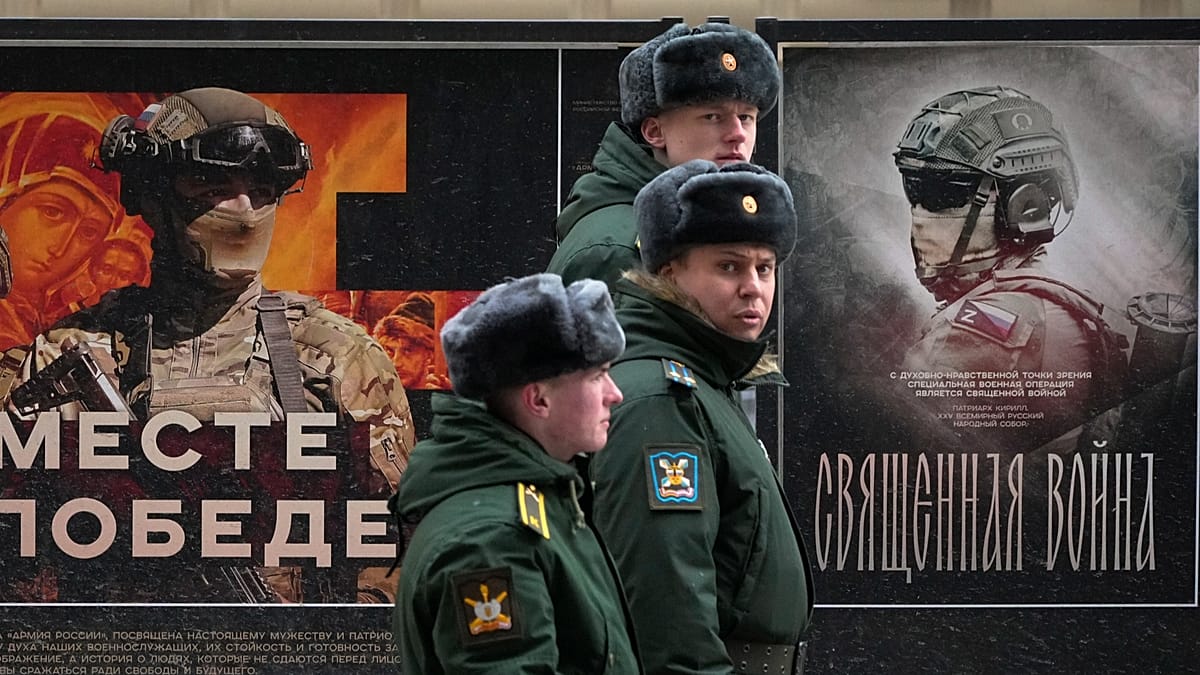
Russia's State Duma has approved a bill that formally empowers the Kremlin to deploy military forces abroad under the guise of protecting Russian citizens. The legislation, passed on [date], grants President Vladimir Putin a legal framework that effectively authorizes invasions of foreign countries, raising alarm across Europe.
According to the Duma's official documents, the bill was drafted to safeguard the rights of Russian nationals facing arrest, detention, or prosecution by foreign courts that operate without Moscow's consent. Vyacheslav Volodin, the Duma's chair, framed the move as a necessary countermeasure against what he called the West's 'repressive machine' targeting dissidents. 'In these circumstances, it is important to do everything to ensure that our citizens abroad are protected,' Volodin stated.
A Familiar Pretext
The justification echoes the rationale Putin used for the 2014 annexation of Crimea and the full-scale invasion of Ukraine in 2022—both launched under the banner of protecting Russian-speaking populations. Andrey Kartapolov, head of the Duma's Defence Committee, claimed the law would counter a 'campaign of rampant russophobia' abroad.
European officials have long warned that Russia poses a direct military threat to its neighbours. The new legislation adds fuel to those concerns, particularly as Moscow continues its missile and drone assaults on Ukraine. Russian weapons have repeatedly breached NATO airspace, prompting member states to bolster their defence capabilities. For instance, Hungary recently summoned the Russian envoy after a drone strike violated its airspace.
Ukrainian President Volodymyr Zelenskyy suggested in April that Russia's tightening internet controls and bans on popular messaging apps could be a prelude to a new wave of conscription and a fresh offensive—either against Ukraine or the Baltic states. Moscow has issued numerous threats to the Baltics since the start of its full-scale war.
The law's passage comes amid heightened tensions across the continent. Overnight drone and missile barrages on Kyiv have killed civilians and underscored the urgency of European defence coordination. Meanwhile, the EU remains divided over how to engage with Putin, with foreign ministers split on whether to pursue direct talks.
Analysts warn that the new legislation could be used to justify interventions in any country where Russian citizens reside, from Moldova to the Balkans. The Kremlin's track record—from Crimea to eastern Ukraine—suggests that the 'protection' argument is a flexible tool for military expansion.
As European states ramp up their own defence spending and NATO reinforces its eastern flank, the Duma's move is likely to accelerate discussions about collective security. The law also raises questions about the status of Russian diaspora communities across Europe, which could become pawns in future geopolitical confrontations.