London — The UK government has put an end to months of speculation by confirming that national museums will remain free for all visitors, including those from abroad. Culture Secretary Lisa Nandy announced the decision at an event hosted by Art Fund and The Cultural Policy Unit at Tate Liverpool, during the Labour Party conference.
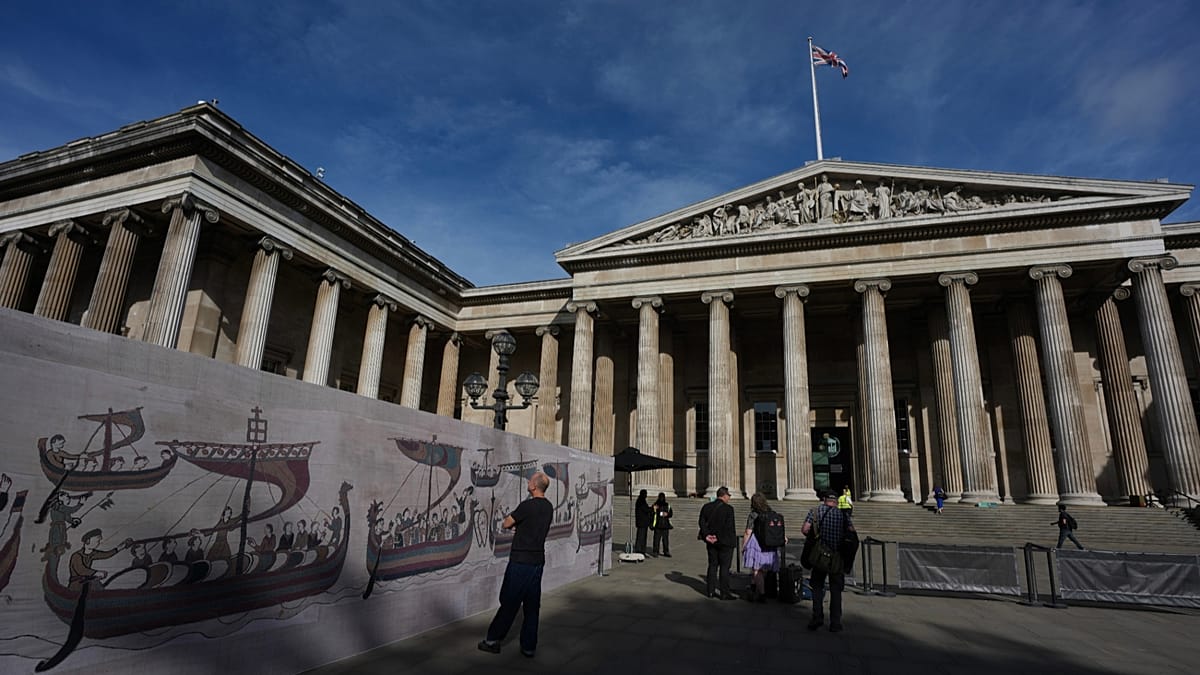
The policy applies to the 15 institutions directly funded by the Department for Digital, Culture, Media and Sport (DCMS), including the Tate, the National Portrait Gallery, National Museums Liverpool, and the British Museum, which currently hosts the Bayeux Tapestry.
“Our museums are the places that light up the world,” Nandy said. “They remind us of our shared history and enable us to step outside the confines of our lives. There is something incredibly special about that. That’s why they must be free, forever, for everyone to access. I’m delighted that we’re continuing that transformative policy pioneered by the last Labour government, opening up access to our excellent museums for generations.”
A landmark policy under scrutiny
Universal free entry has been a cornerstone of UK cultural policy since it came into effect on 1 December 2001. The decision to maintain it comes after growing debate over whether international visitors should be charged, a move that had been considered by the government. London Mayor Sadiq Khan had voiced strong opposition, arguing that free museums and galleries are a “fundamental” part of life in the capital.
Alison Cole, director of the Cultural Policy Unit, welcomed the announcement, calling free entry “one of the landmark cultural policies of our time.” She added: “It is wonderful that the Government has recognised not only its economic merits, but also its power to express our values and shape how we engage with the world.”
Gabriele Finaldi, director of London’s National Gallery, echoed that sentiment: “Free entry to national museums is one of the UK’s greatest cultural assets: it enables millions to visit, enjoy and learn. Thanks to free entry our museums are a deeply integral part of national life and free entry to museums is widely admired among our museum peers internationally.”
The numbers support the policy’s impact. Visitor figures to the 15 national museums have risen by 96% since 2001, from nearly 22.8 million in 1999 to just under 44.7 million in 2025/26.
A contrast with continental neighbours
The UK’s decision stands in sharp contrast to recent moves elsewhere in Europe. In France, the Louvre now charges adult visitors from outside the European Union, Iceland, Liechtenstein, and Norway a €32 entry fee — a 45% increase that took effect in January. The museum says the new pricing will help fund its “Louvre – New Renaissance” modernisation project and could generate an additional €15 to €20 million annually.
Other French institutions, including the Palace of Versailles, the Paris National Opera, and the Château de Chambord in the Loire, have also raised prices for non-European visitors. French researcher Patrick Poncet has drawn parallels between this approach and the “America First” policy of former US President Donald Trump, under which entry fees for foreign tourists in US national parks were raised by $100 from 1 January 2026.
The UK’s commitment to free entry is likely to be welcomed by cultural observers across the continent, who see it as a model for public access to heritage. As the policy approaches its 25th anniversary, it remains a defining feature of British cultural life — and a point of pride for many Europeans who visit the UK’s museums each year.