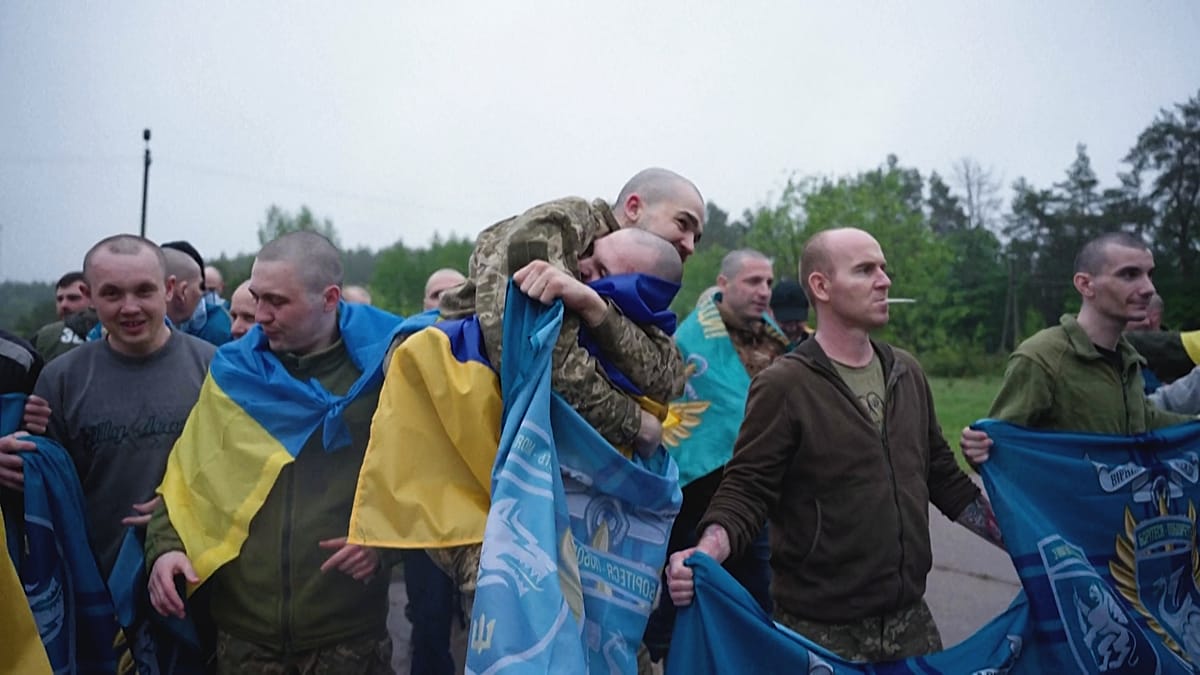
In a rare moment of cooperation amid the ongoing war, Ukraine and Russia completed a prisoner exchange on [date], swapping 205 servicemen and women each. The deal, mediated by the United Arab Emirates, marks the first phase of a planned 1,000-for-1,000 exchange that could bring hundreds of soldiers home over the coming weeks.
The swap took place at an undisclosed location along the front line, with both sides confirming the return of their personnel. Ukrainian President Volodymyr Zelenskyy hailed the exchange as a victory for diplomacy, stating, "Every soldier brought back is a step closer to justice." Russian officials similarly framed the move as a humanitarian gesture, though they did not provide further details on the condition of the returnees.
Humanitarian Relief Amid Escalation
The exchange comes as fighting intensifies in eastern Ukraine, particularly around the city of Kharkiv, which has faced renewed Russian drone and missile barrages. The prisoner swap offers a glimmer of relief for families on both sides, many of whom have waited months for news of their loved ones. The International Committee of the Red Cross, which has facilitated previous exchanges, confirmed its role in verifying the identities and health of the prisoners involved.
This is not the first large-scale exchange since the war began in February 2022. Previous swaps have ranged from a few dozen to several hundred prisoners, often mediated by third parties such as Turkey, Saudi Arabia, or the UAE. The current deal, however, is notable for its scale and the explicit commitment to a 1,000-for-1,000 framework, suggesting a potential shift toward more systematic negotiations.
Geopolitical Context and European Implications
The exchange underscores the complex web of international diplomacy surrounding the conflict. While the United States and European Union have provided billions in military and economic aid to Ukraine, Gulf states like the UAE have carved out a role as neutral intermediaries, maintaining ties with both Moscow and Kyiv. This balancing act has allowed them to broker deals that Western powers, due to their explicit support for Ukraine, cannot easily pursue.
For Europe, the prisoner swap is a reminder of the human cost of the war, which has displaced millions and killed tens of thousands. The exchange also highlights the ongoing efforts by 36 nations to establish a special tribunal to prosecute Russian aggression, a move that could shape post-war accountability. Meanwhile, the Kremlin's reliance on convicts to fill its ranks—Russia's prison population has dropped by 40 percent as inmates are sent to the front—adds a grim dimension to the negotiations.
The exchange also comes as cultural tensions simmer. In Venice, activists from Pussy Riot and FEMEN have protested Russia's return to the Venice Biennale, arguing that cultural engagement normalizes the regime. Such protests reflect a broader European debate about how to engage with Russia while the war continues.
What Comes Next
The success of the 1,000-for-1,000 framework depends on both sides' willingness to continue negotiations amid ongoing combat. Previous large-scale exchanges have been followed by periods of intensified fighting, as each side seeks to gain leverage. Analysts caution that while prisoner swaps are humanitarian victories, they do not signal a broader thaw in relations.
For the families of the 205 prisoners returned, however, the deal is a lifeline. Many of the returnees are expected to require medical and psychological support after months or years in captivity. Ukraine's government has pledged to provide rehabilitation services, while Russian authorities have not disclosed their plans.
As the war enters its third year, such exchanges remain one of the few areas of direct communication between Kyiv and Moscow. Whether they can pave the way for broader negotiations—on grain exports, energy infrastructure, or even a ceasefire—remains uncertain. For now, the focus is on the individuals who have come home.