Ukraine has sharply escalated its drone and missile strikes against military and energy infrastructure in and around occupied Crimea, pursuing a deliberate strategy to sever the peninsula from Russian-controlled territory. The campaign, which Kyiv describes as essential to restoring Ukrainian sovereignty, is progressively making life untenable for Russian forces stationed there.
Crimea, annexed by Moscow in 2014, remains Russia's most prized territorial gain from its invasion of Ukraine. For Kyiv, the war will not be over until the peninsula is liberated and returned to its indigenous Crimean Tatar community. But Ukraine's recent operations suggest a methodical effort to isolate Crimea logistically before any broader military push.
Cutting Ground Lines of Communication
Crimea's geography makes it both strategically vital and vulnerable. The peninsula is connected to mainland Ukraine by a narrow land corridor across the Perekop isthmus and a network of roads and rail lines running through occupied parts of the Kherson region. Russia relies on these ground lines of communication (GLOCs) to move troops, ammunition, and fuel to its forces on the peninsula.
On Thursday, Ukraine confirmed a strike that destroyed 50 military cargo vehicles carrying fuel and ammunition on the Armiansk bridge, a key link between Crimea and mainland Ukraine. Ukrainian military command said the attack was made possible by earlier strikes against Mariupol and the road to Berdyansk, cities under Russian occupation on the Sea of Azov coast.
Moscow-installed Kherson region head Vladimir Saldo acknowledged further hits, reporting that Ukrainian forces struck several bridges connecting occupied Kherson and Crimea: a bridge over the North Crimean Canal near Preobrazhenka and Myrne, the Perekop-Armyansk Road Bridge, and the Stavky Road Bridge. These structures run along the M-17 Armyansk-Oleshky highway, a critical supply artery.
The US-based Institute for the Study of War (ISW) confirmed that Ukraine is intensifying its mid-range strike campaign against Russian GLOCs across occupied southern Ukraine. The ISW assessed that continued strikes will likely have cascading battlefield effects and may complicate Russian preparations for offensive operations.
Fuel Crisis Worsens
Russia supplies its forces in Crimea with petrol, diesel, and aviation fuel via three main routes: road and rail tankers over the Kerch Bridge from Russia, shipments by sea, and overland routes through occupied southern Ukraine. As Ukraine increasingly targets these links with drones and precision strikes, the peninsula is experiencing its worst fuel crisis since the 2014 annexation.
In a rare public acknowledgment, the Kremlin has recognised the scope of the problem. Moscow-installed occupation authorities have tightened restrictions on gasoline purchases in recent weeks. Sevastopol occupation governor Mikhail Razvozhaev stated on Wednesday that his administration could not issue new QR codes for fuel purchases because fuel trucks were unable to reach Sevastopol on Tuesday for unspecified reasons.
Razvozhaev introduced a policy on 6 June requiring customers to use a pre-purchased QR code, accessible only via the Russian state-controlled Max messenger app, to buy gasoline in occupied Sevastopol. Authorities have further tightened limits to 20 litres per week, down from the previous 20 litres per day, as shortages worsen.
Commander of Ukraine's Unmanned Systems Forces Robert Brovdi said Ukraine's aim is to isolate occupied Crimea from Russia by disrupting key military supply routes to the peninsula. The campaign, he explained, is designed to make it impossible for Russian forces to sustain their presence.
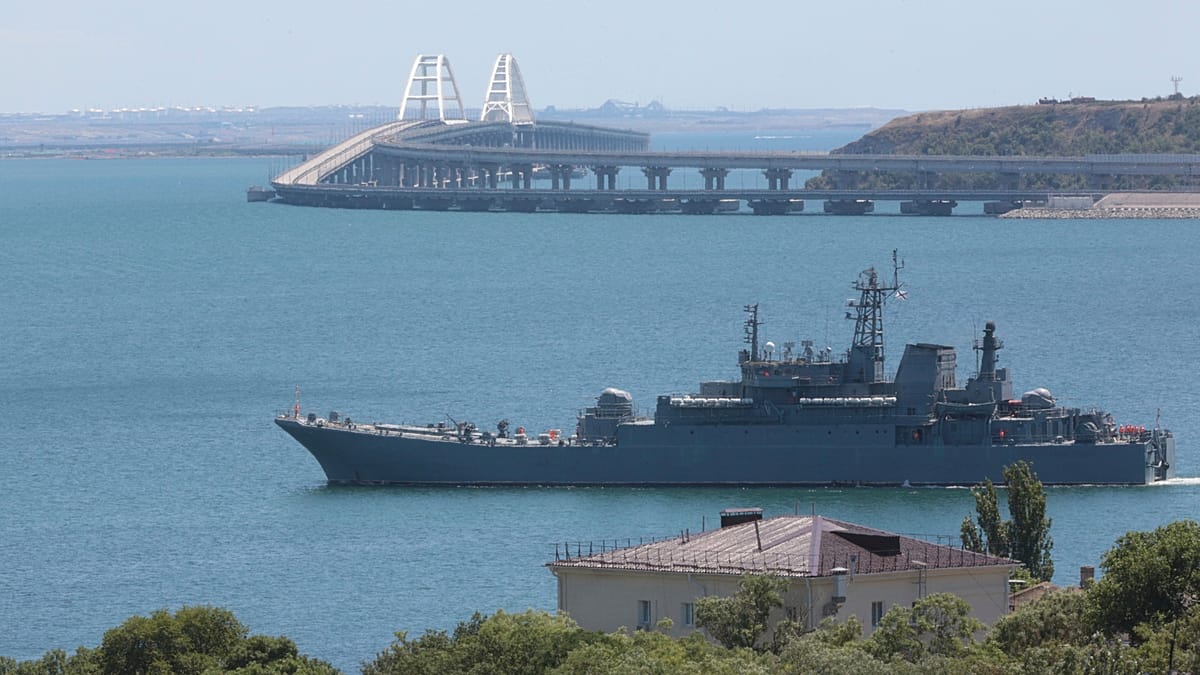
The Kerch Bridge, a prized asset for President Vladimir Putin, has been struck multiple times since October 2022, when a truck bomb killed five people and blew up two sections of the span. Further attacks followed in 2023 and 2025. Ukraine has also sunk several Russian warships in the Black Sea and at their Crimean bases, forcing Moscow to redeploy its fleet to Novorossiysk.
As the drone campaign intensifies, the cumulative effect on Russian logistics is becoming increasingly apparent. The fuel shortages and disrupted supply lines are likely to hamper Russian military operations across southern Ukraine, potentially shifting the battlefield dynamics in Kyiv's favour.