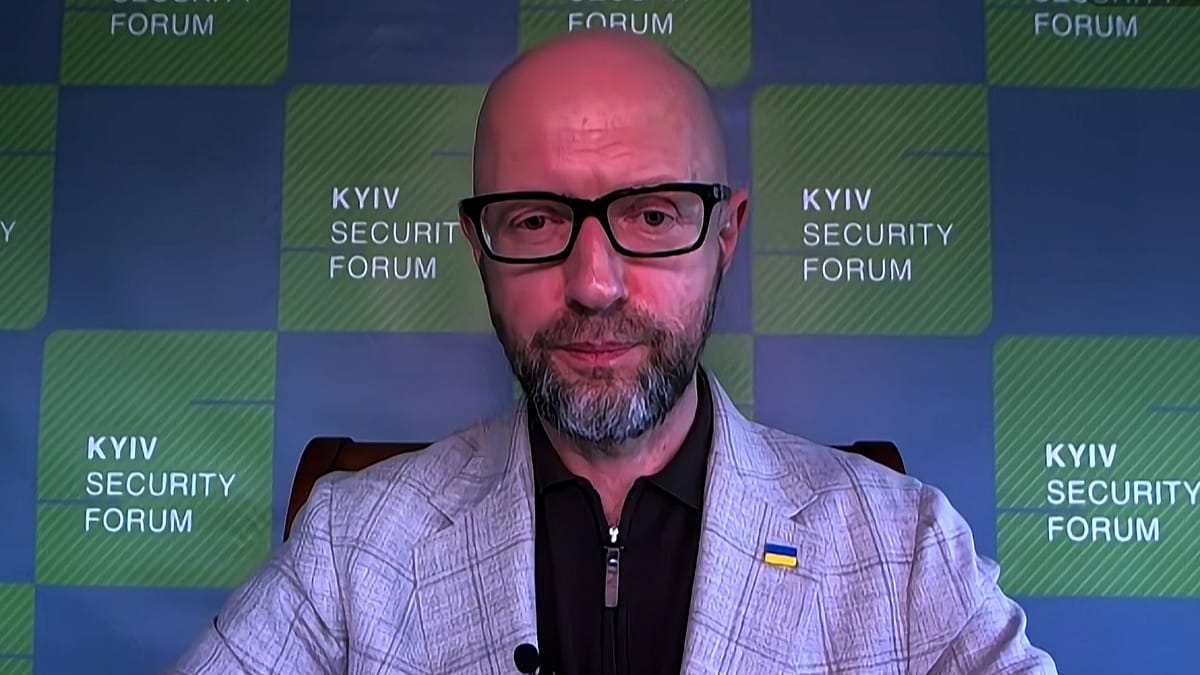
Former Ukrainian Prime Minister Arseniy Yatsenyuk has described the recent G7 summit in Evian as a display of unity that Moscow had hoped to fracture. Speaking to Euronews, Yatsenyuk said the Kremlin anticipated a “spat” between G7 leaders and President Volodymyr Zelenskyy, but instead the optics were “much better than expected.”
Yatsenyuk, who served as prime minister from 2014 to 2016, argued that the real test of this solidarity is whether Ukraine, Europe, and the United States can compel Russian President Vladimir Putin to negotiate—whether he wants to or not. He dismissed Putin’s recent birthday call to Donald Trump as a “KGB special operation” designed to stall genuine talks. “It was the way how to drag our feet into never-ending talks,” Yatsenyuk said.
The Trump Card
Despite Trump’s dismissive comment at the G7 that the war in Ukraine “has no impact on us other than we sell weapons,” Yatsenyuk remains convinced that American backing is pivotal. He noted that “the majority of Americans believe that the US have to support Ukraine,” and pointed to the upcoming US midterm elections as a factor that could shape Washington’s timeline. With Iran no longer a primary focus, Kyiv sees a window of opportunity.
“What kind of cards do we have? First, we have Europeans. The second one, we have strong military support. The third one, we have sanctions in place,” Yatsenyuk said. “Most important issue, whether we have President Trump as a 'trump card,' and I still try to find out whether President Trump will press like hell on war criminal Putin, because it’s in the interest of the United States to stop this war.”
Ukraine has repeatedly proposed direct talks between Zelenskyy and Putin in a neutral third country—Switzerland, Turkey, or the Middle East. Zelenskyy even offered to meet on the sidelines of the G7, an offer Moscow now claims it never received. Yatsenyuk believes that only sustained US pressure can force the Kremlin to engage in meaningful diplomacy, potentially leading to a ceasefire or an end to the war.
On the battlefield, Yatsenyuk insisted Ukraine remains resilient. “We actually are defending our sovereign soil, and we even managed to claw back a number of Ukrainian territories,” he said, acknowledging the “overwhelming support” from European countries. The former prime minister also highlighted the importance of maintaining sanctions and military aid, which have been crucial in Ukraine’s defense.
The broader European context is critical. As Ukraine seeks licenses to manufacture Patriot systems for Europe, the continent’s role in arming Kyiv is expanding. Meanwhile, Russian drone attacks continue to hit Ukrainian cities, underscoring the urgency of a diplomatic resolution.
Yatsenyuk’s remarks come as the EU and US navigate a complex geopolitical landscape, with trade tensions simmering alongside security cooperation. For Ukraine, the path to peace hinges on whether Washington will wield its influence decisively—a question that remains unanswered as the war grinds on.