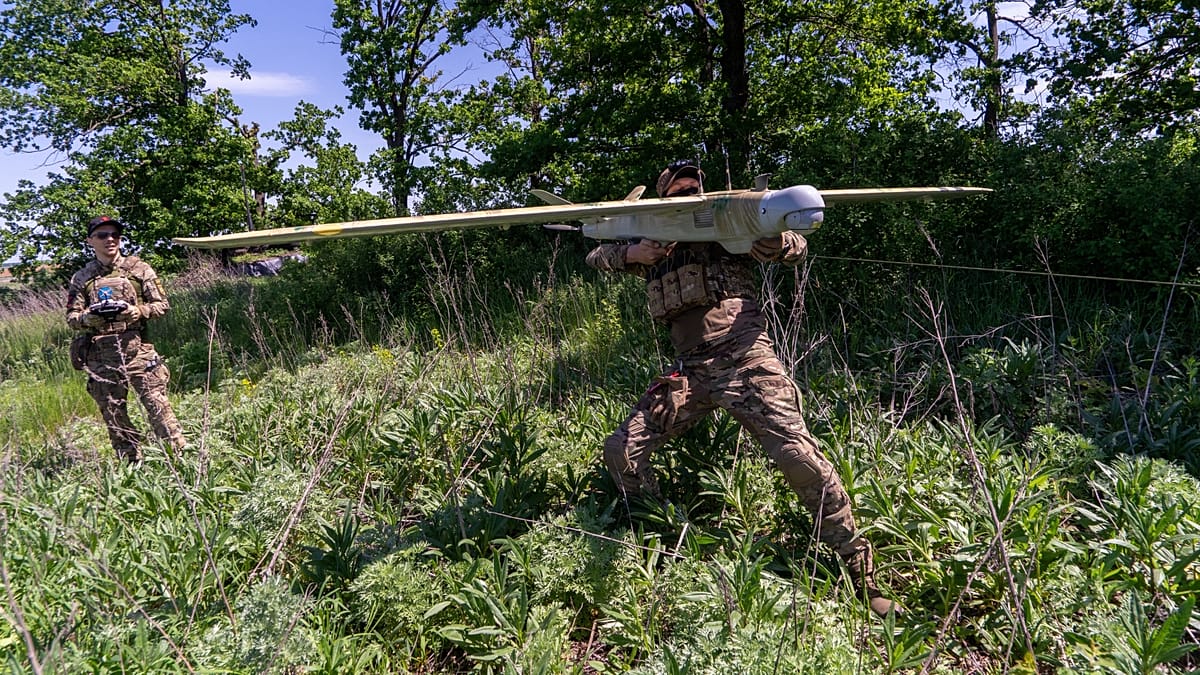
Ukrainian forces launched a series of long-range strikes overnight on Saturday, hitting energy and industrial facilities deep inside Russian territory, according to statements from both Russian and Ukrainian authorities. The attacks mark the latest escalation in Kyiv's campaign to disrupt the infrastructure that funds and supplies Moscow's full-scale invasion, now in its third year.
The Ukrainian military confirmed on Telegram that it had scored a direct hit on the Sheskharis oil terminal in the southern port city of Novorossiysk, a critical export hub on the Black Sea. Local Russian authorities reported that falling drone debris ignited a fire at the terminal, injuring two people. The Sheskharis facility serves as the export terminus for major oil pipelines operated by the state-controlled company Transneft, making it a strategic asset for Russia's energy revenues.
Unverified images posted by the Russian outlet Astra showed smoke rising above the terminal, though independent confirmation was not immediately possible. The attack underscores Ukraine's growing ability to strike far beyond the front lines, using domestically developed drone and missile technology.
In a separate operation, Ukrainian President Volodymyr Zelenskyy confirmed that a strike had targeted the Metafrax Chemicals plant in Perm Krai, approximately 1,700 kilometres from the Ukrainian border. “Metafrax Chemicals is an important part of Russia's chemical industry. The enterprise's products supply dozens of other Russian military manufacturers, including aviation equipment and drones, missile engines, and explosives,” Zelenskyy wrote on X. The plant's location deep in the Urals region highlights the expanded reach of Ukraine's mid- and long-range strike capabilities.
Russia Vows Retaliation for Alleged Attack on Dormitory
Meanwhile, the Kremlin has threatened severe retaliation for an alleged Ukrainian drone strike on a college dormitory in the Russian-occupied town of Starobilsk in eastern Ukraine on Friday. Russia's Foreign Ministry promised “inevitable and severe punishment,” claiming the attack killed 12 people born between 2003 and 2008. President Vladimir Putin asserted that there were “no military facilities, intelligence service facilities or related services in the vicinity.”
Ukraine's General Staff reported that overnight on 22 May, its forces struck “a number” of Russian targets, including an oil refinery, ammunition depots, air defence systems, and command posts. It also said it had targeted one of the headquarters of Moscow's elite Rubicon drone unit. At an emergency UN Security Council meeting convened at Russia's request, Ukrainian diplomat Melnyk Andrii dismissed the Russian accusations as a “pure propaganda show,” insisting that Friday's operations “exclusively targeted the Russian war machine.”
The strikes come as Ukraine intensifies its campaign against Russian oil assets, which have been a key source of funding for the invasion. This strategy aligns with broader European efforts to reduce reliance on Russian energy, as highlighted by the EU's firm stance against returning to Russian gas and oil amid the ongoing energy crisis. The attacks also follow a pattern of escalating drone warfare, with recent Russian drone barrages hitting residential areas in Kharkiv, underscoring the war's toll on civilians.
For European observers, these developments carry significant implications. The strikes demonstrate Ukraine's capacity to project power deep into Russian territory, potentially altering the strategic calculus in the conflict. They also raise questions about the security of critical energy infrastructure in the Black Sea region, which is vital for global oil markets. As the war grinds on, the EU continues to grapple with energy market strains, though recent data shows German business sentiment unexpectedly rising despite these pressures.