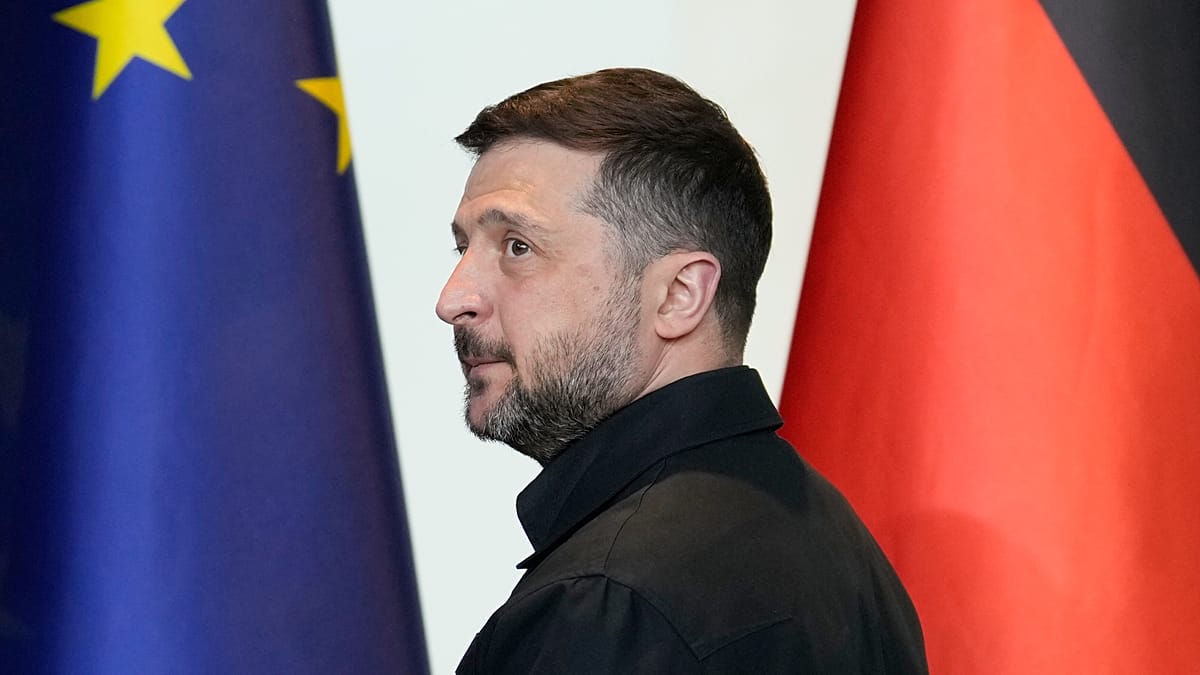
Ukrainian President Volodymyr Zelenskyy has firmly rejected a proposal by German Chancellor Friedrich Merz to grant Kyiv a non-voting "associate membership" in the European Union, insisting that Ukraine deserves full membership with all attendant rights. The rebuff came after Merz outlined the idea in a letter to EU leadership, suggesting the interim status could apply during the lengthy accession negotiations.
In his daily address, Zelenskyy stated: "Without Ukraine, there can be no fully-fledged European project, and Ukraine's presence in the EU must also be complete, with full rights." He emphasized that his country is not merely a supplicant but a defender of the continent, repelling the Russian invasion and thereby safeguarding European security. "Ukraine is fighting for its life, for its independence, and for that Europe which has lived in peace the longest," he added, urging the bloc's 27 member states to accelerate membership talks.
What Merz's Associate Membership Would Entail
Merz's proposal, detailed in a letter to European Council President António Costa and European Commission President Ursula von der Leyen, would allow Ukraine to attend EU summits, have a representative in the European Commission, and access parts of the EU budget—but without voting rights on key decisions. The plan was intended as a pragmatic step to integrate Kyiv while the formal accession process, which typically takes years, unfolds. However, Zelenskyy's response underscores a fundamental disagreement: for Ukraine, anything short of full membership is unacceptable.
The associate membership idea has faced skepticism in Brussels, as reported by European Pulse, with some diplomats questioning whether it would create a two-tier system within the Union. Merz had also proposed including a mutual defense clause in the arrangement, a move that would have significant security implications for the bloc.
Stalled Accession Talks and Hungarian Hurdles
Ukraine submitted its EU membership bid days after Russia's full-scale invasion in February 2022 and was granted candidate status that June. Formal accession negotiations began in 2024, but progress has been slow, hampered by the complexity of aligning Ukrainian law with the EU's acquis communautaire—covering everything from agricultural standards to rule-of-law reforms. A major obstacle has been Hungary's former prime minister, Viktor Orbán, who repeatedly blocked or delayed talks. However, Orbán's recent ouster by rival Péter Magyar has raised hopes in Kyiv that negotiations could move forward. Expert-level talks on minority rights between Budapest and Kyiv have already resumed, signaling a potential thaw.
Zelenskyy's insistence on full membership reflects a broader strategic calculus: Ukraine views EU integration as existential, not merely symbolic. The country has already aligned many of its policies with European norms, and its military resistance has earned it considerable goodwill among EU member states, particularly in Central and Eastern Europe. Yet the path to accession remains arduous, with many capitals wary of admitting a war-torn country of 44 million people that shares a long border with Russia.
The debate over Ukraine's EU future also intersects with NATO dynamics. Zelenskyy has been invited to the upcoming NATO summit in Ankara, where the alliance is grappling with pressure from Washington to increase defense spending. For Kyiv, membership in both organizations is seen as the ultimate guarantee against future Russian aggression.
As the war grinds on, Ukraine's European aspirations remain a central issue for the continent. Merz's proposal, while well-intentioned, has highlighted the gap between what some EU leaders are willing to offer and what Ukraine demands. For now, Zelenskyy has made clear that anything less than full membership is a non-starter.