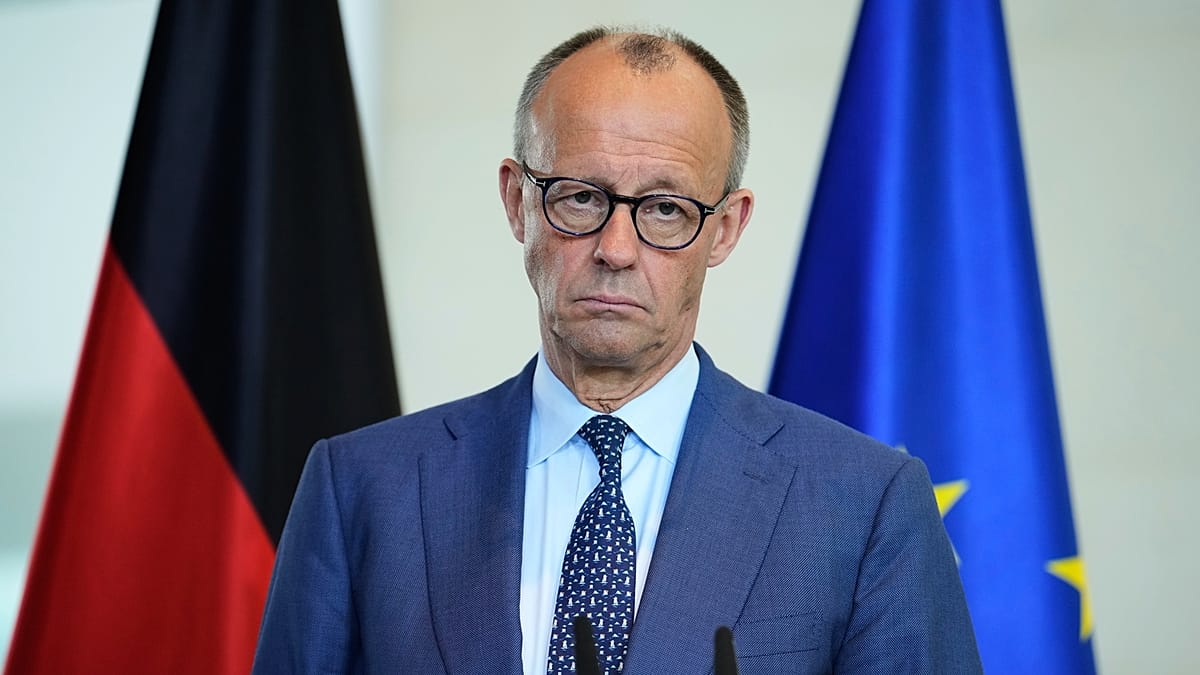
German Chancellor Friedrich Merz has proposed a novel "associate membership" status for Ukraine within the European Union, a plan that has elicited a cautious and at times skeptical response from diplomats and officials in Brussels. The proposal, outlined in a letter to EU leaders, aims to accelerate Ukraine's integration without granting full voting rights, but questions about its legality and political viability have emerged.
Merz's Proposal: Gradual Integration with Security Guarantees
In his letter, Merz suggests a tailor-made arrangement that would allow Ukraine to participate in EU decision-making bodies—without voting rights or portfolio—and access certain EU-funded programs on a "step-by-step" basis. A key element is the invocation of Article 42.7 of the EU treaties, which would oblige member states to assist Ukraine in case of armed aggression, effectively creating a mutual defense clause. Merz argues this would provide a "substantial security guarantee" to deter Russia, framing the move as a bold step forward in Ukraine's EU integration.
"It is now time to boldly move on with Ukraine's EU integration through innovative solutions as immediate steps forward," Merz writes, urging his peers to embrace creative approaches. The proposal comes as the bloc seeks to overcome Hungary's veto on Ukraine's accession, with a window of opportunity opening after Budapest launched consultations with Kyiv on minority rights, as reported in Hungary and Ukraine Hold Expert Talks on Minority Rights, Easing EU Accession Path.
Diplomatic Skepticism and Legal Hurdles
In Brussels, the letter has drawn comparisons to Merz's earlier op-ed endorsing the use of Russia's immobilized assets for a reparations loan to Ukraine—a plan that ultimately collapsed. One diplomat described the letter as "a rather hasty statement, and not very well coordinated," adding that the timing is "strange" given expectations of progress in June. "We need to do things differently. There is indeed a timeline, with June in view, and there is a method. Things will move forward," the diplomat said, warning of widespread skepticism.
A second diplomat questioned the legal feasibility of associate membership without treaty changes. "I don't see how this could work from a legal point of view. You would need to change the treaties for that. Associate members with all institutions by way of political arrangement? I don't see it," the diplomat remarked. A third diplomat noted that "some ideas are better than others," while a fourth observed that the real debate among member states has yet to begin.
Commission's Cautious Endorsement
The European Commission, which oversees the accession process, offered a more measured response. Guillaume Mercier, the Commission's spokesperson for enlargement, welcomed Merz's proposal as a sign of "strong commitment from member states to make enlargement a reality as soon as possible." He emphasized that "enlargement is a geostrategic investment in our prosperity, peace, and security," and that Ukraine's accession is "fundamentally linked to the security of our union." However, Mercier stressed that any innovative solution must respect the "merit-based" nature of the accession process, which involves complex multi-chapter negotiations.
Earlier this year, the Commission floated a "reversed" membership model, where Ukraine would become a formal member first and then gradually access benefits. That idea was largely rebuffed by capitals as dangerous and unrealistic. Merz's approach flips this, offering gradual integration into EU funds and high-level forums, with formal membership only at the end of the road.
Timing and Political Context
The German initiative arrives as Brussels sees a potential breakthrough on Hungary's veto, which has paralyzed Ukraine's accession for two years. The new government in Budapest has launched consultations with Kyiv on the rights of the Hungarian minority in Ukraine, a politically sensitive issue. EU officials hope that sufficient progress will be made to lift the veto in June, allowing the opening of the first cluster of negotiations, known as fundamentals, with the remaining five clusters to follow later in the year.
It remains unclear how Ukrainian President Volodymyr Zelenskyy will respond. Last month, he flatly rejected any overture for "symbolic" membership, insisting on a clear path to full integration. The proposal also comes amid broader security concerns, as highlighted in Merkel Warns Europe's Security Assumptions Are Outdated After Ukraine Invasion, underscoring the urgency of credible guarantees.
As the debate unfolds, Merz's plan represents a significant political gambit, but its success hinges on overcoming legal, procedural, and political obstacles. For now, the mixed reception in Brussels suggests that while the idea of innovative solutions is welcome, the devil remains in the details.