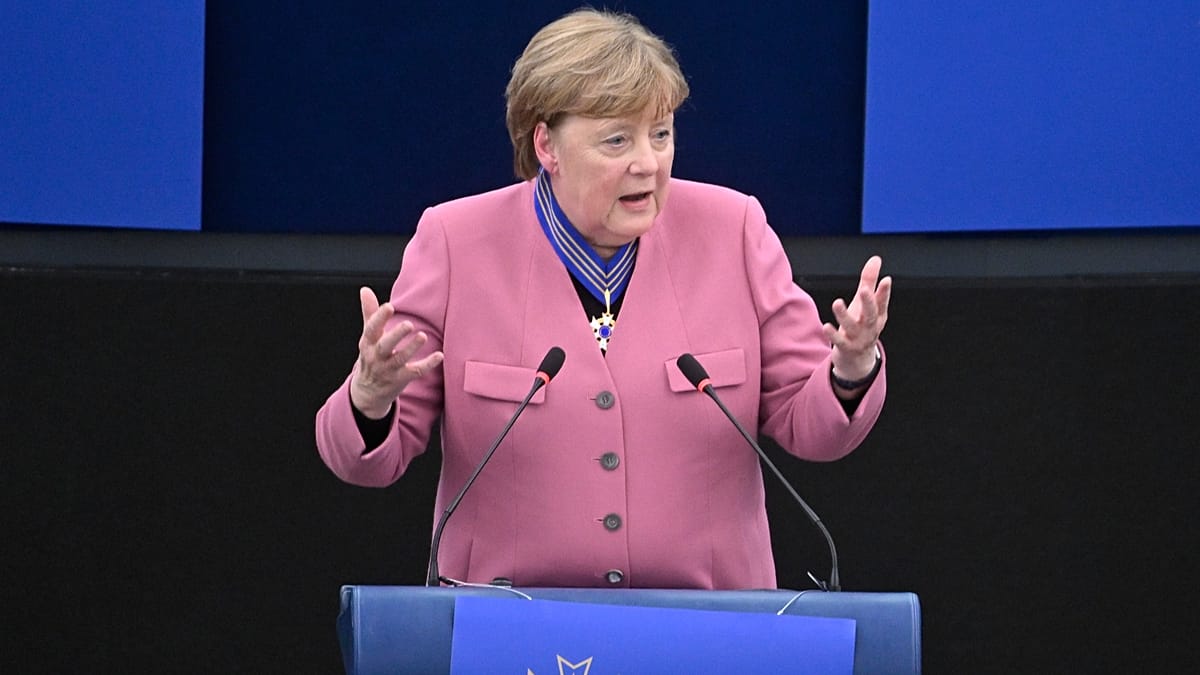
Former German Chancellor Angela Merkel accepted the European Order of Merit on Tuesday, using the occasion to deliver a stark warning about the continent's security landscape. Speaking in Berlin, Merkel argued that Europe can no longer depend on the post-Cold War certainties that have underpinned its peace and prosperity for decades.
Merkel pointed directly to Russia's full-scale invasion of Ukraine as a watershed moment. 'We can no longer take peace and security for granted,' she said. The former chancellor, who led Germany from 2005 to 2021, noted that the war has shattered assumptions about territorial integrity and the inviolability of borders in Europe.
She also highlighted shifts in United States security policy as evidence that old frameworks are eroding. While she did not name specific US administrations, her remarks come amid ongoing debates in European capitals about the reliability of American commitments under NATO. The United States has long been the alliance's dominant military power, but recent political turbulence in Washington has raised questions about its long-term engagement.
A Continent Forced to Rethink
Merkel's comments resonate across the European Union and the wider continent, including the United Kingdom, Switzerland, Norway, and the Balkans. For years, many European governments operated on the assumption that US security guarantees were immutable and that Russia would not challenge the post-1945 order directly. The war in Ukraine has upended both beliefs.
The European Order of Merit, awarded by the European Council on Foreign Relations, recognizes individuals who have made exceptional contributions to European unity. Merkel's tenure was marked by her handling of the eurozone crisis, the refugee influx of 2015, and her role in maintaining EU cohesion during turbulent times. Critics, however, have pointed to her energy policies—particularly the reliance on Russian gas—as a factor that left Germany and Europe vulnerable.
In her speech, Merkel did not dwell on past decisions but focused on the present and future. She called for European nations to invest more in their own defense capabilities and to coordinate more closely on foreign policy. 'We must build new certainties for ourselves,' she said, 'because the old ones are no longer reliable.'
The former chancellor's warning aligns with recent assessments from EU military officials. EU Military Chief: Ukraine Remains Europe's Top Security Priority underscores the bloc's continued focus on the conflict. Merkel's remarks also come as European leaders grapple with the economic fallout of sanctions and energy disruptions.
Merkel's successor, Chancellor Olaf Scholz, has announced a Zeitenwende—a historic turning point—in German defense policy, pledging 100 billion euros to modernize the Bundeswehr. Yet implementation has been slow, and many allies remain skeptical about Germany's willingness to take a leading security role.
The award ceremony took place at the Allianz Forum in Berlin, a venue that symbolizes the transatlantic ties Merkel now says are shifting. Attendees included current and former European leaders, diplomats, and civil society figures. The mood was somber, reflecting the gravity of the challenges ahead.
Merkel's message is clear: Europe must awaken from its strategic slumber. The continent can no longer rely on the United States to guarantee its security, nor assume that dialogue with Moscow will prevent conflict. The task now is to forge a new consensus—one that acknowledges the fragility of peace and the necessity of collective action.