As European defence chiefs gather in Brussels this week to mark a quarter-century since the creation of the EU Military Committee, the shadow of war looms large over the proceedings. The committee, born out of the Balkan conflicts of the 1990s, now confronts a security landscape reshaped by Russia's full-scale invasion of Ukraine and escalating instability in the Middle East.
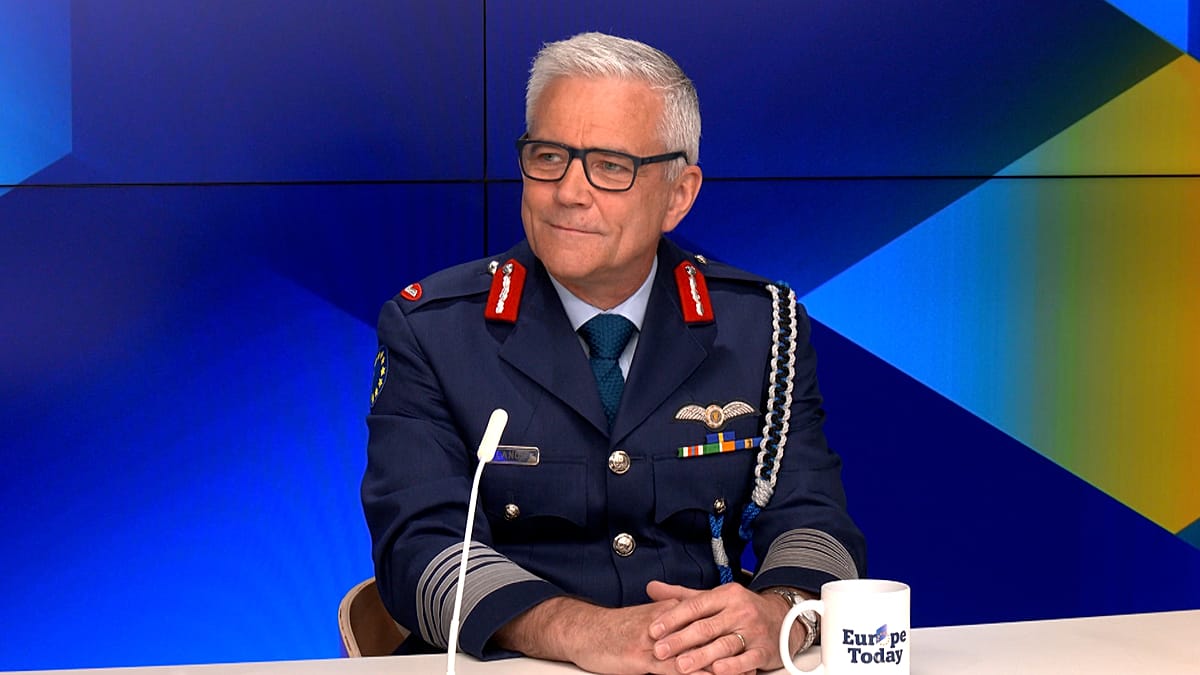
General Seán Clancy, the Irish officer who chairs the EU Military Committee, described the anniversary as “a time for reflection more than celebration.” In an interview with Euronews' Europe Today, he underscored that Ukraine remains the European Union's “number one priority” as defence officials convene to assess readiness, strategy, and continued support for Kyiv.
Clancy's remarks come amid a fresh wave of Russian attacks on Ukraine, with reports indicating hundreds of drones and dozens of missiles launched overnight. The general praised the resilience of Ukrainian forces and civilians, noting that their defiance has transformed the country into “a fortress nation.” He argued that Ukraine's security is now “integral to the future security of Europe,” a sentiment echoed by many in Brussels and national capitals from Berlin to Warsaw.
EU's Role Beyond NATO
While dismissing the notion that the EU should evolve into a “military powerhouse” comparable to NATO, Clancy emphasised the bloc's unique contributions through economic leverage, defence coordination, and overseas missions. The EU Military Assistance Mission for Ukraine has trained more than 93,000 Ukrainian soldiers to date, a figure that underscores the union's practical commitment. “We will continue unrelentingly,” Clancy said, adding that all 27 member states remain dedicated to shaping the future of Ukraine's armed forces.
The anniversary meeting also serves as a platform for broader discussions on European defence integration. With the war in Ukraine exposing gaps in munitions stockpiles and industrial capacity, EU officials are pushing for joint procurement and increased spending. Clancy's comments align with recent moves by the European Commission to boost defence production, though member states remain divided on how quickly to scale up.
Meanwhile, the conflict continues to reverberate beyond the battlefield. Russia's intensified nighttime strikes have targeted energy infrastructure across eight Ukrainian regions, deepening the humanitarian crisis as winter approaches. In a separate development, a UAE-mediated prisoner exchange saw 205 soldiers returned to each side, offering a rare glimmer of diplomatic progress.
The EU's focus on Ukraine also intersects with other geopolitical flashpoints. NATO military chiefs are meeting separately to address the strain on alliance munitions caused by the Iran conflict, highlighting the interconnected nature of global security challenges. For Clancy and his colleagues, the message is clear: Europe's defence cannot be compartmentalised.
As the EU Military Committee looks ahead to its next 25 years, the war in Ukraine will likely remain the defining test of its relevance. Clancy's insistence on Ukraine as the top priority reflects a broader consensus among member states, even as political shifts—such as Hungary's evolving stance on EU accession talks—add complexity to the bloc's long-term strategy.