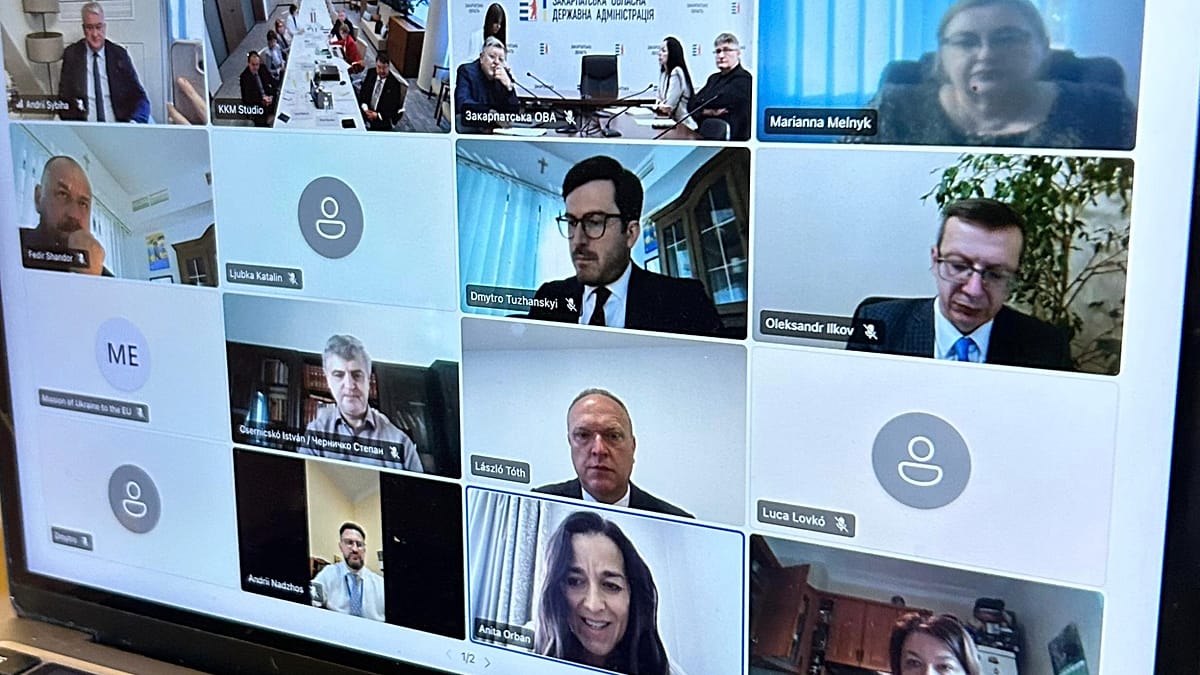
Hungary and Ukraine convened their first expert-level consultations on minority rights on Wednesday, signaling a potential thaw in bilateral relations after years of tension. The talks, held in Budapest, included representatives from both governments and the Hungarian minority in Ukraine's Transcarpathia region.
Hungarian Foreign Affairs Minister Anita Orbán described the meeting as “important steps toward rebuilding our bilateral relations and strengthening future cooperation.” The discussions mark a shift from the confrontational stance of Viktor Orbán’s previous administration, which had blocked Ukraine’s EU accession bid over perceived discrimination against the 100,000-strong ethnic Hungarian community in western Ukraine.
Key Issues on the Table
Ukrainian Foreign Affairs Minister Andrii Sybiha outlined three priorities for the talks: bilateral relations, minority rights, and Ukraine’s EU accession. “Ukraine wants to open a new, mutually beneficial chapter in our bilateral relations based on trust,” Sybiha said. “We are in a momentum to achieve this.”
The consultations also involved officials from Ukraine’s Ministry of Education and Science and the Transcarpathian Hungarian College of Higher Education, suggesting potential amendments to Kyiv’s legislation on national minorities. Ukraine’s 2017 education law, which requires at least 70% of instruction above fifth grade to be in Ukrainian, had been a flashpoint. Budapest argued it discriminated against Hungarian speakers, while Kyiv maintained it was necessary to counter Russian influence.
In 2023, Ukraine amended the law to allow the use of EU languages and minority languages in political advertising, private schools, universities, and media—one of seven steps recommended by the European Commission for EU accession. The new government in Budapest, led by Prime Minister Gábor Magyar after his landslide victory in April, has signaled a more conciliatory approach. Hungary’s shift on Ukraine’s EU bid has raised hopes in Brussels for progress.
“The Hungarian community in Transcarpathia is not only an important part of the relationship between our two countries, but also a bridge between our nations,” Orbán said. “Genuine progress requires open, honest, and professional dialogue built on clear legal guarantees.”
For Ukraine, the stakes are high. Resolving the minority rights dispute is critical to unlocking EU accession talks, which have been stalled by Budapest’s veto. The consultations come amid broader European efforts to support Ukraine, including EU military commitments and ongoing sanctions debates. The talks also follow Hungary’s recent signals on EU sanctions against Russian Patriarch Kirill, indicating a broader recalibration of Budapest’s foreign policy.
Ukraine’s commitment to European standards on minority rights was underscored by Sybiha: “Ukraine takes national minority rights seriously and remains committed to ensuring them in accordance with European standards. We understand that this issue has a fundamental importance.”
The expert-level consultations are expected to continue, with further meetings planned to address specific legal guarantees. If successful, they could remove one of the last major hurdles to Ukraine’s EU membership path, a goal that has gained urgency since Russia’s full-scale invasion in 2022. As Ukrainian activist Oleksandra Matviichuk noted, the country is paying a high price to return to European values—a sentiment that now resonates in Budapest as well.