The United Nations General Assembly is expected to adopt by consensus on Thursday a landmark declaration designed to guarantee that countries whose territory becomes partly or fully uninhabitable due to rising sea levels do not forfeit their statehood or their standing in the international community.
For the small island states on the front line of the climate crisis, the stakes go far beyond vanishing beaches. Rising waters are eroding the physical land on which traditional notions of sovereignty have long rested. The declaration seeks to establish that a changing coastline should not automatically spell the end of a country as a legal and political entity.
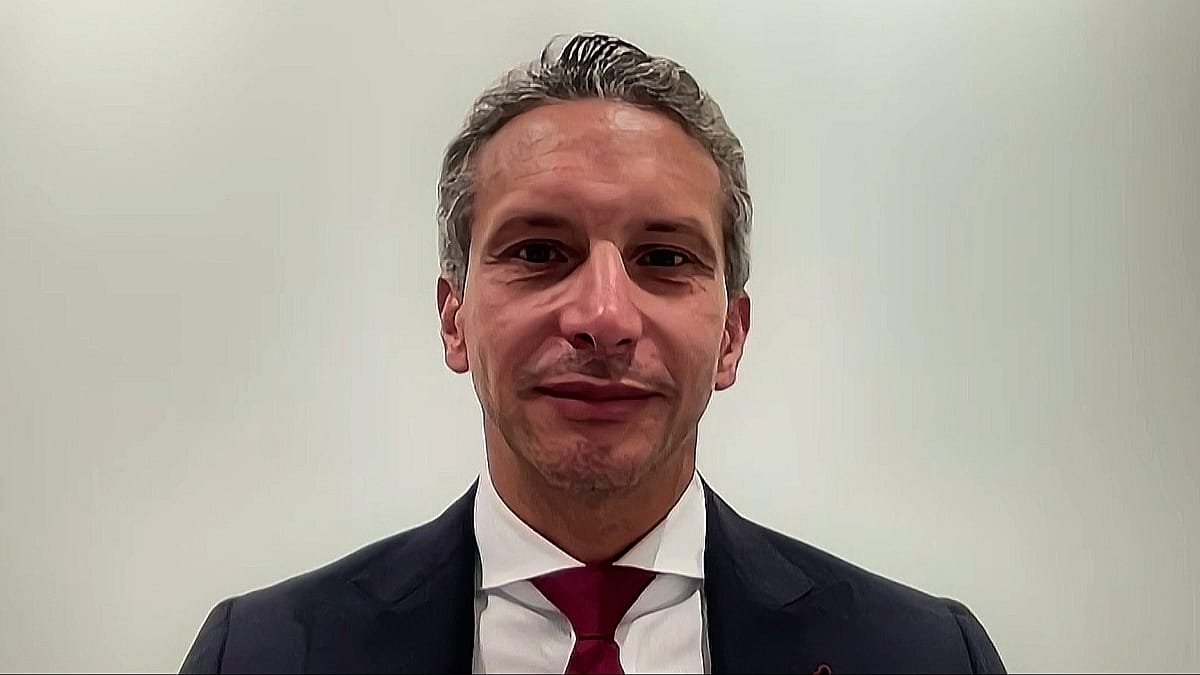
While the initiative is primarily aimed at Pacific and Caribbean nations, its implications reach Europe as well. Kamal Amakrane, Managing Director of the UN's Rising Nations Initiative, stressed that the continent is not immune: "Every centimetre of sea level rise will be translated in stronger storms, in stronger high tides, will be translated in many economic losses. Because the ports will need to be adjusted and adapted. Some of the airports may need to be moved."
Why statehood matters
Under international law, a state typically requires a defined territory, a permanent population, a government, and the capacity to enter relations with other states. If territory disappears beneath the waves, the legal basis for statehood could be called into question, threatening access to UN membership, development aid, and maritime rights.
The UN declaration, though not legally binding, carries significant political weight. It would provide a clear interpretive framework for how existing treaties and customary law should be applied to climate-displaced nations. Legal scholars argue that such a consensus could pave the way for future binding agreements.
European countries, many of which are themselves coastal and low-lying, have a direct interest in the outcome. The Netherlands, for instance, has long championed international cooperation on water management and sea level adaptation. The declaration could also influence how the European Union negotiates climate finance and migration policies with affected regions.
Amakrane noted that the effects will be felt across Europe's infrastructure: "The ports will need to be adjusted and adapted. Some of the airports may need to be moved." He pointed to major hubs like Rotterdam, Hamburg, and Marseille as examples of facilities that will require significant investment to withstand higher seas and more intense storms.
The initiative comes amid broader concerns about climate-induced displacement. While the UN declaration focuses on statehood, it also opens the door for discussions on the rights of people forced to leave their homelands. European nations, already grappling with migration debates, may find themselves drawn into these conversations as sea level rise accelerates.
Some EU member states have already begun to integrate climate resilience into their national planning. Italy, for example, has launched projects to protect Venice from flooding, while the UK has invested in Thames Barrier upgrades. These efforts, however, are often piecemeal and underfunded compared to the scale of the threat.
The declaration is expected to be adopted without a vote, reflecting broad international support. It is the culmination of years of advocacy by island nations, supported by a coalition of states including many from Europe. The move is seen as a crucial step in ensuring that the most vulnerable countries are not erased from the map—both physically and legally.
As the world warms and seas continue to rise, the UN's action sends a clear signal: statehood should not be a casualty of climate change. For Europe, it is also a reminder that the continent must prepare for the cascading effects of a changing coastline, from economic losses to the need for massive infrastructure adaptation.