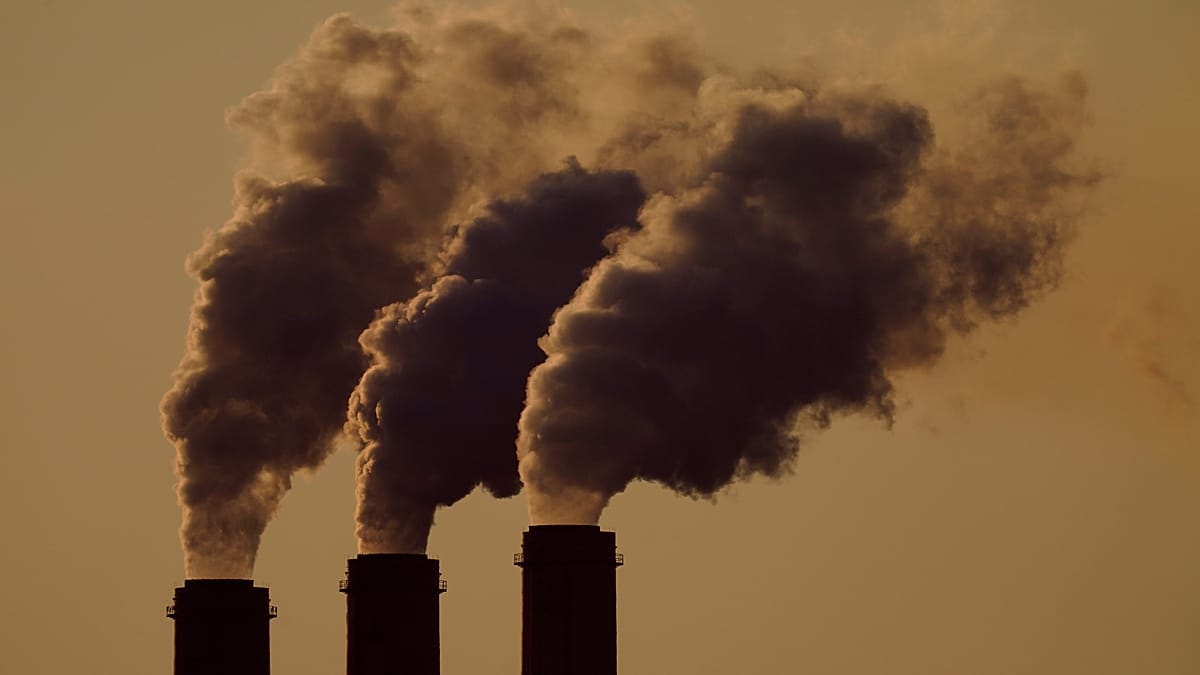
The world is making progress in shifting away from fossil fuels, but not nearly fast enough. That is the stark conclusion of the latest Emissions Gap Report from the United Nations Environment Programme (UNEP), released today. The report exposes a wide gap between political promises and actual action on climate change, and it sets the stage for the upcoming COP31 summit in Antalya, Turkey.
According to the report, even if countries fully implement their current climate pledges, global temperatures would still rise by 2.6°C above pre-industrial levels by 2100. If only existing policies are maintained, the warming could reach 2.8°C. Both scenarios far exceed the Paris Agreement's goal of keeping warming well below 2°C, while striving for 1.5°C.
UN Secretary-General António Guterres was blunt in his assessment: “The world can no longer avoid overshooting the 1.5 degree limit, and the consequences are already devastating.” He pointed to deadly floods, brutal heatwaves, and raging wildfires that have plagued many nations this year, adding that “those least responsible are suffering first and worst.”
A narrow but possible pathway
The report outlines a “lowest possible” overshoot scenario, where peak warming is limited to 1.7–1.8°C. To achieve this, global greenhouse gas emissions must be cut by 18% by 2030, 45% by 2035, and 69% by 2040, relative to 2025 levels. In addition, large-scale removal of carbon dioxide from the atmosphere would be required to bring temperatures back down to 1.5°C by 2100.
“The main takeaway is simple – governments need to get on with enacting policies that cut fossil fuel use as soon as possible,” said Bill Hare, CEO of Climate Analytics, a global policy institute.
The report also details what such a pathway would mean in practice: electricity generation from coal would need to fall by at least 75% by 2035 and be effectively phased out globally by 2040. Methane emissions would need to be at least 25% lower than 2025 levels by 2035, and 40% lower by 2040.
US stands out as a major exception
While emissions growth has slowed among the G20, the United States is a “major exception,” according to the report. Preliminary data for 2025 shows that US emissions increased by 133 megatons of CO2 equivalent – the largest rise of any country – driven by higher electricity demand and a rebound in coal power generation. The US is the world's second-largest emitter, behind China, and President Donald Trump has rolled back clean energy policies while boosting fossil fuel production.
UNEP Executive Director Inger Andersen stressed that no country is shielded from climate impacts, noting that they are being felt “on every nation on the planet, including the US.”
Among the top six emitters, emissions also rose in Indonesia and China, while they fell in India, Russia, and the European Union. Turkey, which is hosting COP31, recorded the next-largest increase after the US.
Political leadership under fire
The report comes as some climate-vulnerable developing nations accuse larger emitters of abandoning the Paris goals. A showdown over the 1.5°C target is expected at COP31, which runs from 9 to 20 November in Antalya.
Mohamed Adow, director of the Kenya-based think tank Power Shift Africa, called the situation “a historic failure of political leadership.” He added: “The science has been clear for decades, but governments have chosen delay over action. The consequences will be measured in lives lost, not just degrees of warming.”
The report also notes that global greenhouse gas emissions in 2025 were broadly on par with record levels in 2024, with the difference too small to call. Carbon emissions from burning coal, oil, and gas rose slightly in 2025 compared to the previous year.
For Europe, the findings reinforce the urgency of the bloc's own climate agenda. The EU has already seen emissions decline, but the report's call for deeper cuts across all major economies highlights the need for continued leadership. As European leaders prepare for COP31, they face pressure to not only meet their own targets but also to support developing nations in their transition.
The report's authors stress that the 1.5°C limit is now effectively out of reach, but that does not mean giving up. “Every additional fraction of a degree and additional year of warming above 1.5°C increases climate impacts and risks,” the report warns. The window for action is narrowing, but it is not yet closed.