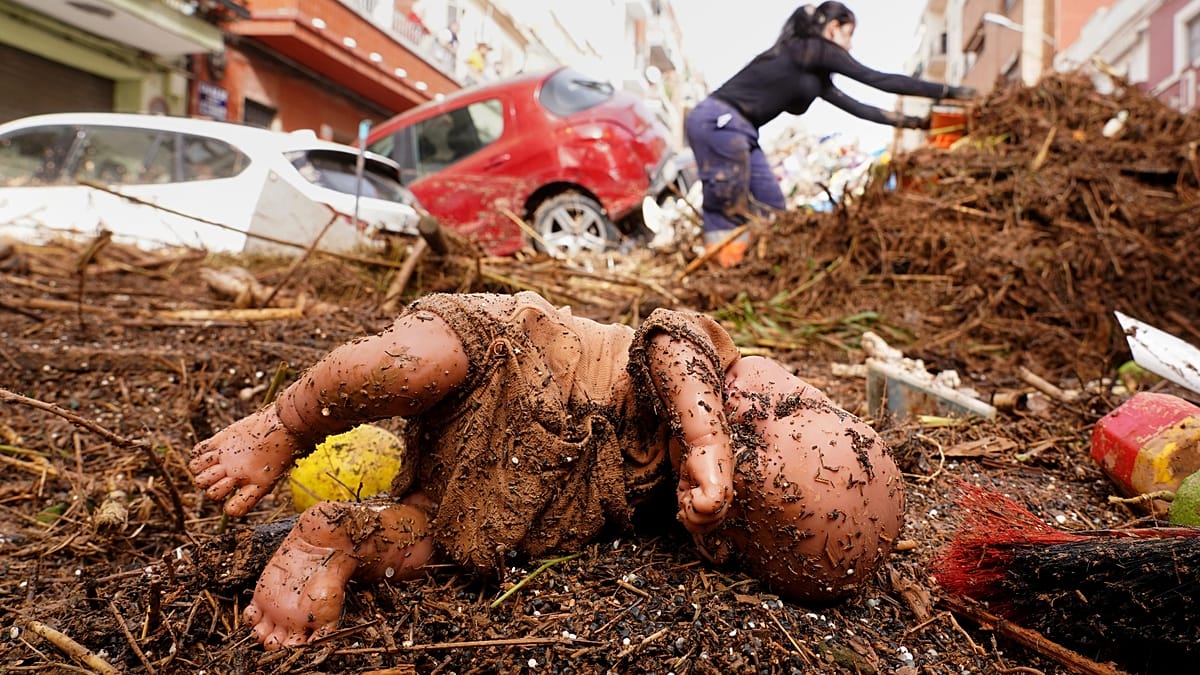
Eastern Spain is once again counting the cost of a sudden, violent storm. Storm Adam, which struck the Valencia region over the weekend, dumped up to 700 litres of rain per square metre in just 24 hours in some areas. The deluge swept away cars, submerged roads, and forced emergency crews to airlift residents to safety. At least five people have died, including a 79-year-old woman found in her home in Oliva, a man who suffered a fatal heart attack at a campsite, and another who drowned off a beach in Sagunto. In neighbouring Catalonia, a woman died after falling into a rain-swollen stream.
The storm is a stark reminder of the devastating floods that hit the same region in late 2024, when a year's worth of rain fell in a single day, claiming over 200 lives. That disaster, one of Europe's worst flood-related events in decades, prompted widespread criticism of the government's failure to issue timely warnings. This time, authorities appear to have learned the lesson: mobile phone alerts were sent before Storm Adam arrived, urging people to avoid travel, stay away from rivers and ravines, and seek higher ground.
The 2024 floods introduced many Europeans to the term DANA, an acronym for Depresión Aislada en Niveles Altos (isolated depression at high levels). In essence, a DANA is a pocket of very cold air that breaks off from the polar jet stream and becomes surrounded by much warmer air. This contrast creates intense instability, leading to heavy rain, thunderstorms, and a sudden drop in temperatures. The greater the temperature difference, the more violent the storm. That is why the most severe DANAs typically occur in late summer and early autumn, when the Mediterranean is at its warmest.
Spain's southeastern coast is particularly prone to these events because it sits at the meeting point of Atlantic and Mediterranean air masses. The region's mountainous terrain also helps to lift moist air, encouraging the formation of storm clouds. While the term DANA has become common in everyday Spanish, it is a relatively recent replacement for the older phrase gota fría (cold drop). Spain's meteorological agency, Aemet, explains that the older term is imprecise and has been superseded by a more accurate understanding of these high-altitude cut-off lows.
Is climate change making DANAs worse?
The scientific consensus is clear: global warming is intensifying these extreme rainfall events. Dr Friederike Otto, who leads the World Weather Attribution group at Imperial College London, said of the 2024 Valencia floods: “No doubt about it, these explosive downpours were intensified by climate change.” Her team's rapid analysis found that human-caused climate change made the rainfall about 12 per cent heavier and roughly twice as likely.
The mechanism is straightforward: a warmer atmosphere can hold more moisture, which means that when a storm does form, it can release far more water. In the 2024 event, an unusually wavy and stalled jet stream allowed the cut-off low to park over the region, pouring out a year's worth of rain in just eight hours. Record-high sea surface temperatures in the Mediterranean, made far more likely by climate change, provided additional energy and moisture. Prolonged drought in parts of eastern and southern Spain had also left the ground hard and less able to absorb water, worsening the flooding.
Dr Otto warns that these deadly floods are “yet another reminder of how dangerous climate change has already become at just 1.3°C of warming.” As global temperatures continue to rise, the risk of such extreme weather events across Europe will only grow. The UN's latest report underscores the urgency, calling for a drastic reduction in emissions to avert the worst impacts.
For Spain, adapting to a hotter, harsher climate is no longer a distant concern. The country is already exploring practical defences like rain gardens to mitigate flood risk in urban areas. But as the DANA storms demonstrate, the challenge is immense. The 2025 event, while less deadly than the previous year, is a sobering reminder that Europe's weather is becoming more volatile. As the continent grapples with the consequences, the link between climate change and extreme weather is no longer a matter of debate—it is a lived reality.