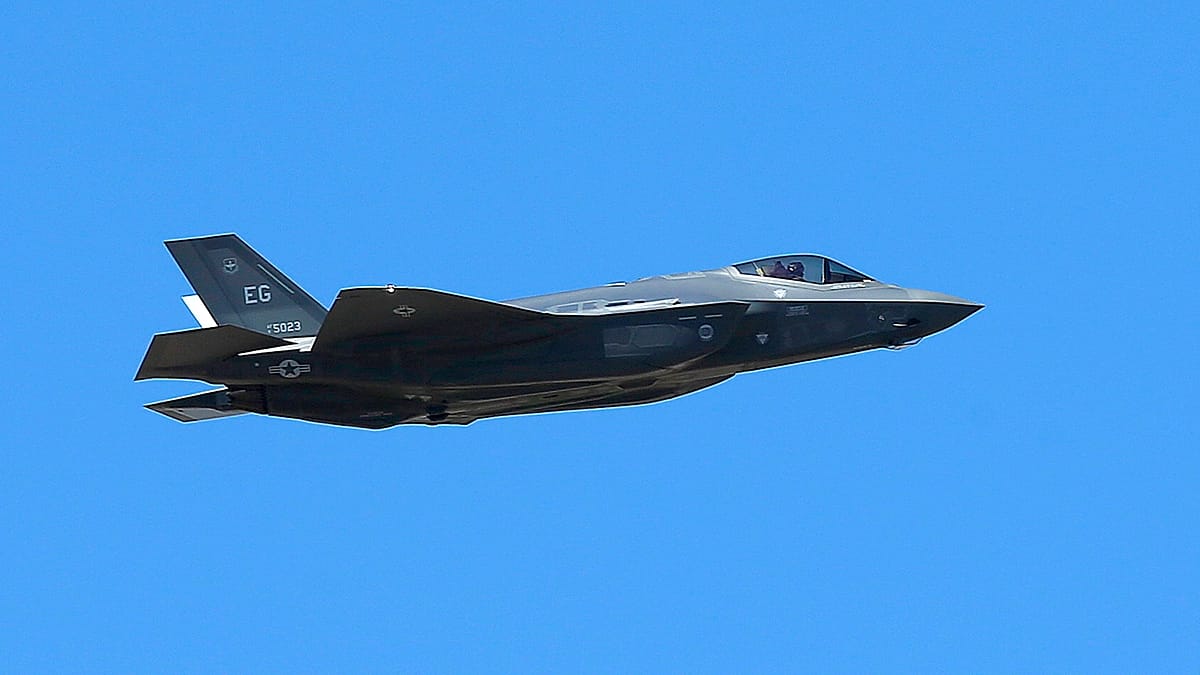
The prospect of Turkey rejoining the F-35 fighter jet programme has ignited a fresh political battle in Washington, pitting the White House's desire for closer ties with Ankara against a bipartisan coalition in Congress determined to uphold existing legal barriers.
President Donald Trump's recent meeting with Turkish President Recep Tayyip Erdoğan revived discussions about Ankara's potential return to the multinational programme, from which it was expelled in 2019. However, no official decision has been announced, and the issue has quickly moved to Capitol Hill, where lawmakers are preparing to intervene.
Greek-American lobby leads the charge
Democratic Congresswoman Dina Titus of Nevada has spearheaded the first organised response, gathering 18 signatures on a letter to House leadership. The letter calls for guarantees that current US law will be enforced and that Congress will be ready to block any administration attempt to reinstate Turkey.
“Dina Titus has brought together various, mainly Democratic, representatives – 18 in total – who have sent a letter to the House leadership so that they are ready to act and prevent any move we may see from President Trump on the F-35s,” said Thanos Davelis, Director of Public Affairs at the Hellenic American Leadership Council (HALC).
Davelis noted that Republican lawmakers, while equally cautious, are pursuing a quieter strategy. “The Republicans seem to be moving internally. They do not want to put their names to this letter and are trying to persuade the Trump administration from within, making use of their various contacts.”
Legal hurdles and the S-400 dilemma
The core obstacle to Turkey's return is the CAATSA (Countering America's Adversaries Through Sanctions Act) law, which imposes sanctions on countries that purchase major Russian defence equipment. Turkey's acquisition of the S-400 surface-to-air missile system triggered these sanctions and led to its expulsion from the F-35 programme.
Congress has since added further legislative restrictions through defence budget bills, explicitly linking Turkey's re-entry to the removal of the S-400s. “There are two pieces of legislation which essentially stipulate that the F-35s cannot go to Turkey as long as it still possesses the S-400s,” Davelis explained.
A key legal question now under debate in Washington is the interpretation of the word “possession”. US law does not merely require that the S-400s be deactivated or unused; it requires that Turkey no longer have them at all. This has led to speculation that Ankara might transfer the system to a third country to circumvent the restriction.
Beyond the legal dimension, US officials remain deeply concerned about the security of F-35 technology. Operating a Russian S-400 system in proximity to the fifth-generation fighter could allow Moscow to gather critical data on its stealth characteristics, electronic warfare capabilities, and operational performance. “There is a risk that the S-400s could record or obtain various pieces of information which constitute US secrets about these F-35s, and that this information could then be passed on to the Russians,” Davelis stressed.
Athens watches closely
Greece, a NATO ally with longstanding tensions with Turkey over Aegean and Eastern Mediterranean disputes, has been monitoring the situation closely. While Athens acknowledges that arms sales are a sovereign US decision, it has raised concerns about the potential for advanced weapons to be used against another alliance member.
Greek officials point to unresolved issues such as the 1995 Turkish parliamentary resolution that includes a justification for war, ongoing challenges to Greek sovereign rights, and disputes over maritime boundaries. They are calling for any sale of advanced systems to be accompanied by clear safeguards ensuring they cannot be used against a fellow NATO member.
The lobbying effort extends beyond the Greek-American community. According to Davelis, American-Jewish organisations are also actively engaging on the issue. “American Jews continue to be a strong political voice. They are well organised and are acting along similar lines in Washington on the F-35 issue.”
The final outcome will depend on the balance between the White House's strategic interest in rapprochement with Ankara and Congress's determination to enforce the legislative framework it has built. For now, the legal and political barriers remain formidable, and any move to reinstate Turkey would likely face a protracted battle on Capitol Hill.