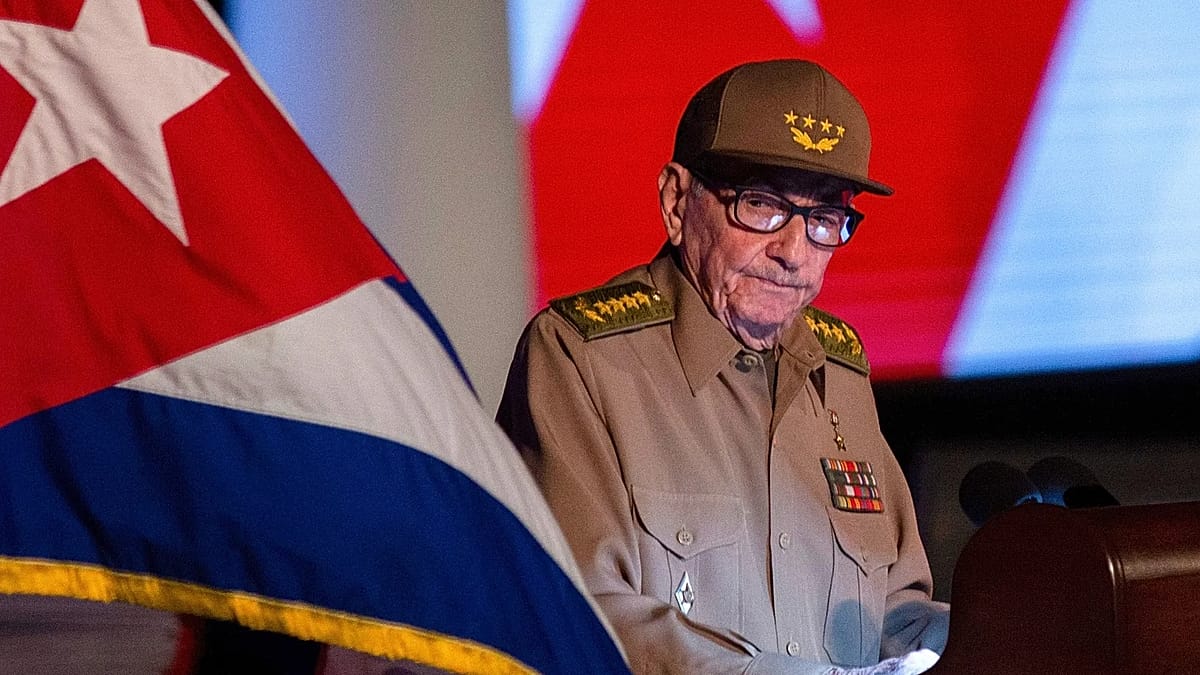
The United States Justice Department has unsealed an indictment against former Cuban president Raúl Castro, charging him with conspiracy to kill Americans and other crimes related to the 1996 downing of two civilian aircraft operated by a Cuban exile group. The 94-year-old Castro, who succeeded his brother Fidel as head of state, now faces legal action from Washington over an incident that has long strained relations between the two countries.
The indictment, made public on Wednesday, accuses Castro and other unnamed individuals of orchestrating the attack on the planes, which were flown by members of the group Brothers to the Rescue. The aircraft were shot down by Cuban fighter jets in international airspace north of Cuba, killing four people, including three US citizens. The case revives a decades-old grievance that has been a flashpoint in US-Cuba relations.
Historical Context and Political Shifts
Raúl Castro took over the presidency from his brother Fidel in 2008, after the latter stepped down due to illness. During his tenure, he oversaw a historic rapprochement with the United States under President Barack Obama in 2015, which included the reopening of embassies in Havana and Washington. However, that thaw was largely reversed under the Trump administration, which reimposed sanctions and tightened the economic embargo on the island.
The indictment comes at a time of heightened tensions between the two nations. In recent months, the US military conducted a raid in Venezuela that ousted President Nicolás Maduro, a key Cuban ally, and imposed a stringent energy blockade on Cuba. The blockade has exacerbated the island's already severe economic struggles, leading to widespread blackouts and fuel shortages. For more on the energy crisis, see our earlier report: US reportedly seeks indictment of Raúl Castro as Cuba's energy crisis deepens.
The legal action against Castro is likely to further complicate any prospects for renewed dialogue between Washington and Havana. European observers, particularly in capitals like Madrid and Brussels, have watched the deterioration of US-Cuba relations with concern, as the EU maintains its own diplomatic and economic ties with the island nation. The EU has consistently opposed extraterritorial US sanctions on Cuba, arguing they undermine multilateral trade and diplomacy.
From a European perspective, this indictment raises questions about the rule of law and international justice. While the US has a long history of prosecuting foreign leaders under its domestic laws, such moves are often viewed skeptically in Europe, where many prefer to address international crimes through bodies like the International Criminal Court. The case also highlights the complex legacy of the Castro regime, which has been both criticized for human rights abuses and admired by some European leftists for its social programs.
Raúl Castro, now retired from official positions, remains a figure of historical significance. His indictment may also draw attention to other former leaders facing legal scrutiny, such as Spain's former Prime Minister Zapatero, who is under formal investigation for influence peddling. The contrast between these cases underscores the different legal and political systems at play.
The timing of the indictment is notable, as it coincides with a broader US push to isolate Cuba and its allies. The energy blockade, combined with the ouster of Maduro, has left Cuba in a precarious position. The island's economy, already battered by the pandemic and US sanctions, is now facing its worst crisis in decades. For a look at how other nations are handling leadership transitions, see Denmark's former Queen Margrethe leaves hospital after heart procedure.
As the legal process unfolds, it remains to be seen whether the US will seek extradition of Castro or if the indictment is primarily symbolic. Either way, the move signals that Washington is not willing to let the past be forgotten, even as it pursues a hardline policy toward Havana. For European readers, this story serves as a reminder of the enduring impact of Cold War-era conflicts on contemporary geopolitics.