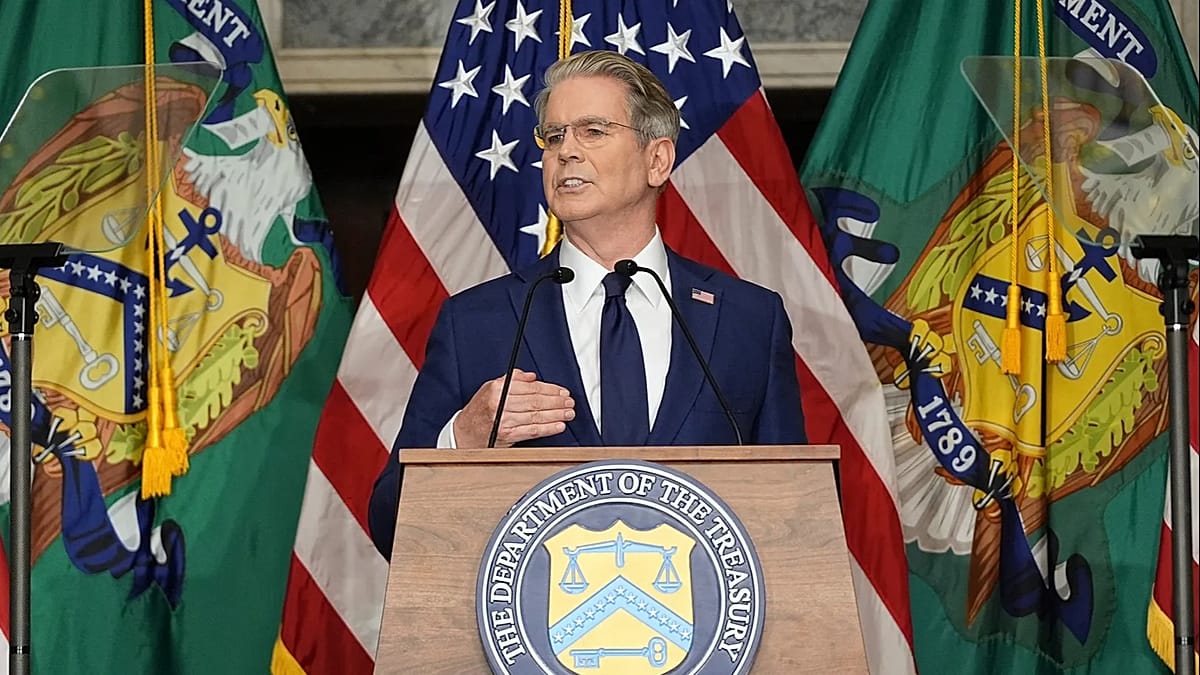
The United States has unveiled a sweeping financial campaign against Iran, dubbed “Operation Economic Outcast,” as Washington intensifies efforts to cut off Tehran's revenue streams amid the ongoing conflict in the region. Treasury Secretary Scott Bessent outlined the initiative on Monday, describing it as an “unprecedented campaign” targeting not only Iran but also the networks and entities that facilitate its financial activities.
“Treasury has mapped every node, every facilitator, and every network that Iran has used to smuggle oil and evade sanctions,” Bessent said. “Beginning today, the actions of Treasury and other agencies will tighten the noose and block every potential source of revenue that funds the IRGC and the evil Iranian regime.”
The campaign marks a significant escalation in US economic pressure, with Bessent warning that “any entity that facilitates money laundering on behalf of Iran will be removed from the US dollar system.” This threat extends beyond Iranian entities to include foreign banks, companies, and individuals who may be involved in such activities, a move that could have ripple effects across global financial markets.
Targeting key sectors
As part of the initiative, the Treasury Department announced determinations against five critical sectors: digital assets, technology, gold, aviation, and shipping. These sectors are seen as vital to Iran's efforts to sustain its economy and circumvent existing sanctions. By targeting these areas, Washington aims to choke off the resources that support Iran's nuclear program and its regional proxies.
President Donald Trump has also been in contact with unspecified world leaders, urging them to cease cooperation with Iran. This diplomatic push is intended to complement the financial measures, creating a unified front against Tehran.
Bessent framed the situation as a stark choice for Iran: “Complete global isolation and a subsistence economy, or a path back to normalcy, with an opportunity to rejoin the global economy.” The ultimatum underscores the administration's belief that economic pressure can force a change in Iranian behavior.
The announcement comes roughly six months after US and Israeli strikes on Iran marked the beginning of the war in the region, which the Trump administration says aims to ensure Iran can never obtain a nuclear weapon. The conflict has largely ground to a stalemate in recent months, with negotiations faltering and a growing dispute over control of the Strait of Hormuz.
European observers are closely watching the developments, as the campaign could have significant implications for European companies and financial institutions that have any dealings with Iran. The threat of being cut off from the US dollar system is a powerful deterrent, and many European firms may be forced to reassess their exposure to Iranian markets.
In Brussels, officials are likely to weigh the impact on the Joint Comprehensive Plan of Action (JCPOA), the 2015 nuclear deal that the US withdrew from in 2018. European signatories have struggled to maintain economic ties with Iran, and this new campaign could further complicate those efforts.
The move also comes amid broader economic tensions, as the US debt has topped $40 trillion, prompting the Treasury to double bond buybacks to calm markets. The financial strain is being felt globally, and the new sanctions could add to the volatility.
As the situation evolves, European policymakers will need to balance their commitment to the nuclear deal with the realities of US financial power. The coming weeks will reveal whether the campaign succeeds in isolating Iran or whether it further destabilizes an already fragile region.