The United States formally launched a review of its military posture in Europe on Monday, a step that signals a fundamental shift in transatlantic security arrangements. The assessment, ordered by the Trump administration, is intended to accelerate a transition in which European allies take on the primary burden for their own conventional defence.
Under Secretary of Defence for Policy Elbridge Colby announced the review on social media, stating that it is "designed to ensure that NATO is moving fast and irreversibly toward Europe taking primary responsibility for its conventional defence." He added that the outcome would produce "a stronger, more equitable, and sustainable alliance."
The decision comes a month after Defence Secretary Pete Hegseth told NATO counterparts gathered in Brussels that Washington would conduct such a review. Speaking at NATO headquarters, Hegseth warned that "some countries will fail and others will pass with flying colours," underscoring the administration's impatience with what it sees as insufficient European defence spending and strategic commitment.
Iran war strains alliance
Hegseth used the Brussels meeting to echo President Donald Trump's repeated criticism of European allies over their response to the joint US-Israeli military campaign in Iran. He specifically rebuked several EU member states for refusing to allow US forces to use bases on European soil to launch attacks against Iranian targets. The Pentagon chief also threatened to reduce Washington's financial contribution to NATO unless allies meet agreed defence spending targets.
The review, while not unexpected, deals a blow to European capitals already grappling with an increasingly unpredictable partner. German Chancellor Friedrich Merz acknowledged last month that allies had long anticipated Washington's intention to reduce its troop presence. "We know that we must do more and we are doing it," Merz said, reflecting a growing consensus across the continent.
In recent months, European NATO members and Canada have accelerated efforts to bolster their own defence capabilities. Speaking ahead of the annual NATO summit in Ankara earlier this month, European Commission President Ursula von der Leyen and NATO Secretary General Mark Rutte both stressed that the alliance must become more European to reduce its long-standing reliance on the US security umbrella.
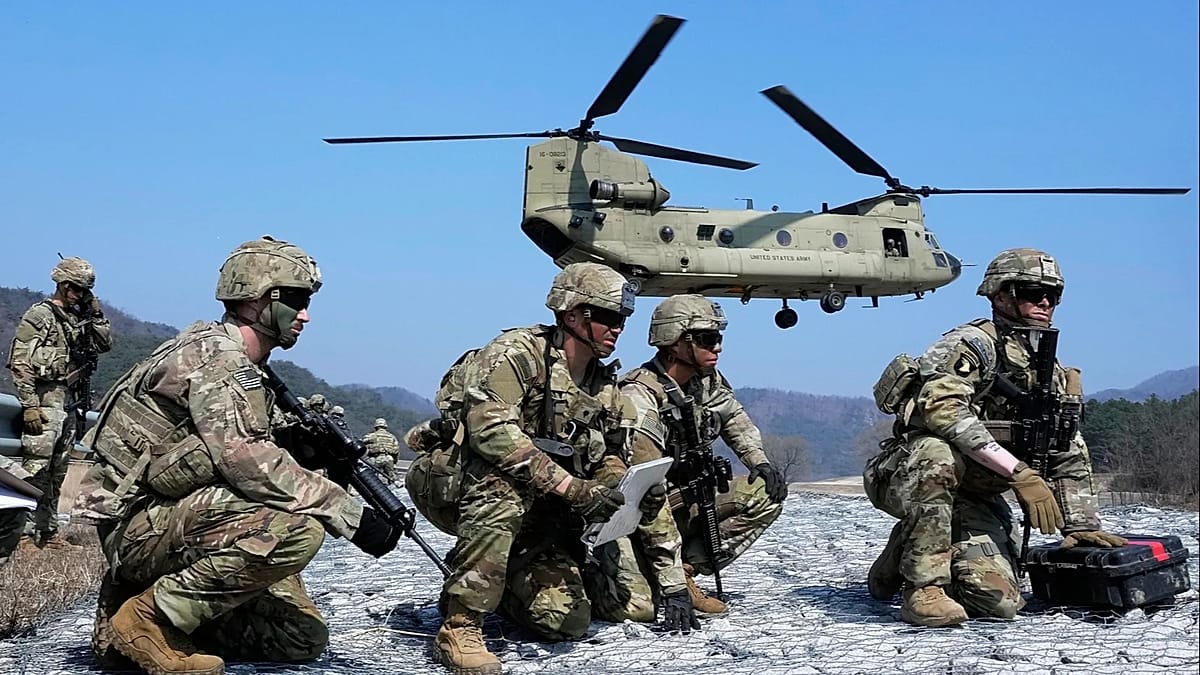
The review's scope remains unclear, but it is expected to examine troop numbers, base locations, and logistical support across the continent. Washington currently stations roughly 100,000 military personnel in Europe, with major concentrations in Germany, Italy, the United Kingdom, and Poland. Any significant reduction would reshape the security architecture that has underpinned European defence since the Cold War.
Analysts note that the timing of the review is particularly delicate. The war in Ukraine continues to drain European defence resources, and several member states are still struggling to meet NATO's target of spending 2 percent of GDP on defence. Meanwhile, the conflict in Iran has exposed deep divisions within the alliance over the use of European territory for offensive operations.
For Brussels and national capitals, the message is clear: the era of automatic US protection is ending. Whether Europe can fill the gap quickly enough remains an open question.