Washington has declared that Brussels is now a formal partner in its financial pressure campaign against Tehran, but the European Union's actual position is more cautious than the American framing suggests.
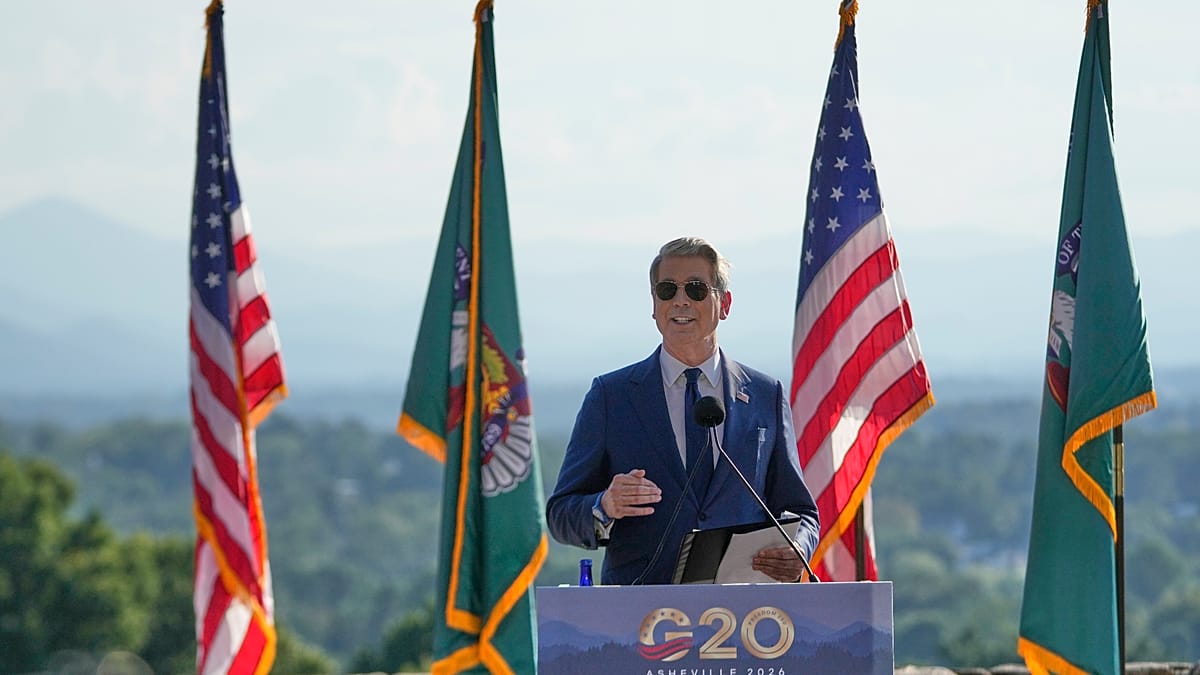
US Treasury Secretary Scott Bessent announced on Friday that the EU had "officially joined" Operation Economic Outcast, the US-led initiative to cut Iran off from the global banking system. He praised the bloc for taking an "early and strong stance" and said the world was "sending a clear message to the Iranian regime."
Yet the European Commission statement Bessent cited, published on 31 August at the G20 finance ministers' meeting in Asheville, North Carolina, does not contain any formal commitment to join the operation. Instead, it "welcomes efforts" to increase economic pressure on Iran, including through the US-led campaign, and says the EU will "continue to work closely with the United States and other G7 and international partners."
What Brussels actually said
The EU statement lists longstanding concerns: Iran's nuclear and ballistic missile programmes, its destabilising activities in the region and in Europe, its military support for Russia's invasion of Ukraine, and its repression of the Iranian population. It notes that the EU "has adopted extensive sanctions to prevent Iran from exploiting the global economy and financial system" and "remains ready to take further measures, where necessary, to safeguard its security and interests, including freedom of navigation through the Strait of Hormuz."
But on the US campaign itself, the wording is carefully limited. The EU "welcomes efforts at ensuring that Iran ceases its destabilising activities and engages in peace negotiations with good faith, also through additional economic pressure, including through the US-led Operation Economic Outcast." It also restates a preference Washington does not share with equal emphasis: "believes continued diplomatic efforts are necessary to reach a peace settlement."
Nowhere does the statement say the EU is joining the operation. Brussels announced no new sanctions, no alignment with US designations, and no change to its own sanctions regime, which already covers Iran's nuclear and missile programmes and its support for Moscow.
Endorsement, not accession
The characterisation of the EU as having formally joined Operation Economic Outcast is Bessent's, and several news organisations have adopted his framing. At the time of writing, neither the European Commission nor the European External Action Service has publicly commented on that characterisation. What Brussels has offered so far is an endorsement of American pressure rather than participation in it.
The distinction matters because of what Operation Economic Outcast involves. Launched in late August, it targets Iran's access to digital assets, advanced technology, gold, commercial aviation and shipping, and relies on secondary sanctions — meaning penalties against foreign firms and banks that keep dealing with Iran. The US Treasury designated close to 60 companies, individuals and vessels at the outset and has signalled fresh measures weekly, starting with banks.
European companies could be exposed to those penalties. The EU's Blocking Statute in principle bars them from complying with US sanctions on Iran without permission from the European Commission. For European banks and exporters, the difference between endorsing the campaign and joining it is the difference between watching it and being bound by it.
The gap between Washington's rhetoric and Brussels' actual commitment remains unclosed. As the EU continues to navigate its own sanctions regime — including recent measures targeting Russian officials over child deportations in Ukraine — the bloc is clearly wary of being drawn into a US-led campaign that could have significant consequences for its own financial institutions.
For now, the EU's position is one of cautious support, not formal accession. Whether that will change remains to be seen, but the bloc's careful wording suggests it is not ready to fully align with Washington's maximalist approach.