The 61st Venice Biennale opened amid protests over Russia and Israel's participation, with some pavilions closing and threats of funding cuts from EU member states. Yet the most resonant works this year are those that quietly embody the late curator Koyo Kouoh's vision of 'In Minor Keys'—a deliberate turn away from the 'anxious cacophony of the present chaos' toward softer tones of emotion, connectivity, and grounding.
Kouoh, who died in May 2025, wanted the Biennale to be an 'archipelago of oases' rich with memory and feeling. The pavilions that best capture this spirit are not the loudest, but those that invite visitors to slow down, listen, and care.
Japan: A Collective Act of Care
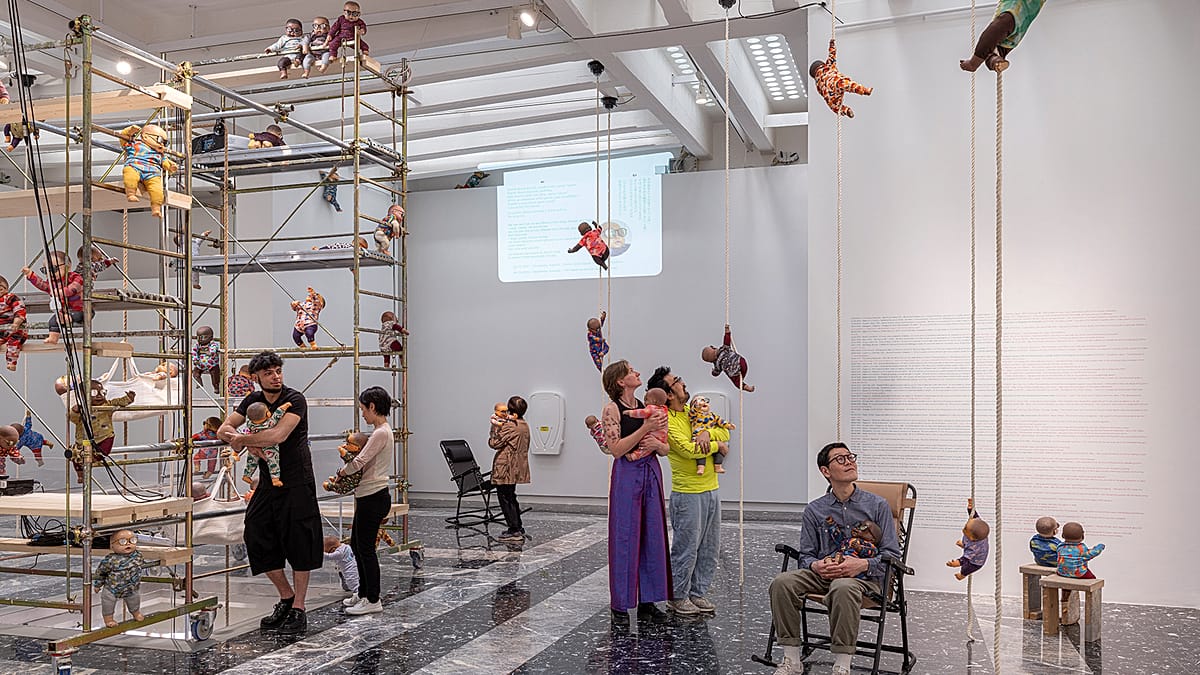
At the Japan Pavilion in the Giardini, visitors are greeted by an unusual sight: adults cradling baby dolls in funky onesies and sunglasses. Grass Babies, Moon Babies by Japanese American queer artist Ei Arakawa-Nash invites each visitor to carry one of 57 dolls through the pavilion's pilotis, gardens, and interior spaces. Participants can change the dolls' diapers and scan a QR code to receive a 'diaper poem' based on the baby's assigned birthday.
The installation provokes joy, nostalgia, responsibility, and grief—forcing a confrontation with the fundamental social question of raising children in an uncertain future. As the curators write, 'how can we celebrate a new generation of babies while we, as caregivers, undertake the unfinished work of reparations and amends that shape the world they enter?'
Poland and the Holy See: The Sound of Minor Keys
Kouoh's melodic theme inspired a wealth of sound-based shows. In the Polish Pavilion, Bogna Burska and Daniel Kotowski's Liquid Tongues is an audio and video installation featuring a choir of both hearing and Deaf singers who chant and sign in International Sign Language. Giant screens—one mounted on the ceiling so visitors can lie back on a cushioned bench—play performances inspired by whale songs, an 'unheard voice' like that of the Deaf community. The project reclaims languages pushed aside by dominant voices, including Hand Talk, the Plains Indian Sign Language used by Indigenous people in North America. As the curators note, 'Based on the idea of Deaf Gain, deafness isn't seen as a disability. Most of the footage was shot in water. Deaf people can sign freely there, but hearing people can only make muffled sounds.'
The Holy See Pavilion, The Ear is the Eye of the Soul, set in the Giardino Mistico—a convent garden of the Discalced Carmelite order—invites visitors to don open-ear headphones and wander in silence, encountering sound commissions by experimental musicians inspired by 12th-century Saint Hildegard of Bingen's chants and visions. In a world racing toward novelty, this act of walking and listening feels radical.
Austria: Venice's Grim Future
Perhaps the buzziest pavilion this year is Austria's Seaworld Venice by choreographer and performance artist Florentina Holzinger. A permanent live installation that blends an underwater theme park with a sewage treatment plant, it offers a blunt vision of Venice's future under climate change. A naked jet skier zooms in circles, while performers swim in simulated urine—a visceral commentary on the city's fragile ecosystem. The pavilion has drawn crowds for its audacity and its melancholic reflection on Venice's plight.
Other notable pavilions include Qatar's exploration of hospitality and migration through food, and the Urban Art Biennale transforming Völklingen Ironworks into an open-air gallery. Amid the political noise, these quieter, more intimate works are likely to keep drawing visitors throughout the Biennale.