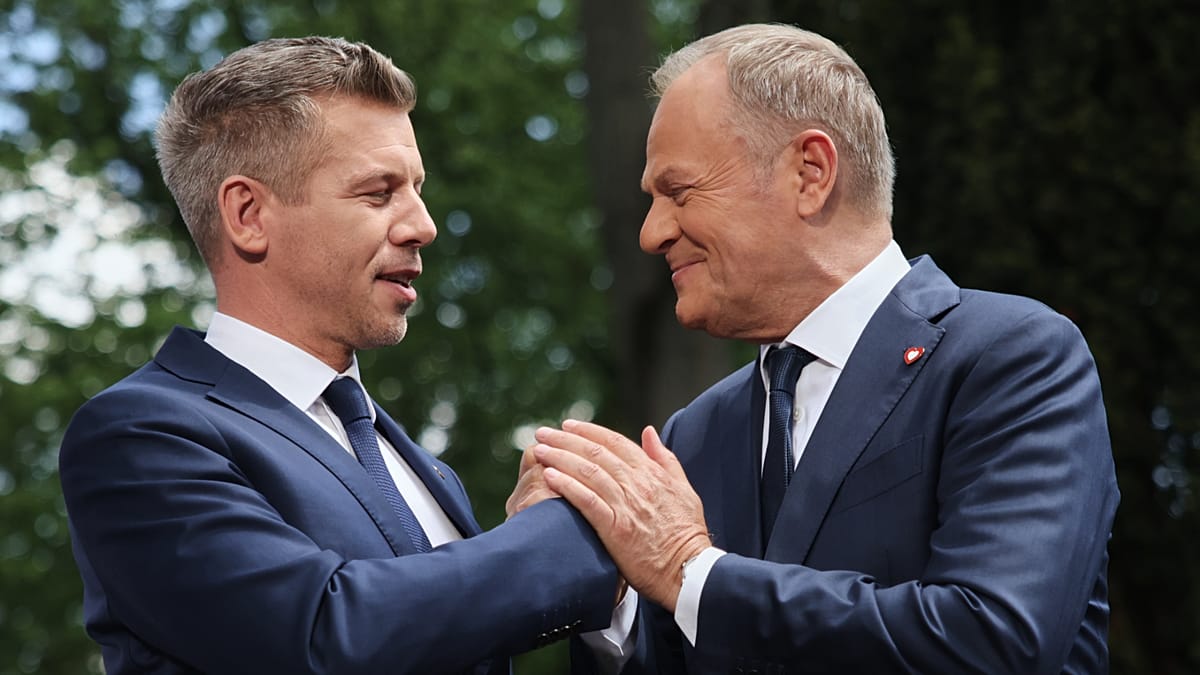
The Visegrád Group, a once-influential alliance of four Central European nations, may be on the verge of a revival. With Hungary's newly elected Prime Minister Péter Magyar seeking to mend ties with neighboring capitals, the V4—comprising Poland, Slovakia, Czechia, and Hungary—could regain some of its former clout in Brussels.
Magyar's landslide victory last month ended Viktor Orbán's 16-year rule, a period that saw Budapest increasingly isolated within the European Union due to its close ties with Moscow. The new Hungarian leader chose Warsaw for his first state visit abroad, a symbolic gesture underscoring centuries of friendship between the two countries. In a joint press conference with Polish Prime Minister Donald Tusk, Magyar declared, "We're ready to revive Visegrád 4. We'll work on organising a V4 summit in Budapest at the end of June."
What a Revived V4 Could Mean
The appetite for revival extends beyond Budapest. Slovakia, which assumes the V4 chairmanship in July, is also keen to breathe new life into the grouping. Slovak Prime Minister Robert Fico posted on X a photograph with Tusk and Czech Prime Minister Andrej Babiš, captioning it, "Three musketeers are waiting for the fourth and the revival of V4." However, the practical implications of a revived V4 remain uncertain. The four countries together represent a population and economy comparable to Italy's, giving them a collective voice that Brussels cannot easily ignore. Yet, many of the issues the V4 once championed—tougher migration controls and a pro-business agenda—have since become mainstream across much of the EU, forcing the group to find fresh terrain.
Geographical proximity and similar economic structures provide a natural basis for cooperation. Diplomatic sources indicate that regional infrastructure projects, such as cross-border high-speed rail links and electricity grid interconnections, are likely starting points. Alignment is also expected on nuclear energy, resistance to elements of the European Green Deal like the Emissions Trading System, and negotiations over the EU's long-term budget, particularly cohesion funding for less wealthy regions. The format is expected to remain flexible, expanding on an issue-by-issue basis. Austria is seen as an obvious candidate for a V4+ arrangement, given its existing cooperation with Czechia and Slovakia through the Austerlitz group. Magyar has also mentioned potential partnerships with Scandinavian countries, Austria, Croatia, Slovenia, Romania, and Western Balkan states not yet in the EU. France, Germany, and Italy could be ad hoc partners depending on the topic.
Fault lines remain, however. Differences over Russia and Ukraine will not dissolve quickly. Hungary's new government has signalled continuity on Russian gas imports while pledging to phase them out by 2035. Hungarian-Slovak relations are periodically strained by a long-running dispute over the post-World War II Beneš decrees, a grievance that tends to resurface around election time—and Slovakia heads to the polls next year. Meanwhile, Babiš was a close Orbán ally and sits in the same European Parliament group, raising questions about his future relations with Magyar's government. As one diplomatic source noted, "The focus has always been on the subject of common interests. More controversial issues won't be put on the table."
After several years of estrangement, the four Visegrád countries appear to have more in common than divides them. In an era of heightened geopolitical uncertainty, the V4 may once again choose to speak with a single, louder voice. Whether that voice will carry real weight in Brussels remains an open question, but the signals from Budapest and other capitals suggest a renewed willingness to try.