European Commission President Ursula von der Leyen has announced a new "strategic dialogue" on the future of European refineries, spotlighting a growing weakness in the EU's energy posture: its steadily shrinking capacity to turn crude oil into the fuels its economy still depends on.
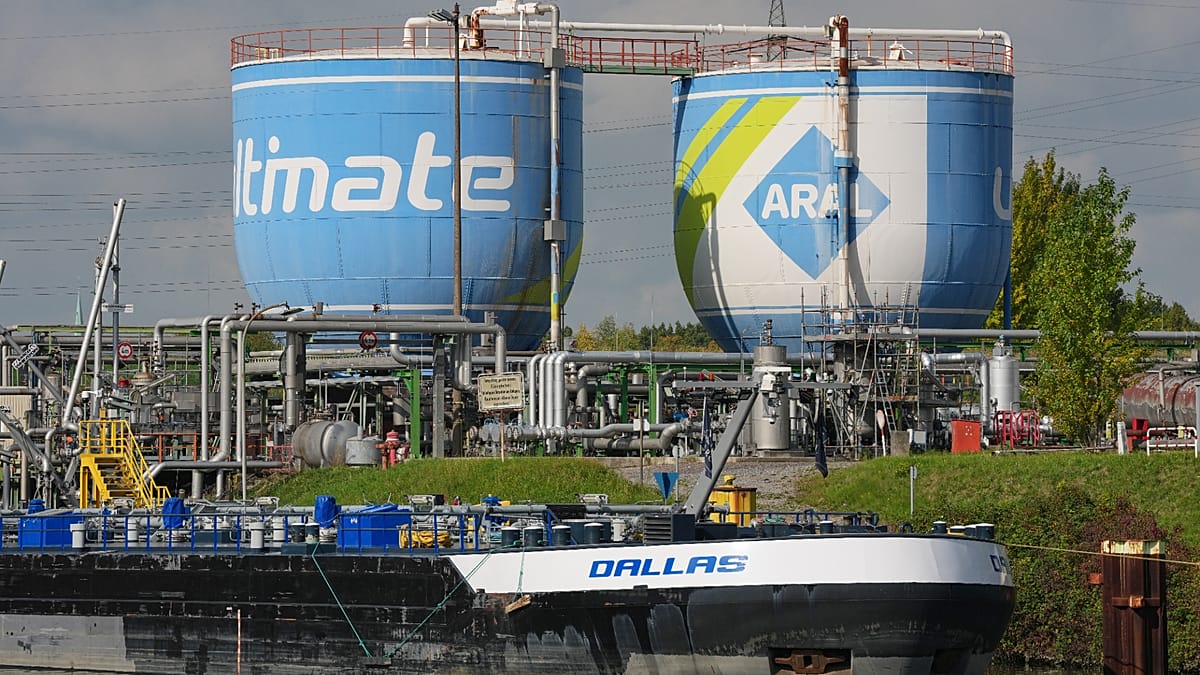
Since 2009, the number of operational refineries across the EU, UK, Norway and Switzerland has fallen from over 100 to just 72, with primary refining capacity down by 167.6 million tonnes a year — a drop of roughly 20%, according to data from Concawe, the scientific arm of the industry body FuelsEurope. Germany remains the largest refining hub with 98.7 million tonnes of annual capacity, followed by Italy (78.6 million), Spain (70.6 million), the Netherlands (59.7 million) and France (57.4 million).
The closures reflect a mix of ageing plants, thinner profit margins, and shifting demand as Europe pushes toward cleaner energy. But the result is that the EU now imports a larger share of its finished fuels — diesel, jet fuel and petrol — from markets that are often less stable, including the Middle East, the United States and India.
Von der Leyen told EU lawmakers ahead of the 15 October summit of heads of state that the dialogue aims "to bring down costs and to ensure we have the supplies needed also for defence." The talks will be co-chaired by Energy Commissioner Dan Jørgensen and Defence Commissioner Andrius Kubilius.
Geopolitics and the price of dependence
The urgency is not purely economic. Global oil markets have become more volatile, with Brent crude averaging $101 per barrel in September and tensions escalating in the Middle East. The G7's latest emergency oil stock release was designed to provide short-term relief, but Commissioner Jørgensen warned that since the US and Israel bombed Iran on 28 February, the EU has paid more than €100 billion in additional costs for fossil fuel imports — without actually importing more fuel.
Ukrainian attacks on Russian refineries and China's suspension of fuel exports have further tightened supply, raising the risk that the EU could draw down its emergency reserves faster than planned. Saudi Aramco's chief Amin Nasser recently described global oil stockpiles as "scarily thin."
Europe can still import crude oil relatively easily, despite disruptions at key chokepoints, but its reduced refining capacity means it cannot guarantee the refined products it needs. Ben McWilliams, an affiliate fellow at the think tank Bruegel, said that emergency stocks are no substitute for domestic refining capacity and that the EU's ability to refine oil is of "significant strategic relevance."
"Europe needs to ensure that it carefully maintains a domestic resource of oil refining capacity, particularly to meet the unique demands of each fuel (including diesel, gasoline, kerosene, and naphtha for the chemical industry)," McWilliams told Euronews.
Industry warns of future resilience
FuelsEurope, which represents nearly all of Europe's refining capacity, argues that the debate is not about the past but about the continent's future resilience. "The real question is whether Europe will continue to produce a significant share of them domestically while transforming its industry, or become increasingly dependent on imports from regions with different regulatory, environmental and geopolitical conditions," a spokesperson said.
The trade body points to the 35 refinery closures since 2009 as a structural weakness that is now "coming back to bite." At least five of the closed sites have been converted into biorefineries, but the overall loss of conventional capacity remains significant.
Greens: replace demand, not capacity
Not everyone agrees that rebuilding refining capacity is the right answer. Michael Bloss, a German Green MEP, said the EU is "dangerously" being pushed to deplete its emergency stocks just before winter. "We are being blackmailed and don't control our own energy. Right now the US is pressuring us over our own diesel stocks, Russia is withholding diesel as leverage over sanctions, and China has paused exports," he told Euronews.
Bloss argues that refinery closures were business decisions driven by declining oil demand and shrinking margins. "Those were business decisions, and oil demand will continue to collapse, so probably they were right," he said. But he identified a "real mistake": the bloc's emergency stocks are held mostly as crude oil, while its actual weak spot is diesel and jet fuel.
"Blaming climate policy for refinery closures gets the story backward," Bloss added. He advocates replacing demand rather than refining capacity, noting that building a new refinery or repurposing an existing one would take years and would still leave Europe dependent on crude oil. "Europe should put its money into electrifying road transport," he said.
The strategic dialogue comes as the EU also grapples with broader energy security questions, including France's proposal for a dual oil release ahead of G7 discussions. The outcome of the talks will shape whether Europe invests in maintaining its refining base or accelerates the shift away from fossil fuels altogether.