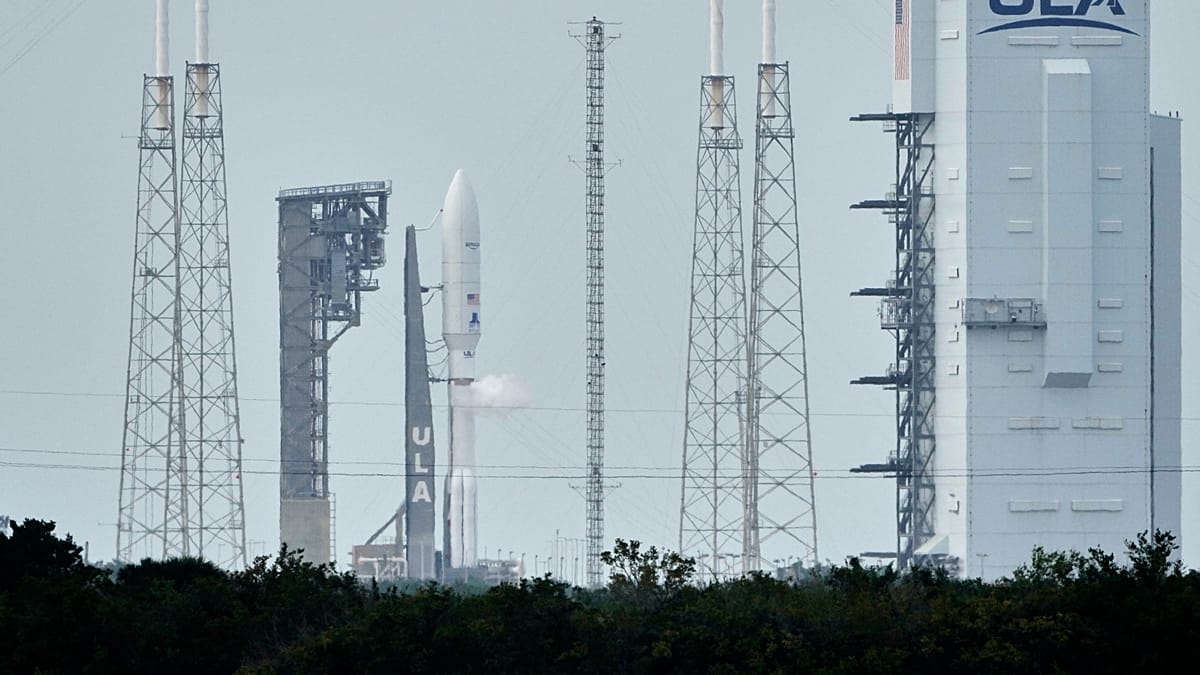
A United Launch Alliance (ULA) Vulcan rocket lifted off from Cape Canaveral, Florida, on Sunday, but the mission ended in failure when an anomaly occurred roughly ten minutes into the flight. The company confirmed that the rocket failed to deliver its payload of 40 Amazon internet satellites into orbit, a significant blow to Amazon's ambitious plan to build a global broadband network.
The satellites were part of Project Kuiper, Amazon's initiative to provide high-speed internet services from low Earth orbit. The launch was one of several dozen flights that Amazon had contracted with ULA to deploy its constellation, which is intended to compete with SpaceX's Starlink and other broadband systems.
Technical failure and immediate consequences
According to ULA, the anomaly occurred during the second stage burn, a critical phase when the rocket is tasked with placing the satellites into their designated orbit. The company has not yet disclosed the precise cause, but it has initiated an investigation. The loss of the 40 satellites represents a substantial financial setback, as each satellite is estimated to cost millions of dollars to build and launch.
This is the first major failure for the Vulcan rocket, which had previously completed two successful test flights. The vehicle is a cornerstone of ULA's future launch manifest, and this incident raises questions about its reliability and the timeline for upcoming missions. For Amazon, the failure complicates its efforts to meet regulatory deadlines for deploying a significant portion of its constellation by mid-2026.
The incident also highlights the inherent risks of the commercial space industry, where a single malfunction can erase years of planning and investment. European observers, particularly those involved in the continent's own satellite initiatives, will be watching closely. The European Space Agency and private firms like Arianespace are developing their own launch capabilities, and this failure serves as a reminder of the technical challenges involved.
Amazon has not yet commented on how the loss will affect its overall deployment schedule. The company had planned to launch more than 3,000 satellites for Project Kuiper, and this setback could delay the start of commercial service, which was expected to begin later this year.
For Europe, the incident underscores the strategic importance of independent access to space. As European nations seek to bolster their own satellite infrastructure—for communications, navigation, and Earth observation—the reliability of launch vehicles becomes a matter of continental security and economic competitiveness. The recent establishment of Turin's new Stellar Hub to mass-produce satellites is a step in that direction, but the Vulcan failure shows that launch reliability remains a fragile link in the chain.
Meanwhile, the broader context of space competition is intensifying. SpaceX continues to launch hundreds of Starlink satellites each month, and other players, including OneWeb and the Chinese government, are expanding their constellations. Amazon's setback could give competitors a temporary advantage, but the company has the financial resources to recover.
The investigation into the Vulcan failure will be closely scrutinized by the aerospace industry, regulators, and Amazon's partners. ULA has a strong track record of reliability with its Atlas and Delta rockets, and the company will be eager to restore confidence in the Vulcan vehicle. For now, the 40 lost satellites are a stark reminder that space remains a high-risk environment, where even the most carefully planned missions can end in disaster.