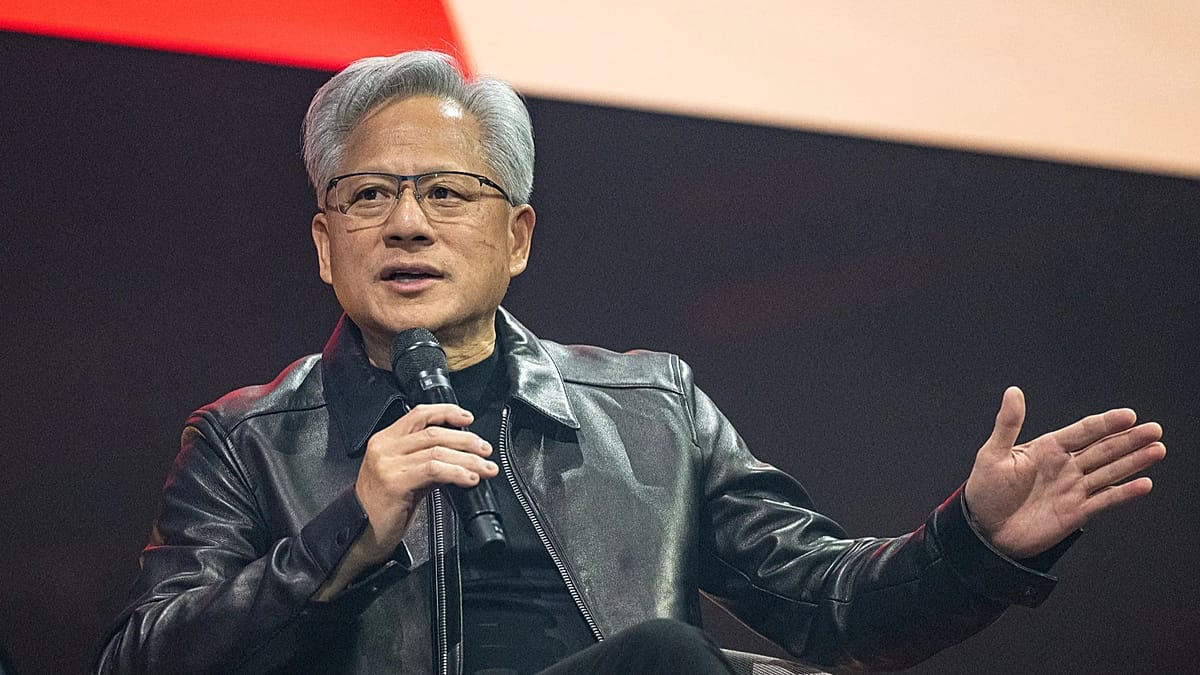
Nvidia's board of directors has no intention of reinstating Jensen Huang as chief executive, according to people familiar with the matter. The board is concentrating on the ongoing investigation into Huang's conduct, not on discussions about his potential return, a source told CNBC.
Huang resigned last week from the company he founded 33 years ago, after admitting to an affair with Alice Huang, a former employee of an Nvidia customer who is alleged to have been a spy for China. Reports also surfaced of two other affairs with Nvidia employees. The company has engaged the law firm Wachtell Lipton to examine whether Huang's actions compromised national security or leaked corporate secrets.
The Financial Times earlier reported that Huang had discussed the possibility of returning with confidants, and that an ally was assembling a "war room" of Silicon Valley executives to lobby on his behalf. Meanwhile, an online petition backed by tech figures including Elon Musk has gathered more than 180,000 signatures calling for his reinstatement.
US President Donald Trump added his voice on Monday, saying he "wouldn't mind" seeing Huang back at the helm. Trump and Huang had developed a close relationship, with Huang becoming a prominent advocate for US leadership in artificial intelligence while also pushing for continued chip exports to China.
For now, Nvidia's chief financial officer, Colette Kress, is serving as interim CEO until a permanent successor is named. The board's decision to rule out Huang's return, at least for the moment, underscores the seriousness of the allegations and the legal risks involved.
European stakes in the Nvidia saga
While this is a US corporate drama, its ripple effects are being felt across Europe. Nvidia's chips are central to the AI boom that is driving investment and policy debates in Brussels, Berlin, and Paris. European lawmakers have been grappling with how to regulate AI and secure supply chains for advanced semiconductors, and any instability at Nvidia could affect those efforts.
The company's valuation and market position are under scrutiny, as analysts assess what the chipmaker is worth without its founder. European investors and tech firms that rely on Nvidia's GPUs for AI research and data centers are watching closely.
The scandal has also intersected with transatlantic tensions over technology exports. China has warned the US about chip curbs as the company at the center of the scandal faces restrictions on selling advanced AI chips to Chinese customers. European companies, many of which have operations in China, could be caught in the crossfire of any further export controls.
In Washington, lawmakers have summoned Huang and Commerce Secretary Howard Lutnick to testify about the spy allegations, adding a political dimension that could complicate any future leadership changes. The congressional inquiry is likely to keep the spotlight on Huang's conduct and the board's decision-making.
For now, the board's stance appears firm. But the pressure from the White House and Silicon Valley is unlikely to fade quickly. As one analyst put it, "The question is not whether Huang could return, but whether the board can withstand the political and corporate lobbying."
European observers, meanwhile, are reminded of the fragility of relying on a single company for critical AI infrastructure. The episode may accelerate calls for greater European strategic autonomy in technology, even as the immediate focus remains on Nvidia's leadership crisis.