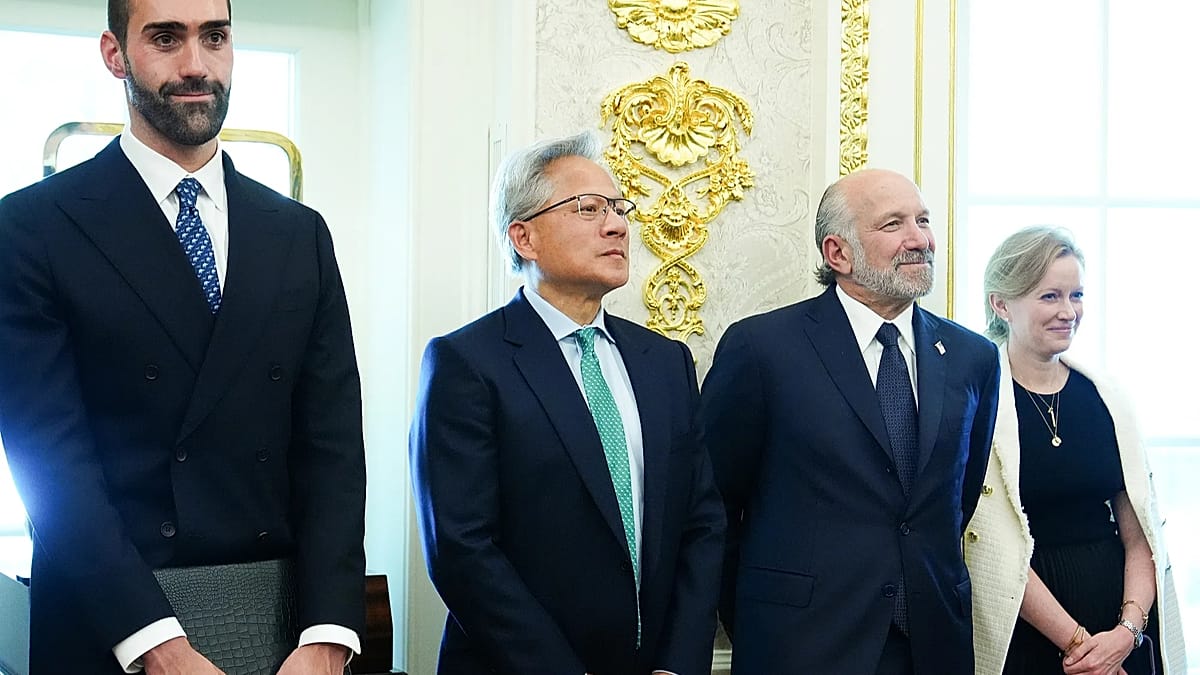
The political fallout from Jensen Huang's abrupt departure from Nvidia has reached Washington, where lawmakers are demanding testimony from the former chief executive and US Commerce Secretary Howard Lutnick. The Senate Banking Committee and three House committees have issued summonses, escalating a scandal that has raised questions about the protection of sensitive American technology.
Huang resigned on Thursday after reports surfaced detailing two extramarital affairs, one of which allegedly involved a woman suspected of being a Chinese intelligence asset. The revelations have triggered a bipartisan push for clarity, with Republican Senator Tim Scott, chairman of the Senate Banking Committee, calling for a hearing.
"Recent reports raise serious concerns about our national security and the protection of sensitive U.S. technology," Scott wrote on social media. "The American people deserve answers."
Scott has requested that both Huang and Lutnick appear before his committee, warning that a subpoena would follow if they declined to testify voluntarily. The House Committees on Foreign Affairs, Intelligence, and China have also summoned Huang to a closed-door, transcribed interview scheduled for 1 December. In a letter, the chairmen gave him until Friday evening to accept, threatening a subpoena if he refused.
Scandal details and security implications
The controversy centres on Huang's relationship with Alice Huang (also known as Huang Le), a senior executive at a Singapore-based data centre called Megaspeed. According to The New York Times, US intelligence officials had previously concluded that Huang Le was delivering information to Beijing and was being monitored for possibly steering AI chips to China. Her close ties to the former Nvidia chief have raised alarms about potential technology leaks.
Huang's resignation came after reports of his affair with an unnamed Nvidia executive, adding to the scrutiny he already faced over the alleged spy connection. Chief Financial Officer Colette Kress has stepped in as interim CEO, but the leadership vacuum has unsettled markets, with European markets dipping as investors weigh the implications for the AI sector.
China has dismissed the espionage allegations as "purely unsubstantiated." Foreign Ministry spokesperson Mao Ning said on Thursday that Washington should "stop fabricating the 'Chinese spy' narratives as a pretext for imposing technology restrictions."
The case has broader resonance beyond the United States. Nvidia's chips are central to the global AI boom, and its leadership turmoil could affect supply chains and investment strategies worldwide. Analysts at the Centre for European Policy Studies have noted that markets are already seeking alternatives to Nvidia's dominance, a trend that could reshape Europe's tech landscape.
European policymakers are watching closely, given the continent's reliance on American AI hardware and its own ambitions to build sovereign capabilities. The scandal has also reignited debates about the fragility of the AI boom, with economists warning that Nvidia's dependence on a single visionary leader exposes the sector's vulnerabilities.
As the congressional probes unfold, the focus will be on whether the Trump administration had any knowledge of Huang's alleged ties and whether it acted appropriately to safeguard US technology. The summonses signal that lawmakers are not prepared to let the matter rest, and the coming weeks could bring further revelations about the intersection of corporate power, espionage, and national security.