The sudden resignation of Jensen Huang as chief executive of Nvidia has plunged the company into uncharted territory. For years, Huang was the face of the artificial intelligence boom, steering the American chipmaker to a valuation that at times exceeded $3 trillion. His departure, announced amid reports of an espionage scandal and personal misconduct, has raised urgent questions about governance, security, and the resilience of the global AI ecosystem.
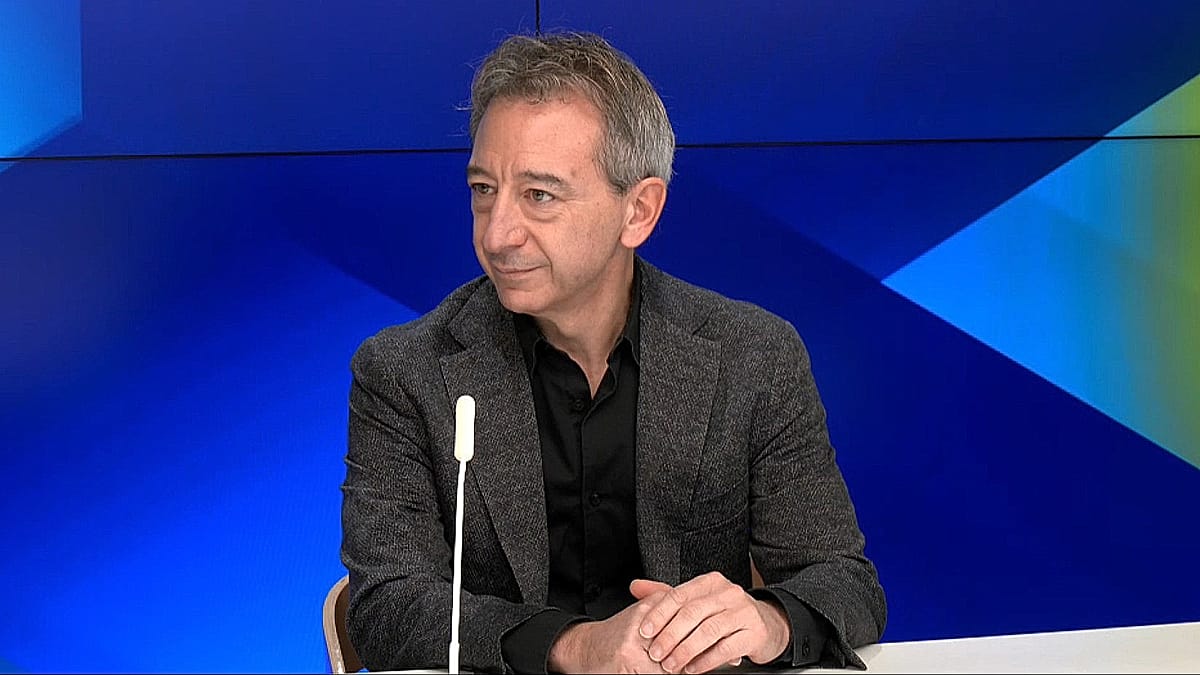
Andrea Renda, head of research at the Centre for European Policy Studies (CEPS) in Brussels, joined European Pulse to dissect the implications. His assessment is measured but clear: “The market will look for alternatives.” Renda argues that while Huang's leadership was exceptional, the semiconductor industry has weathered leadership transitions before, and investors are already recalibrating their expectations.
A leadership vacuum with global ripple effects
Nvidia's dominance in AI accelerators—chips that train and run large language models—has made it a cornerstone of technological progress from Silicon Valley to Europe's emerging AI hubs. The company's GPUs are essential for research labs, cloud providers, and startups across the continent. Huang's exit, therefore, is not just a corporate story; it is a strategic concern for European policymakers who have been courting Nvidia to invest in local manufacturing and research partnerships.
Renda notes that the immediate market reaction has been turbulent, with shares sliding as the board weighs its options. But he cautions against overreacting: “Nvidia's technology is deeply embedded in the AI supply chain. The demand for compute power will not vanish because one executive steps down.” He points to the broader trend of companies like AMD, Intel, and a host of European startups that are eager to fill any gap.
The scandal itself—allegations of ties to a suspected Chinese spy and multiple affair reports—has cast a shadow over the company's corporate culture. Renda emphasizes that this is a wake-up call for the entire industry. “Corporate security and ethical governance are not afterthoughts. They are foundational to maintaining trust, especially when dealing with sensitive technologies.”
European implications and the search for alternatives
For Europe, the episode underscores the continent's dependence on a handful of non-European suppliers for critical AI infrastructure. The European Union has been pushing for greater semiconductor autonomy through initiatives like the European Chips Act, but progress has been slow. Renda suggests that Huang's departure could accelerate efforts to diversify supply chains and invest in homegrown capabilities.
He also highlights the role of European research institutions and companies that are developing alternative architectures, such as neuromorphic computing and optical processors. “The market will look for alternatives, and Europe has a chance to be part of that solution,” he says, pointing to initiatives in Germany, France, and the Netherlands.
The broader geopolitical dimension is unavoidable. The United States and China are locked in a technological rivalry, and Nvidia has been at the center of export controls. Huang's resignation, amid allegations of espionage, could complicate Washington's efforts to maintain its edge. Renda warns that this could lead to further restrictions, which would have knock-on effects for European companies that rely on Nvidia's chips for their own AI products.
As the story develops, European investors are watching closely. The dip in European markets following the news reflects the interconnected nature of the global tech economy. Meanwhile, economists are warning that the AI boom's fragility has been exposed, urging companies to build more resilient systems.
For now, Nvidia's board faces the daunting task of finding a successor who can match Huang's vision and influence. Renda is optimistic that the company will survive, but he stresses that the episode is a reminder of the human element in technology. “No single individual should be indispensable. The market will adapt, but it will take time.”
In the meantime, European policymakers and business leaders are likely to revisit their strategies for AI development, ensuring that the continent is not left vulnerable to the whims of a single company—or a single person.