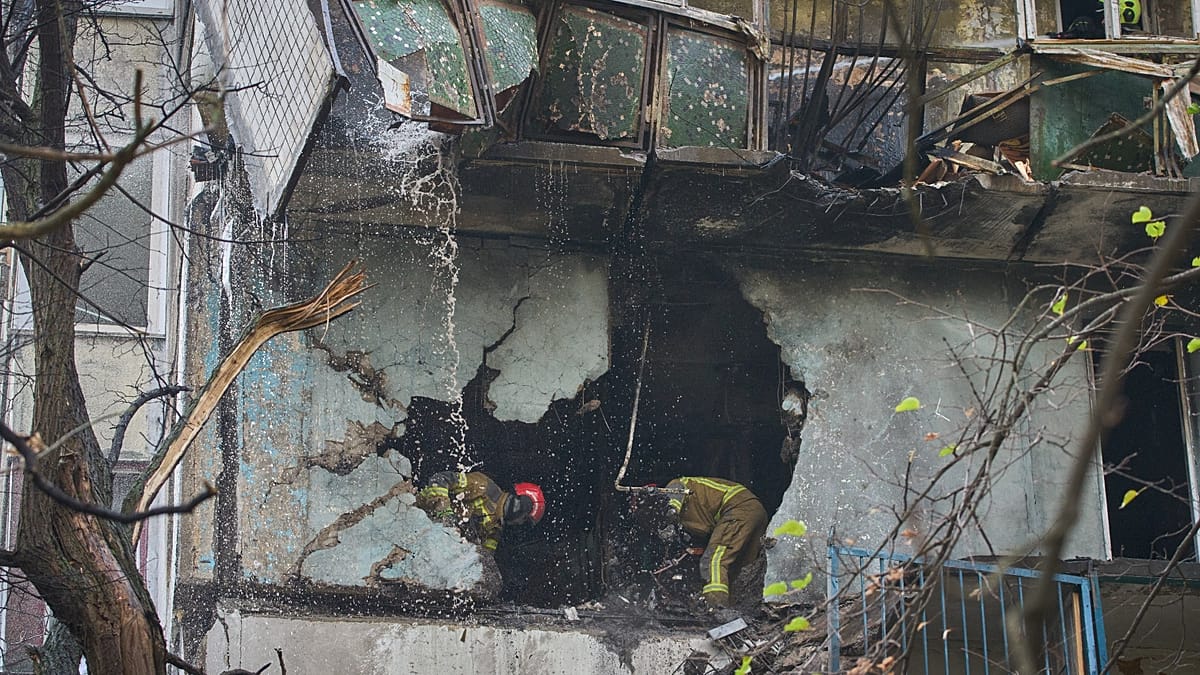
Russian forces launched a fresh wave of strikes across Ukraine on Friday, killing at least three people and wounding more than 20, according to Ukrainian authorities. The attacks hit residential areas and industrial sites in the south, east and northeast of the country.
In the southern port city of Odesa, two people were killed and five injured after a strike damaged a residential building and several cars, said Serhii Lysak, head of the city military administration. Emergency crews were still sifting through debris as daylight broke.
In Zaporizhzhia Oblast, one person was killed in an attack on an industrial facility in the Kosmichny district. A separate strike on a residential block in the same area injured nine people, according to local officials. Mykhailo Semikin, acting head of the regional military administration, wrote on Telegram that flats on three floors were damaged and fires broke out on the second and third floors, with cars in the courtyard also catching fire.
The northeastern Kharkiv region also came under fire. The regional prosecutor's office said that around 4 am on 13 November, a Russian drone struck the village of Malynivka in the Chuhuiv district. Seven people were injured, including two boys aged 16 and 11. Houses were destroyed or damaged in the attack.
Ukraine strikes back
Ukrainian forces responded overnight with drone attacks on Russian territory, targeting the Samara and Volgograd regions. Local Russian authorities reported four people killed in a drone attack on an industrial facility in Samara Oblast, and another four killed in a strike on Volgograd. Unverified video footage circulating on social media appeared to show a large fire at an oil refinery in Volgograd.
The attacks underscore the continuing volatility of the conflict, even as diplomatic efforts intensify. Ukrainian President Volodymyr Zelenskyy met with US special envoys Steve Witkoff and Jared Kushner in Ireland on Thursday, wrapping up a visit that came after the American officials had held talks with Russian President Vladimir Putin.
The meeting in Dublin was part of a broader push by European leaders to secure a seat at the table in any future peace negotiations. As US envoys push for a European role, the continent's leaders have been seeking a unified position, with a summit in Dublin focused on coordinating strategy. The presence of Witkoff and Kushner in Ireland highlighted the delicate diplomacy underway, though Moscow has downplayed European involvement in the talks.
For residents of Zaporizhzhia, the latest strikes are a grim reminder of the constant threat they face. In a recent interview, the city's mayor described life under constant Russian assault, with civilians bearing the brunt of daily bombardments. The attacks on Friday also damaged critical infrastructure, raising concerns about the approaching winter.
The European Union has repeatedly condemned Russian strikes on civilian areas, and the bloc is preparing new sanctions, including a ban on Russian liquefied natural gas imports from the Arctic, which have surged to €8.7 billion ahead of the looming prohibition. The EU's stance remains firm, but the human cost continues to mount.
As the diplomatic and military fronts evolve, the need for a coordinated European response has never been more urgent. The strikes on Friday are a stark reminder that the war is far from over, and that civilians remain the primary victims.