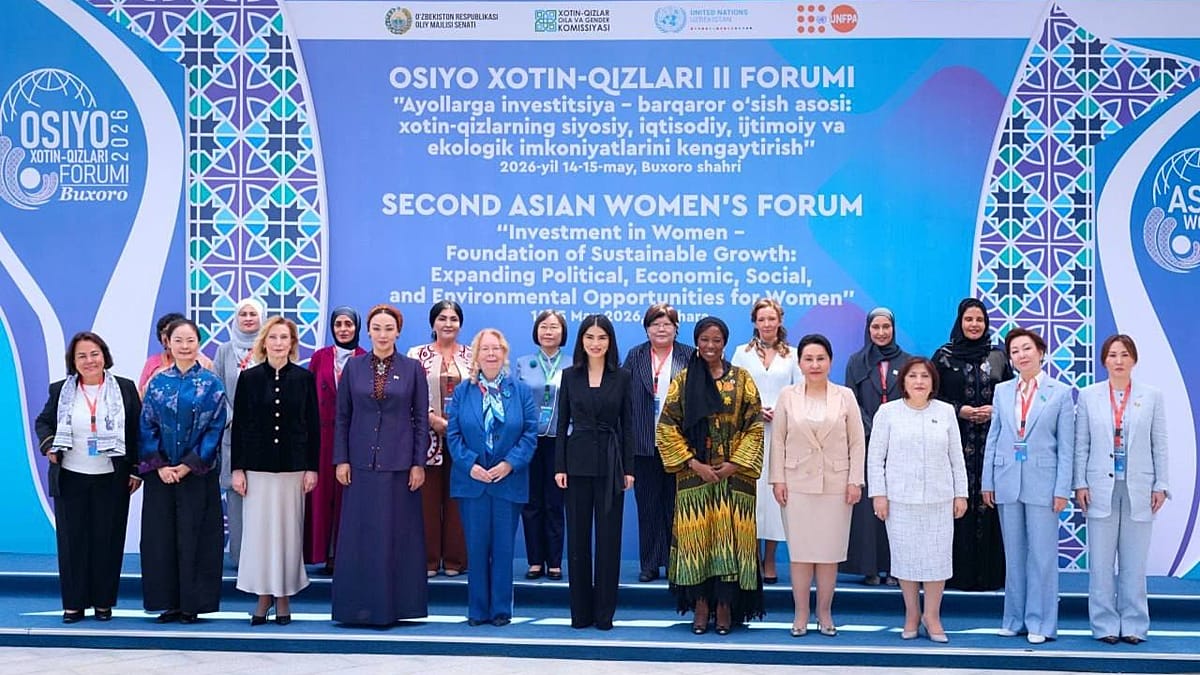
Regional leaders and United Nations officials gathered in Bukhara, Uzbekistan, this week to examine how investment in women, education, and demographic planning can shape long-term development across Asia. The discussions, framed by a stark World Bank statistic — fewer than 5% of women worldwide reside in countries that grant them full legal equality — focused on economic inclusion, labour participation, healthcare access, and the role of women in rapidly changing societies with young and growing populations.
Uzbekistan's Progress on Gender Equality
Uzbek President Shavkat Mirziyoyev, in a message to forum participants, pointed to his country's recent gains. Uzbekistan climbed 43 places in the World Bank's “Women, Business and the Law” index this year, reaching 48th among 190 economies. Mirziyoyev noted that women now hold 35% of public administration positions in the country, while female participation in higher education has risen sharply in recent years.
These figures reflect a broader shift in Central Asia, where governments are increasingly recognising that gender equality is not just a matter of rights but also a driver of economic growth. The forum, the second Asian Women's Forum, brought together policymakers from across the region, including representatives from Kazakhstan, Kyrgyzstan, Tajikistan, and Turkmenistan, as well as officials from the United Nations Population Fund (UNFPA) and other international bodies.
Demographics as Opportunity
UNFPA Executive Director Diene Keita emphasised Central Asia's demographic profile as one of its biggest long-term opportunities — provided governments invest effectively in human capital. “Central Asia is important for the wealth of the entire humanity,” Keita told Euronews. “There is only one way to transform the youth bulge into opportunity. It's to ensure that we have the proper population data, just like Uzbekistan did with its general census.”
Uzbekistan recently conducted its first national census in more than three decades, a process international organisations described as critical for long-term planning. According to UNFPA, reliable demographic data allows governments to adapt education systems, healthcare infrastructure, and employment policies to the actual needs of different population groups, including women and young people. “When you know where the young people are, where the women are, where the elderly are, you can adapt services according to real needs,” Keita said.
The forum's focus on data-driven policy resonates beyond Central Asia. In Europe, similar debates are unfolding about how to manage ageing populations and declining birth rates, particularly in countries like Italy, Germany, and Poland. The contrast with Central Asia's youthful demographics — where the median age in Uzbekistan is under 30 — highlights the diversity of demographic challenges across the continent. For European readers, the Bukhara discussions offer a glimpse into how other regions are tackling issues that also affect the EU's eastern neighbourhood, including migration, labour market integration, and gender equality.
Broader Implications for Europe
The forum's emphasis on women's economic participation aligns with ongoing EU initiatives, such as the Gender Equality Strategy 2020-2025 and the European Institute for Gender Equality's work on closing the gender pay gap. However, the scale of the challenge in Asia — where legal barriers remain widespread — underscores the importance of continued international cooperation. As the Brussels Economic Forum 2026 prepares to examine Europe's AI strategy, the Bukhara forum serves as a reminder that technology and data are also critical tools for social policy.
Uzbekistan's progress, while notable, is part of a longer journey. The country still faces significant hurdles, including persistent gender stereotypes and limited economic opportunities for women in rural areas. Yet the forum's message was clear: investing in women and using reliable data to guide policy are essential steps for any society aiming to harness its demographic potential. For Europe, which shares a continent with Central Asia through the Caucasus and the Black Sea region, these lessons are increasingly relevant.
The Bukhara forum concluded with a call for greater regional cooperation on data collection and gender equality initiatives. As Keita put it, “The future of Central Asia — and indeed the world — depends on how well we empower women and young people today.”